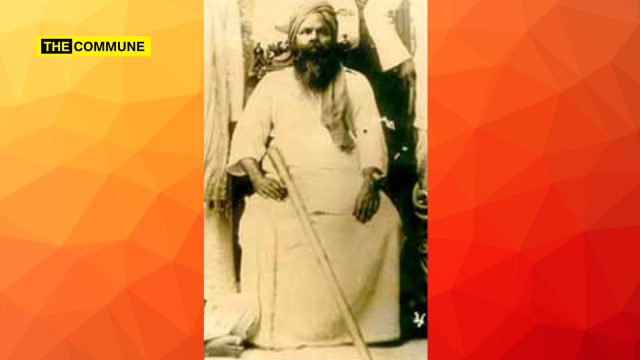
Let us dust and ready the portrait of VVS Aiyer For today, we need to remember Subramania Sivam
Today, July 23, is the Remembrance Day of one of the most selfless sons of Bharata Mata, Subramania Sivam. If so, why that convoluted headline bringing VVS Aiyer into the reckoning? Because these two leaders are always remembered together, four times a year, by a handful of people. Painful, yet true, it is their beard that gets recognised and not them. Therefore, their pictures are used interchangeably.
This article aims to highlight a few aspects of Sri. Subramania Sivam’s life, which we may not be aware of, is worth celebrating for his contributions to liberating Bharata Mata from foreign occupation.
Quick Recap of What We Might Know About Subramania Sivam
Born in Batalagundu, in the foothills of Kodaikanal on October 4, 1884. His childhood and poverty were synonymous. He did his early education in Madurai and moved to Thiruvananthapuram. In his own words, the Oottampirai (free dining hall for the poor) in Thiruvananthapuram kept him nourished. As was the custom in those days, he married Smt. Meenakshi when he was 15 years of age and lost her when he was 18. Meeting Sudhanandha Swamigal in Thiruvananthapuram was a turning point. He obtained Mantra Upadesam and named himself Swatantrananda. From there, he dedicated his life to Bharata Mata. He was a close friend and associate of V.O. Chidambaram Pillai and Subramania Bharathi. We can say that Sivam was one of the first to promote Bharatiyar’s poetry.
First Political Prisoners In Madras Province
12 March 1908, District Collector Winch of Tirunelveli got Subramania Sivam and V.O. Chidambaram Pillai arrested for sedition. The crime was taking out a rally celebrating the release of another freedom fighter, Bipin Chandra Pal (one of the Lal-Pal-Bal trio). These two great men thus became the first political prisoners in Madras Province. As there was no precedent, they were treated as any other prisoner and subjected to all hardships of Rigorous Imprisonment. Being firebrand leaders, they were subjected to more hardships than others.
Jail, The Place Of Penance
Undergoing innumerable hardships wasn’t a big thing for Sivam. In a booklet titled “Jail Life”, he describes his experience in jail humorously. He says, “Brothers! In this world, happiness and misery alternate. The jails we are imprisoned in for the sake of the ideal of Swatantra are really places of penance for us. We shall with bold dignity accept the jail term which is given as a prize for endeavour to bring freedom to humanity.”
“In the prison cells, there will be a bell at 5 a.m. Fifteen minutes later, there will be a second bell. By this time, all prisoners would have to get up, come out of their opened cells, and stand before their cell doors. By 5:30 a.m., the third bell will be rung, and the doors of the ward will be opened. After the jail officials had inspected the prisoners, we ran towards the lavatories. It will be a hell of a place, most unclean, with past refuse not properly cleaned. We have to clean the refuse pots that we use. After that, we will ‘clean’ our teeth with sand or dirt, whichever might be available.
Breakfast will be ready by now. Kanji made from ragi with a little something called chutney. At 11 AM, there will be a ragi meal, a solid mass with sambhar, both dropped into our meal pot. The sambhar will be truly tasteless. Twice a week, we will be treated with rice with no vegetables to go with it. All vegetables grown in jail would have gone to the houses of the jail officials. Every Wednesday and Sunday, non-vegetarian food would be served. For those not taking non-vegetarian food, a small quantity of Gingelly oil would be given.”
He had this to say about Sundays, the day of compulsory shaving for the prisoners. “If only one were not compelled to undergo the shave, prisons would be declared heavenly abodes. For shaving, they will have some sharpened iron blades. It will be a real torture to be shaved by this implement. According to the intractable jail rules, hair in excess of half an inch anywhere on the body of the prisoners will encourage accumulation of dirt and lead to ill-health.”
The rigorous imprisonment he underwent included hard labour. Sivam was put on wool cleaning. Wool reared from sheep was an arduous task. First, it was soaked in lime and dried. While twanging, particles of wool and lime will enter the cleaner’s nose and eyes, resulting in tearing and nonstop hiccups. Thanks to this ordeal, Sivam fell prey to leprosy.
Sivam was a writer par excellence. He ran a monthly magazine called Gyanabhanu (1913). Later, he had to discontinue Gyanabhanu and started a weekly magazine called Prapancha Mitran (1916).
Sivam On Social harmony
Sivam fully understood that social harmony starts with educating all the sons and daughters of Bharata Mata. In an essay he wrote in November 1914, he says, “Everyone born here is a child of the same mother. Any misery we undergo is contagious. We need to provide education to everyone so that they understand that the misery of one easily catches the other. Misery is collective. The aim of education should be to broaden the hearts and minds of the people. Selflessness is the only way people will become society-oriented and people-centric. We should teach our children that selflessness is national interest. We need to ensure that our children are educated for Bharata, that nationalism is infused in them. Children should be made aware that Bharata was once the world’s Gyana Guru. They should be taught that shunning arrogance, seeing good in keeping others happy, are the qualities of a true hero. We should help children develop three essential attributes: tolerating pain, maintaining a calm demeanour, and bravery.”
In May 1914, he wrote an essay “Vidhya Anubhava Vishesham” about Thirukural. In that he says, “Unity is strength. Why should we create a divide between ourselves by saying one is high and the other is low? Knowledge that doesn’t lead people in the right direction is of no use. It would be better if we didn’t acquire such knowledge. A wider and open heart is much better than a deeper brain. We should see Ishwara in the form of all creatures. They are all his creation after all. Serve them all. For that is happiness.”
He closes this article with a verse from Thayumanava Swami.
கற்று மென்பலன் கற்றிடு நூன்முறை சொற்ற சொற்கள் சுகாரம்பமோ நெறி நிற்றல் வேண்டும்
Which translates to, what is the use of learning from reams and reams of paper if we can’t stand by what is learnt? This is precisely what Tiruvalluvar says in Kural 391, (கற்க கசடற).
In an article he wrote in January 1915, he says, “For a tree to grow, you water its roots. Likewise, for the community to grow, Gyana (Knowledge) is the foundation. As our ancient knowledge suggests, we must ensure that every life on earth lives in happiness and harmony.”
He brings the social angle in an essay he wrote on religion (June 1915). “Whether you are cutting wood or ploughing, consider whatever you do as Ishwara Pooja. Our Dharma doesn’t ignore worldly life. It encompasses every sphere of life – the welfare of the community, matters of polity and state governance, trade and commerce. Brother, there isn’t any difference between the Ishwara in you and others. Ishwara Prakasha is one and can’t be split or seen differently. There is no caste or creed or any difference in Ishwara Prakasha. Everything on earth is a manifestation of Ishwara.”
See Swadeshi In Everything
In another essay (the date is unclear; this should also be around 1915), he says the call for Swadeshi should encompass all walks of life, including the games and sports we play. “We should encourage and grow sports like wrestling, kusti.” He has written extensively about the Mallars (wrestlers) and the rings (Godha) where the fights happen. He talks very fondly of Gada (mace) and Mudgar (Karla Kattai) and the need for training with these implements. He says, becoming fit and developing your body is an easy way to attain a happy mind. He says, “Reclaim the glory of Silambam. Don’t ignore the treasures like Kabaddi (Sadugudu), it isn’t enough screaming on top of your lungs about being Swadeshi when you ignore these Swadeshi treasures.”
Tamil, Thy Name Is Nectar
He discusses the importance of maintaining the purity of Tamil, free from English contamination (in contrast to another individual who advocated for writing Tamil in the English script). At the same time, he acknowledges that we cannot wish away the use of Sanskrit words from the Tamil language. He takes pride in saying that Tamil is a unique and well-developed language. He says that research has proved the legacy and beauty of our language. Often, he would challenge people, asking them to provide an English word they thought didn’t have an equivalent in Tamil. He says, “We should remember that up north, even the English speak in Hindi. Language is the lifeblood of society.”
He ends this essay with this short poem.
Let your tongue soak in Tamil.
Pen glide through Tamil,
May your heart seek out and be filled with Tamil
May the damsel, Tamil, give you love and protection.
The Man Who Gave Without Prejudice
Subramania Sivam had a very tough life. But difficulties never bothered him, be it the poverty during childhood, losing his wife at a very young age, the hardships in prison, the deadly disease of leprosy he contracted in prison, and what came after – he wasn’t allowed to board any public transport. He was single-minded; he wanted to free Bharata Mata and wanted to build a temple for Bharata Mata where everyone, irrespective of caste or creed, can come and celebrate their mother.
In 1923, he purchased land in Papparapatti, near Dharmapuri, to construct a temple dedicated to Bharata Mata. He had another great son of Bharata Mata, Chittaranjan Das, who laid the foundation for the temple. It was rather unfortunate that the temple wouldn’t be complete and opened before he passed away into history on 23 July 1925. He was all of forty-one.
He lived true to one of his favorite Thirumanthiram (250) by Thirumoolar, providing us with the message of social harmony, Swadeshi, and much more. Just that, we are not reading him. It is time we woke up.
ஆர்க்கும் இடுமின் அவர் இவர் என்னன்மின்
பார்த்திருந்து உண்மின் பழம்பொருள் போற்றன்மின்
வேட்கை உடையீர் விரைந்து ஒல்லை உண்ணன்மின்
காக்கை கரைந்துண்ணும் காலம் அறிமினே
Aarkkum Idumin Avar Ivar Ennanmin
Paarthirundhu Unmin Pazhamporul Potranmin
Vetkai Udaiyeer Viraindhu Ollai Unnanmin
Kaakkai Karaindhunnum Kalam Arimine
Provide food (knowledge) without prejudice.
Don’t eat when the hungry are waiting.
Let go of the past; don’t hold on to old things.
Learn from the crows, how they call each other before they eat the morsels available to them.
Raja Baradwaj is a marketing communications professional who works with a leading technology multinational company. He is an avid reader, history buff, cricket player, writer, and Sanskrit and Dharma Sastra student.
Subscribe to our Telegram, WhatsApp, and Instagram channels and get the best stories of the day delivered personally.