We have a comfortable habit in India. When we see a fissure in our society, we instinctively look for a foreign hand. We hunt for the colonial scholar or the missionary. We find a Max Muller or a Robert Caldwell. We pin the blame on them. We tell ourselves that they divided us. We tell ourselves that they manufactured hate where none existed.
This is a convenient lie. It is a great alibi.
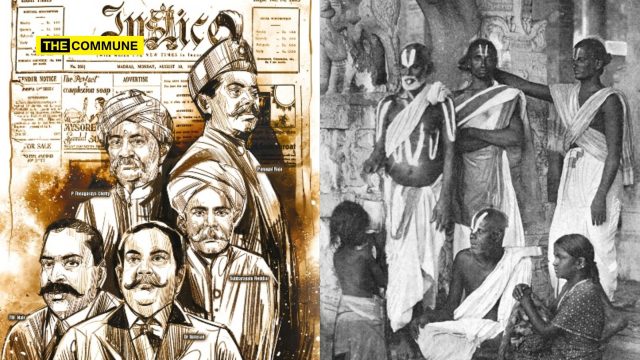
Consider the Dravidian movement. The standard critique is well known. Bishop Caldwell fabricated the “Dravidian” race theory. G.U. Pope distorted Tamil texts to sever them from their Vedic roots. The conclusion follows that the visceral anti-Brahmin hate in Tamil Nadu is merely the product of a Christian colonial conspiracy.
This thesis is deeply problematic. It is a half-truth that shields the real culprits. It exonerates the key actors within Tamil society itself. It masks the face of the local elite. The landed gentry. The mercantile aristocracy. The dominant agrarian communities. These were the forces that funded, nurtured, and weaponized this hate for their own administrative dominance. The missionary provided the grammar. But the venom was indigenous.
The Anxiety of the Feudal Elite
To understand the origins of this divide, one must look not at the church pulpit. Look at the ledger of the Zamindar and the warehouse of the merchant. For centuries, social power in the Tamil country rested with the land. The feudal overlords held sway over the village economy. These powerful communities were the “Sons of the Soil.” They were the custodians of the great temples. They were the patrons of the arts.
The Brahmin was a priest, a minister, or a scholar. He possessed ritual status. But his material existence often depended on the grants and patronage of the landholding elite. He was a dependent.
The advent of the British administration fundamentally altered this equation. Power began to shift from the village granary to the urban secretariat. It shifted from the land to the file. The Brahmin community had a long tradition of literacy and scholarship. They adapted to this shift with speed. They entered the civil service. They entered the judiciary. They entered the legal professions in disproportionate numbers. They became the new intermediaries between the state and the subject.
The old feudal elite watched this transformation with acute anxiety. Their traditional dominance was slipping. They were the kings of the soil. But they were becoming subjects of the administration. They faced a new rival. This rival did not owe his position to their patronage. He owed it to his utility in the colonial bureaucracy.
The “Dravidian” racial theory offered the perfect weapon for this elite to strike back. It was not that they blindly accepted a foreign theory. They actively appropriated it. It served a vital political function. By framing the Brahmin as an “Aryan invader,” the indigenous elite could delegitimize his newfound administrative authority. If the Brahmin was a racial alien, he had no right to rule or adjudicate over the “indigenous” populations.
This narrative allowed the powerful land-owning and mercantile castes to cloak their own feudal privilege in the language of victimhood. They focused the anger of the masses on the “Aryan” minority. This successfully deflected attention from their own economic dominance. The peasant was told his enemy was the priest who owned no land. He was told the enemy was not the landlord who owned the village. It was a brilliant, strategic diversion.
These elites were not atheists seeking to dismantle Hinduism from the outside. They were often deeply religious. They maintained the very temples and rituals they claimed to be liberating. They were Janus-faced. In private, they upheld the strictest orthodoxies. In public, they funded the platforms that spewed venom against the Brahmin community. They were the financiers of the movement. They were the patrons of the libraries. They were the organizers of the conferences. The hate did not bubble up from the streets. It trickled down from the palaces and the mansions of the indigenous aristocracy.
A Pioneer in the Wilderness: Reality Check India
Historians and sociologists have often glossed over these uncomfortable truths. They prefer to focus on the “social justice” rhetoric of the movement. There has been a significant gap in analyzing the raw, visceral nature of the hate propaganda itself. In this regard, the commentator/blogger (and of course, Discourse Analyst) known as Reality Check India stands as a pioneer.
It is no exaggeration to say that not a single scholar has ventured into these questions as deeply as he has. Academia has largely sanitized the Dravidian discourse. They treat it as a benign subaltern movement. Reality Check India has painstakingly documented the primary sources. He has dug up the plays, the speeches, and the forgotten pamphlets. These documents reveal the movement’s darker psychological underbelly. He has excavated the cultural production of hate that others have ignored. He provides an analytical framework that is essential for understanding the true nature of this divide.
The “Criminal Passion”
Drawing on the framework of Jean-Paul Sartre, Reality Check India characterizes this phenomenon not as a mere political opinion. He calls it a “criminal passion.” The anti-Brahminism of the Dravidian movement shares the psychological structure of classic anti-Semitism.
It is a hate that is not based on experience. It shapes experience. It is a choice. The hater chooses to be impenetrable to reason. When confronted with logic or facts, they do not engage. They sneer. They intimidate. Or they retreat into a “passionate” silence. This passion was cultivated in the drawing rooms of the “second-hand haters.” These were the elite who found that this hate gave them a distinct personality. It was a way to distinguish themselves from the “Aryan” rival who was competing for the same government posts and legal influence. And most importantly, it gave them the platform for rallying the “lower” and more backward castes on their side while simultaneously retaining their ‘apex’ status in the Tamil society’s hierarchy.
The Cultural Production of Hate
The hate was not abstract. It was manufactured and distributed through specific cultural products funded by the elite. Reality Check India provides a compelling analysis of the plays that shaped this consciousness. They were not artistic endeavors. They were strategic instruments of division.
Consider the 1930 play Pankajam allathu Paarpana Kodumai (“Pankajam or the Brahmin Atrocity”). As Reality Check India notes, this was a masterclass in driving a wedge between the communities. The play depicts Brahmins not as priests. It depicts them as leeches exploiting the generosity of wealthy mercantile patrons. Specifically, the Nattukottai Chettiars. It portrays Brahmin agents cheating patrons of their land. It shows them scheming to keep other groups in poverty. This was a strategic narrative. It was designed to sever the traditional financial patronage that these wealthy groups extended to Brahmins.
Then came Iraniyan Allathu Inayattra Veeran (“Hiranyakashipu, the Matchless Hero”) in 1934. Here, the “Colonial Conspiracy” theory falls flat. This was a homegrown distortion. The play rewrites the Narasimha Avatar. It turns the demon king Hiranyakashipu into a Dravidian hero. It turns the Avatar into a fraud.
The subtext is highlighted by Reality Check India. It introduced fictional narratives involving the use of Brahmin women to entrap Dravidian men (the sexualisation of the Brahmin female and the emasculation of the Brahmin male in Dravidian folklore is something we shall delve into in the future as it is outside the remit of this particular essay). It deployed vile stereotypes to characterize the community as cunning and treacherous. This was not the language of social justice. This was the language of elimination. And it was funded, staged, and applauded by the local elite.
The Glorification of Violence
This ideology did not stop at words. It created a culture where violence against the specific community was not just tolerated. It was celebrated.
A stark example cited by Reality Check India is the case of “Acid” Thiagarajan. This was a man who threw acid on a Brahmin lawyer. In a normal society, such an act would be universally condemned. In the Dravidian ecosystem, he was celebrated. He was given a platform at conferences and honored.
The metaphors used to rally support for such figures were not calls to the proletariat. They were signals to the cadre that violence had the sanction of the leadership. The message was clear. The “Aryan” is not a citizen with rights. He is a target.
The Blindness of the Hindutva Lens
This brings us to a critical error made by modern observers. This is particularly true for those looking from the North or through the lens of Hindutva. There is a tendency to view the Dravidian movement through a simplistic binary of “Hindu vs. Anti-Hindu.” The assumption is that because the movement attacked Brahmins and Sanskrit, it must have been an atheist, anti-religious project. They assume it was driven by forces external to Hinduism.
This lens is not just inadequate. It is blinding. It renders the observer incapable of understanding the complexity of Tamil society. The uncomfortable reality is that the staunches of Hindus among the Tamils were the very creators of the Dravidian movement. The patrons of the anti-Brahmin discourse were often the same men who endowed the great temples. They funded the festivals. They maintained the strictest caste rituals.
These were not rootless atheists. They were the feudal dominant caste elites. They viewed themselves as the true custodians of the religion. They were protecting it from what they termed “Aryan corruption.” To view them as merely “anti-Hindu” is to misunderstand the nature of the power struggle. It was a civil war within the fold. It was a battle for the control of the sacred and the secular assets of the land. The Hindutva lens reduces this 120-year-old project to a simple case of “atheism.” It fails to see that the rot originated from the pious, not the profane.
The Conspiracy Exonerates the Criminals Involved
Why then does the “Christian Colonial Conspiracy” theory persist with such tenacity? Why do so many who claim to fight for Dharma today cling to the idea that Bishop Caldwell or the Church are solely responsible for the Dravidian divide? The answer lies in the psychological need for absolution.
For the modern descendants of the non-Brahmin elite, the “Christian Conspiracy” is a convenient laundry service. It washes away the sins of their ancestors. Many of these descendants now wish to align with nationalistic or Hindutva politics. This theory allows them to construct a narrative of victimhood. It suggests their forefathers were merely innocent dupes. They were tricked by cunning white missionaries into hating their Brahmin brethren. This is a grand act of exoneration. It scrubs the blood off the hands of the indigenous elite.
If the hatred was purely a colonial injection, then the grandfather who funded the anti-Brahmin printing press is not guilty. He was just misled. If the division was purely a missionary plot, then the community that ostracized the Brahmin is not complicit. They were just brainwashed. It effectively absolves them of the responsibility for birthing, sustaining, and propelling this hatred for over a century.
By pointing the finger at the foreigner, they avoid looking in the mirror. They avoid the painful admission that the “Dravidian” movement was not an imposition from London or Rome. It was a strategy hatched in the verandas of Thanjavur and Chettinad. It allows them to pretend that they were always the defenders of the faith. It hides the fact that they were the financiers of the very movement that tore the social fabric apart.
Conclusion
We must stop hiding behind the “Christian Conspiracy.” Yes, the colonial scholars planted the seeds of distortion. But the tree was watered by local hands. The fruit was harvested by local leaders.
The hate that permeates the political discourse of Tamil Nadu is not a foreign import. It is a homegrown product. It was manufactured by the indigenous elite to preserve their feudal hold on power against an administrative rival.
As long as we blame the outsider, we will never confront the truth. The rot is not in the history books written by the British. It is in the politics practiced by our own. One can even go to the extent of saying that it is in the very soul of the Tamil Society.
Yours truthfully,
Nishkala
Subscribe to our channels on WhatsApp, Telegram, Instagram and YouTube to get the best stories of the day delivered to you personally.