


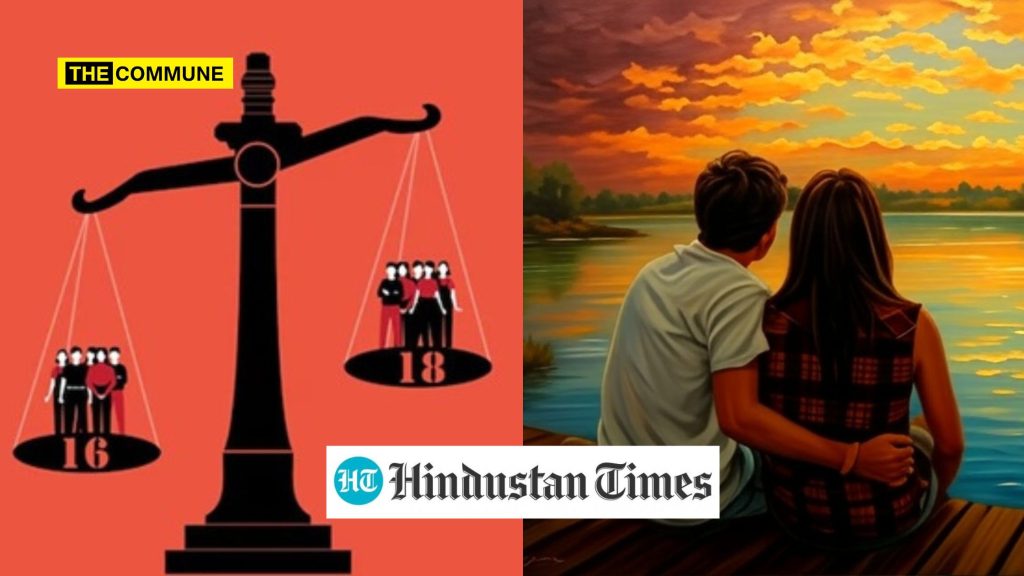
Starting 12 November 2025, the Supreme Court will conduct continuous hearings on a proposal by Indira Jaising seeking to legally permit sexual activity among teenagers, effectively attempting to lower the age of sexual consent from 18 to 16. Critics warn that such a move would put millions of minors at risk, as the protection of children remains non-negotiable. Notably, major outlets like Times of India, Hindustan Times, and international organizations including UNICEF India have allegedly consistently advocated for lowering the age of consent, which would decriminalize sexual activity with minors.
In line with this, The Hindustan Times opinion piece, “Mind the Gap: How a law to protect children was weaponized against consensual teen sex”, published on 4 August 2025, attempts to make a case for decriminalizing sexual relations between teenagers and minors aged 16–17. On the surface, it frames the debate as one about adolescent love and overreach by the legal system. But a closer look reveals serious one-sided reasoning, selective framing, and a troubling moral and legal blind spot.
The article repeatedly emphasizes stories of “teenagers in love” where a 16- or 17-year-old girl is in a relationship with an 18–20-year-old boy, portraying the parents’ intervention and the police action as overbearing and even unjust. Justice Jasmeet Singh’s recent acquittal of a 19-year-old man is quoted as vindication, with the judge labeling the punishment a “perversity of justice.” Yet, the piece glosses over the constitutional and social rationale behind the current law: the protection of minors from sexual exploitation and abuse.
Selective Use of Statistics
The article cites NFHS-5 data showing 39% of girls have sex before 18, and studies highlighting that roughly 20–25% of POCSO cases involve “romantic relationships.” But this framing is misleading. It conflates consensual sex with potential statutory violations and implies that parents filing complaints are acting out of malice or conservatism, ignoring the law’s protective purpose. The same surveys and case studies reveal that many minors are married off by parents, coerced, or exploited, yet these nuances are downplayed to create a narrative of “victimized adolescent couples.”
The Age of Consent Debate
HT’s article laments that the age of consent was raised from 16 to 18 in 2012 under POCSO and quotes advocates like Indira Jaising arguing for autonomy and “mature consent” of minors. But the piece fails to grapple with the critical reality: 16–17-year-old girls are legally children, not autonomous adults. Laws like POCSO exist precisely because minors are vulnerable to coercion, manipulation, and abuse. Suggesting a “close-in-age exception” risks creating a legal loophole that predators could exploit and dangerously blurs the line between consensual relationships and statutory rape.
Romanticization of Risky Relationships
The article repeatedly frames these relationships as “teenage love” or “adolescent choice,” invoking emotional imagery from films like Bulbul Can Sing. Yet it ignores the power imbalance inherent in even slightly older partners, the psychological and social pressures on minor girls, and the serious consequences of early pregnancies. The narrative subtly shifts the blame from adult males or coercive adults to the parents, painting legal protection as oppressive.
Hypocrisy and One-Sided Framing
The most glaring hypocrisy is the selective outrage: HT is quick to condemn “overzealous parents” and “misuse of POCSO,” but provides little attention to the real-world abuses POCSO addresses, including child sexual abuse, trafficking, and grooming. While 53% of children reportedly faced sexual abuse in 2007, the article’s argument implicitly prioritizes the romantic rights of minors over their safety, dignity, and consent under law.
Moreover, by repeatedly citing acquittals of teenage couples, the piece creates the impression that the legal system is out of touch. But it fails to highlight that the majority of cases still involve exploitation, coercion, or power imbalances that the law is meant to prevent. Using selective examples to argue for a structural legal change is intellectually disingenuous.
Conclusion
The Hindustan Times article frames a morally and legally complex issue as a case of “adolescent love under siege,” effectively romanticizing relationships with minors. While it is true that courts have occasionally recognized consensual relationships among “mature minors,” this is not a justification to undermine protections for children. Protecting minors from sexual exploitation and coercion is not hypocrisy—it is the foundation of constitutional morality and social welfare.
In short, the article’s “heartfelt” narrative masks a dangerous push to normalize sex with minors under the guise of autonomy and romance. The real gap HT should be minding is not between the law and love, but between ethical journalism and advocacy for vulnerable children.
Subscribe to our channels on Telegram, Instagram and YouTube to get the best stories of the day delivered to you personally.