


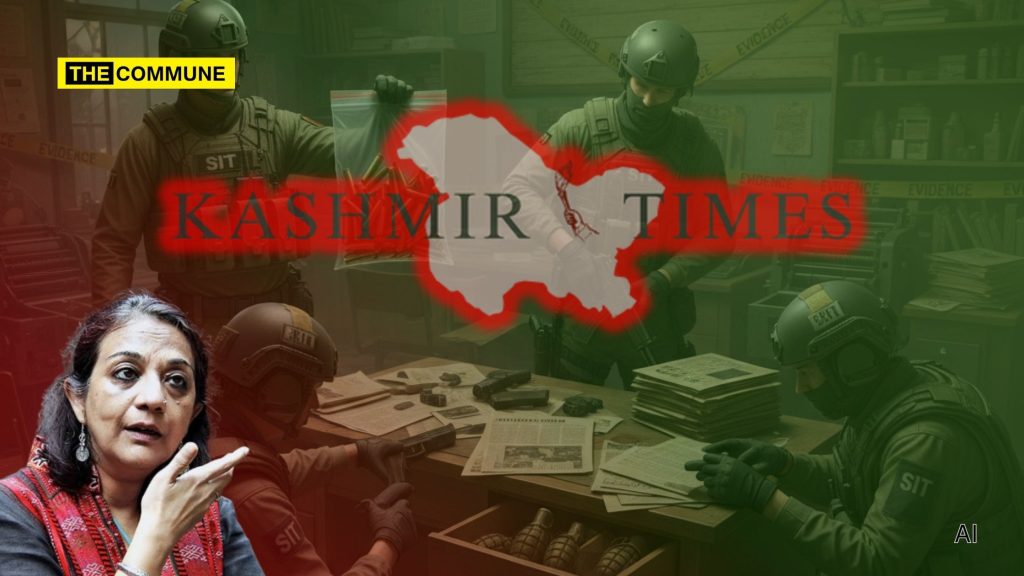
On 20 November 2025, the State Investigation Agency (SIA) of the Jammu & Kashmir Police raided the Kashmir Times office in Jammu for allegedly promoting anti-national activities. During the search, officers recovered around 14 AK-47 cartridges, pistol rounds and three grenade levers. The SIA accused Executive Editor Anuradha Bhasin and the newspaper of participating in a “criminal conspiracy with secessionist and other anti-national entities” operating within and outside Jammu and Kashmir.
This report documents sixteen incidents from 2006–2025 that illustrate how Bhasin and Kashmir Times consistently amplified anti-India narratives, defended ISI-linked actors, legitimised pro-Pakistan positions and normalised Islamist violence, reflecting a long-running pattern of hostile information activity.
#1 SIA Raid on Kashmir Times Office, Ammunition Seized – 20 November 2025
On 20 November 2025, the J&K Police’s State Investigation Agency raided the Kashmir Times office in Jammu for alleged anti-national activity. Officials recovered around 14 AK-47 cartridges, pistol rounds and three grenade levers. An FIR under the Unlawful Activities (Prevention) Act was filed against the organisation, its promoters and Executive Editor Anuradha Bhasin. The SIA alleged a criminal conspiracy between the newspaper and secessionist or anti-national entities operating inside and outside the Union Territory.
#2 Article Downplays Terror, Deflects Pakistan’s Role – 17 November 2025
On 17 November 2025, Anuradha Bhasin published an article titled Inventing an Enemy Within, arguing that criticism of “white-collar terrorism” after the Delhi blast which killed 13 people was being used to promote Islamophobia, particularly because some accused individuals were Muslim doctors.
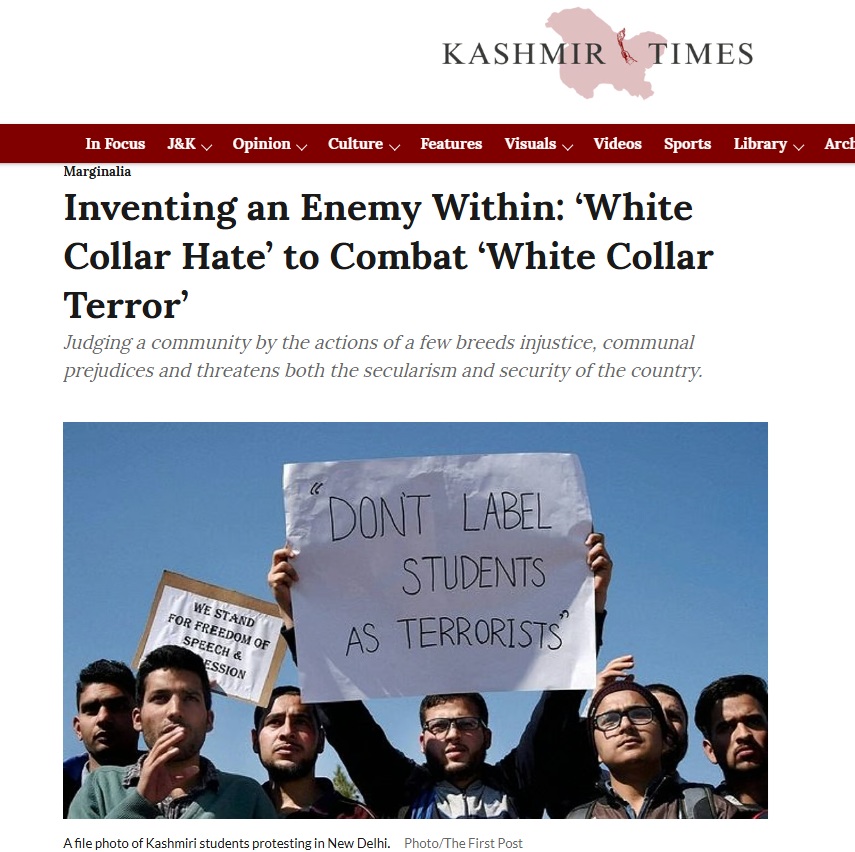

She also wrote that Pakistan had not been explicitly blamed since India had “learned the hard way” that the world had no appetite for nuclear brinkmanship and Pakistan’s military capability “couldn’t be undermined.” The article shifted focus away from the jihadist nature of the attack.
#3 J&K Government Seizes Banned Book Copies – 5 August 2025
In August 2025, the J&K government banned Anuradha Bhasin’s book A Dismantled State: The Untold Story of Kashmir After Article 370, citing propagation of false, secessionist narratives. The book included claims that the revocation of Article 370 made Kashmir “occupied” and that supporters of “Azadi” viewed the move as confirmation that “the only legal link” with India was broken. Authorities conducted seizures of the book as part of a statewide crackdown on what they described as seditious literature. The episode intensified debate around the political messaging embedded in Bhasin’s writings.
#4. Bhasin Suggests Islamist Attack Was ‘Anticipated Anger’ – 3 May 2025
After the Islamic terror attack in Pahalgam on 22 April 2025, in which Hindus unable to recite the Kalma were executed, Anuradha Bhasin told The Frontline (The Hindu) that the violence was “anticipated” by observers of Kashmir’s situation.
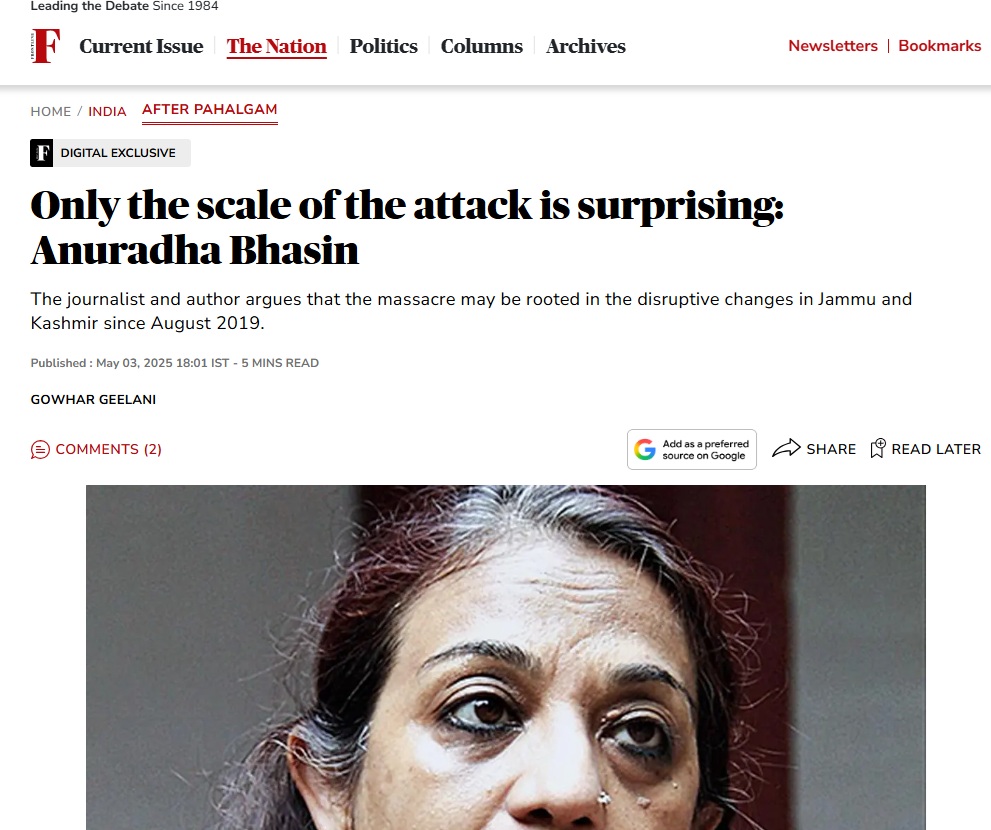

Bhasin said, “For many of us, who have been closely observing Kashmir for years, this is something that could have been easily anticipated. Not exactly in the manner in which it eventually happened, but certainly all of us knew that there could be an explosion of venom.”
She linked the attack to “deepening resentment” post-Article 370. Critics argued that her explanation normalised sectarian killings and framed a targeted jihadi massacre as a predictable “outburst.” The comment was seen as minimising the ideological motivation behind the attack.
#5 Anti-Army Caravan Article Shared; Kashmir Times Uses Pakistan’s PoK Terminology – 4 February 2024
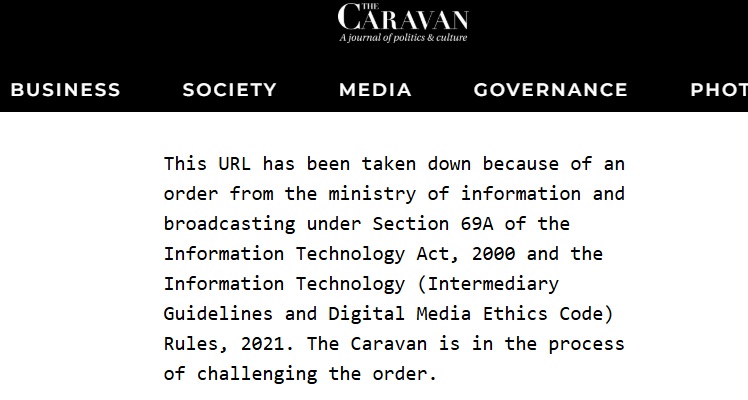
In February 2024, Bhasin shared a Caravan article alleging that the Indian Army tortured and killed civilians. Kashmir Times was simultaneously noted for referring to Pakistan-occupied Jammu & Kashmir as “Pakistan-administered Kashmir” or “PaJK,” and adding qualifiers such as “which India calls PoK.”
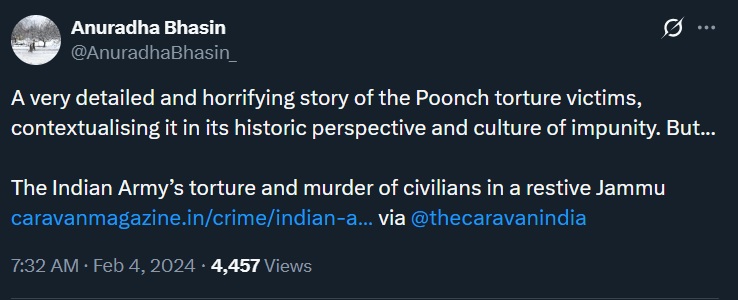


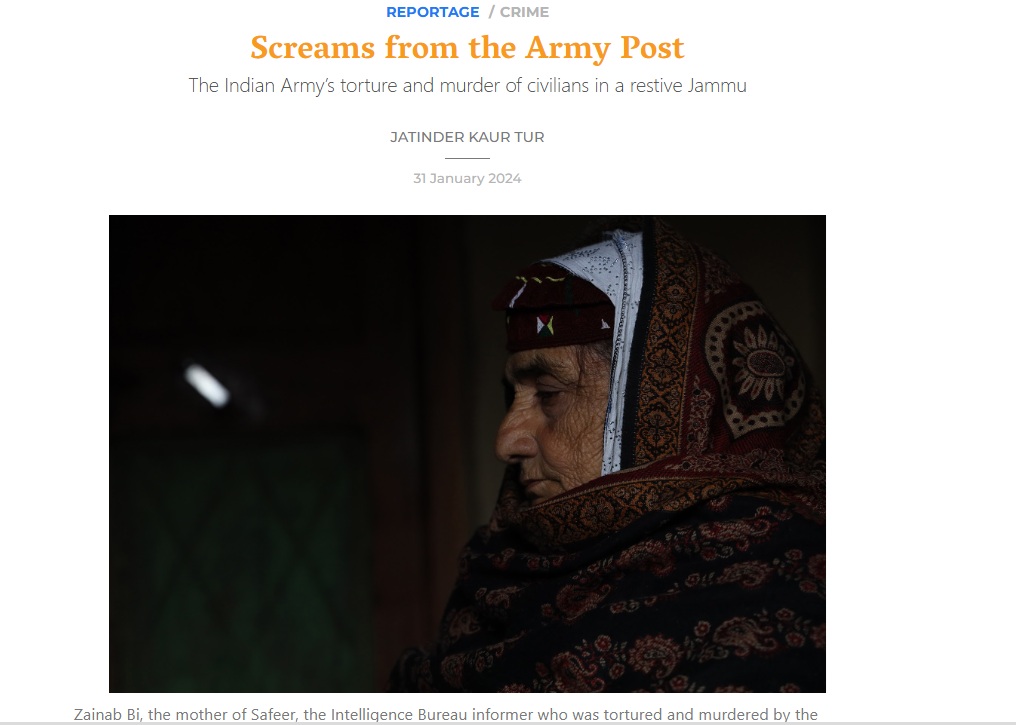
This terminology mirrored Islamabad’s lexicon. The article was later taken down after government action.

#6 Kashmir Times Publishes Prashant Bhushan’s Article Against SC’s 370 Verdict – 17 December 2023
On 17 December 2023, Kashmir Times carried an article by advocate Prashant Bhushan alleging the Supreme Court had “betrayed” the Constitution by upholding the abrogation of Article 370.
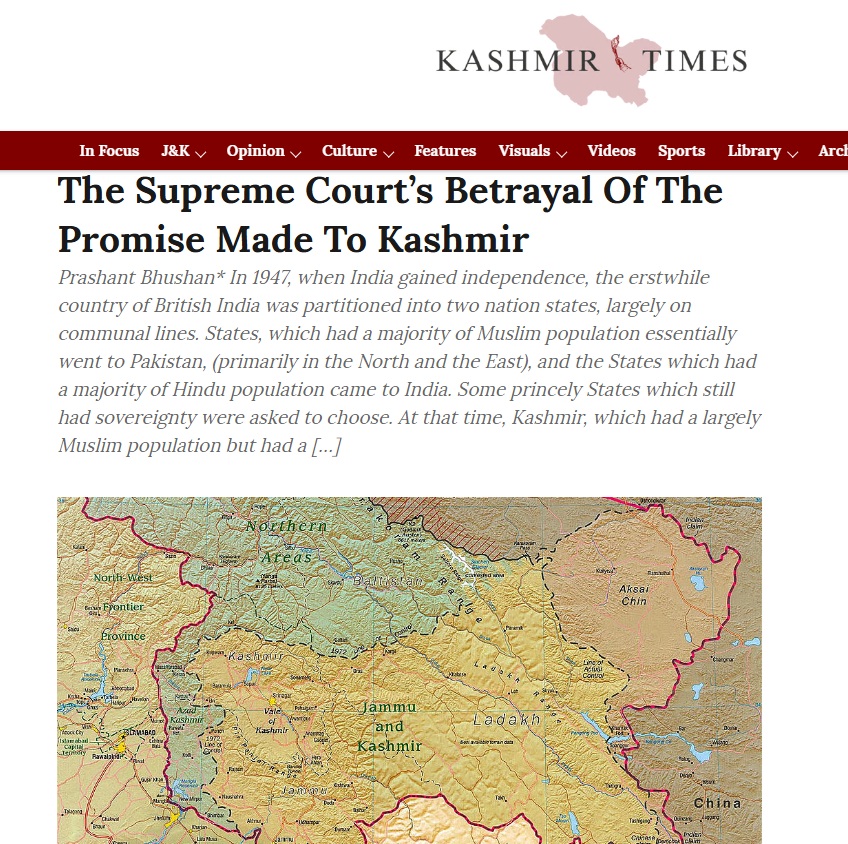

Bhushan publicly linked by critics to narratives around the 2020 Delhi riots attacked the verdict’s reasoning and characterised the court’s stance as enabling central overreach. The newspaper’s decision to publish the article seemed to be part of a pattern of amplifying legal arguments aligned with separatist or anti-government positions on J&K.
#7 Bhasin Calls Article 370 Abrogation a Constitutional Fraud – 9 December 2023
On 9 December 2023, Bhasin published a detailed essay arguing that Article 370 was not a temporary provision and that its abrogation amounted to a political and constitutional “fraud.” She contested the central government’s legal reasoning and dismissed the Supreme Court’s view that Article 370 was transitional.
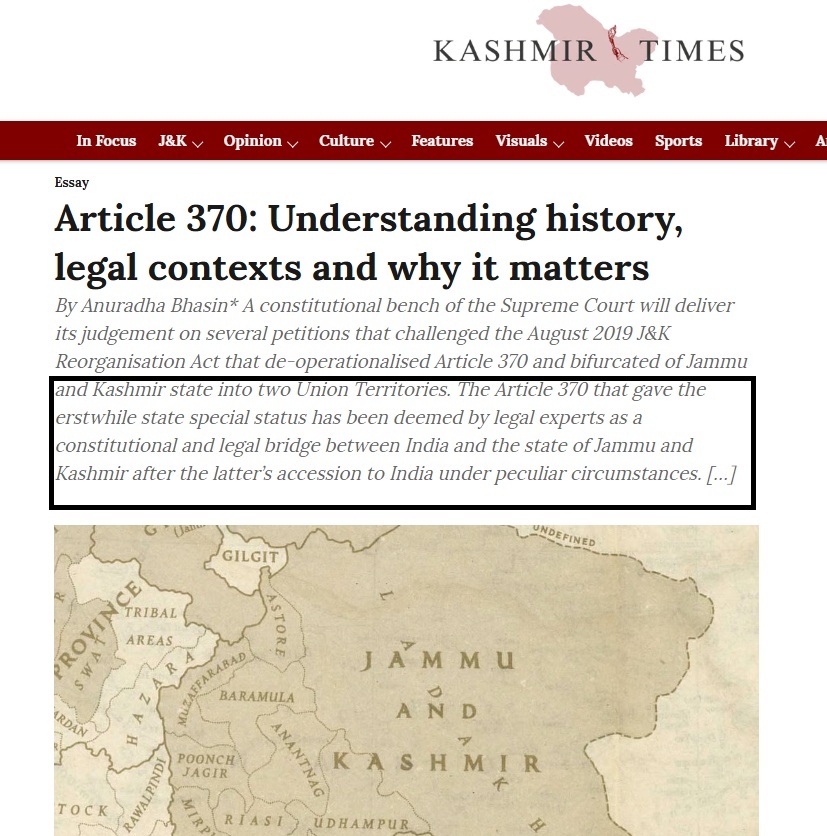

The essay held that Jammu and Kashmir’s special status should not have been revoked. The piece was another example of using opinion writing to question the legitimacy of India’s constitutional decisions on J&K.
#8 NYT Op-Ed Alleging Repressive Media Climate Under Modi – 8 March 2023
On 8 March 2023, Bhasin wrote a New York Times op-ed titled Modi’s Final Assault on India’s Press Freedom Has Begun.
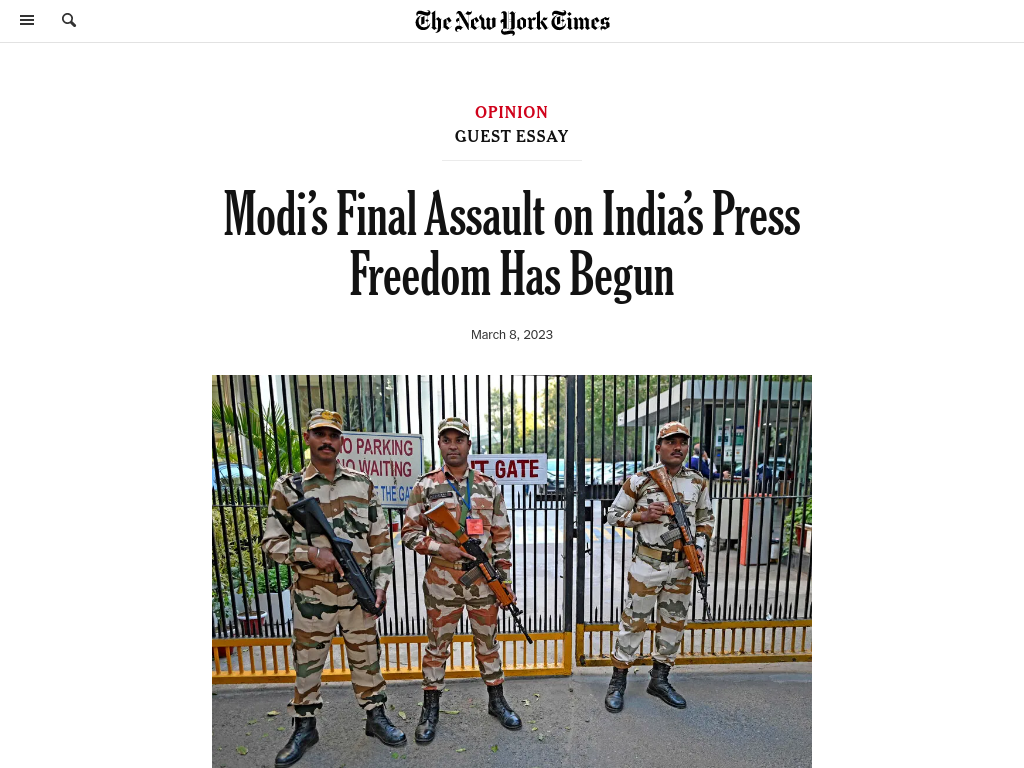

She accused the government of imposing repressive media controls, intimidating independent outlets and creating an “information vacuum” in J&K. She claimed that Kashmir Times could not survive under the prevailing environment.
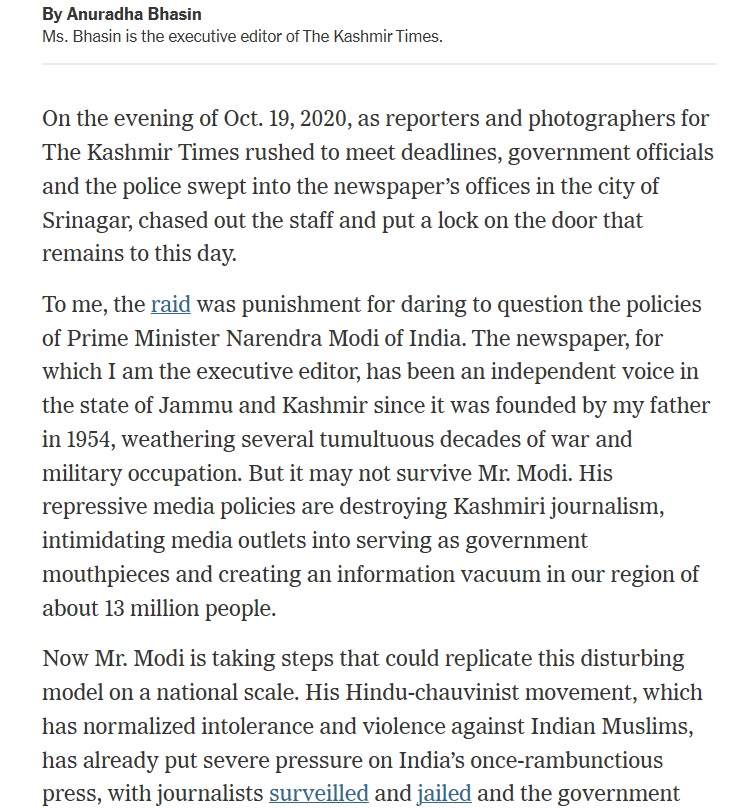

The article fully misrepresented the situation by projecting India as suppressing dissent and aligned with foreign commentary echoing Pakistan’s narrative.
#9 Srinagar Office Sealed After Death of Founder Ved Bhasin – 19 October 2020
On 19 October 2020, the J&K administration sealed one of the two government-allotted properties used by Kashmir Times in Srinagar. One property functioned as office space; the other had been allotted as the residence of founder Ved Bhasin, who died in 2015. Authorities stated that the family failed to vacate the property despite notices. Anuradha Bhasin alleged that officials “locked down” the office unlawfully. The dispute highlighted longstanding clashes between the newspaper and the administration over state-allotted accommodations.
#10 Bhasin Moves Supreme Court Against Media Restrictions After 370 Abrogation – 10 August 2019
On 10 August 2019, following the abrogation of Article 370 and the imposition of restrictions in J&K, Anuradha Bhasin approached the Supreme Court challenging curbs on press movement and internet shutdowns.
Abrogation of #Article370 challenged in Supreme Court
READ: https://t.co/V1wbKmse3r pic.twitter.com/W0XKbCOzAb
— The Times Of India (@timesofindia) August 10, 2019
#11 Ved Bhasin’s Links to ISI Mole Ghulam Nabi Fai – 7 November 2015
After Ved Bhasin’s death in 2015, ISI-linked Kashmiri lobbyist Ghulam Nabi Fai praised him as someone who believed Kashmir should be a separate state.
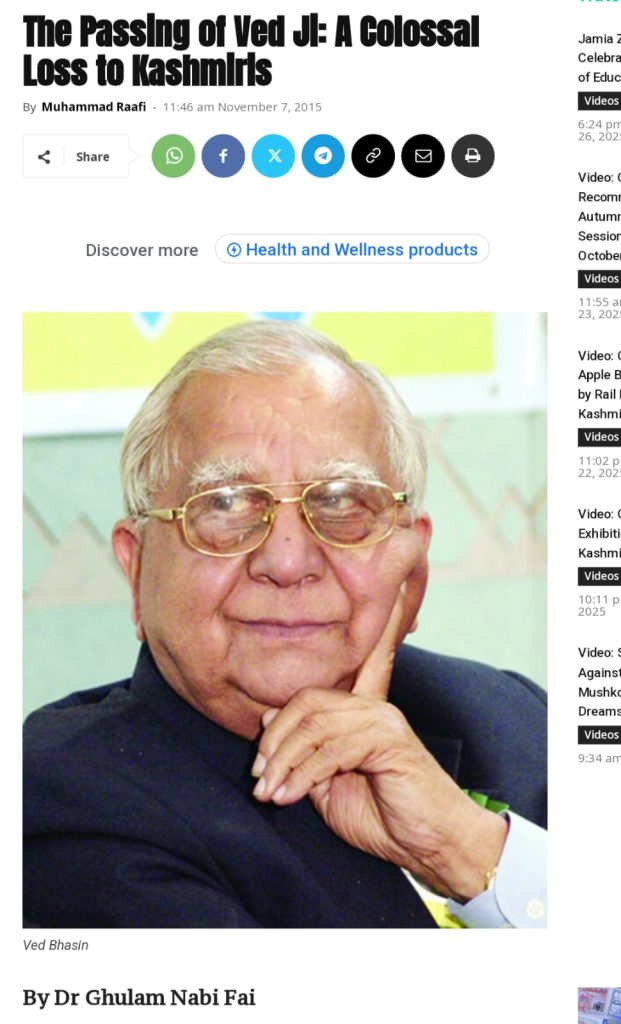

Fai, later convicted in the U.S. for concealing ISI funding, had longstanding ties with Bhasin, who frequently engaged with his network. Fai described Ved Bhasin as a supporter of positions aligned with Pakistan’s Kashmir narrative.

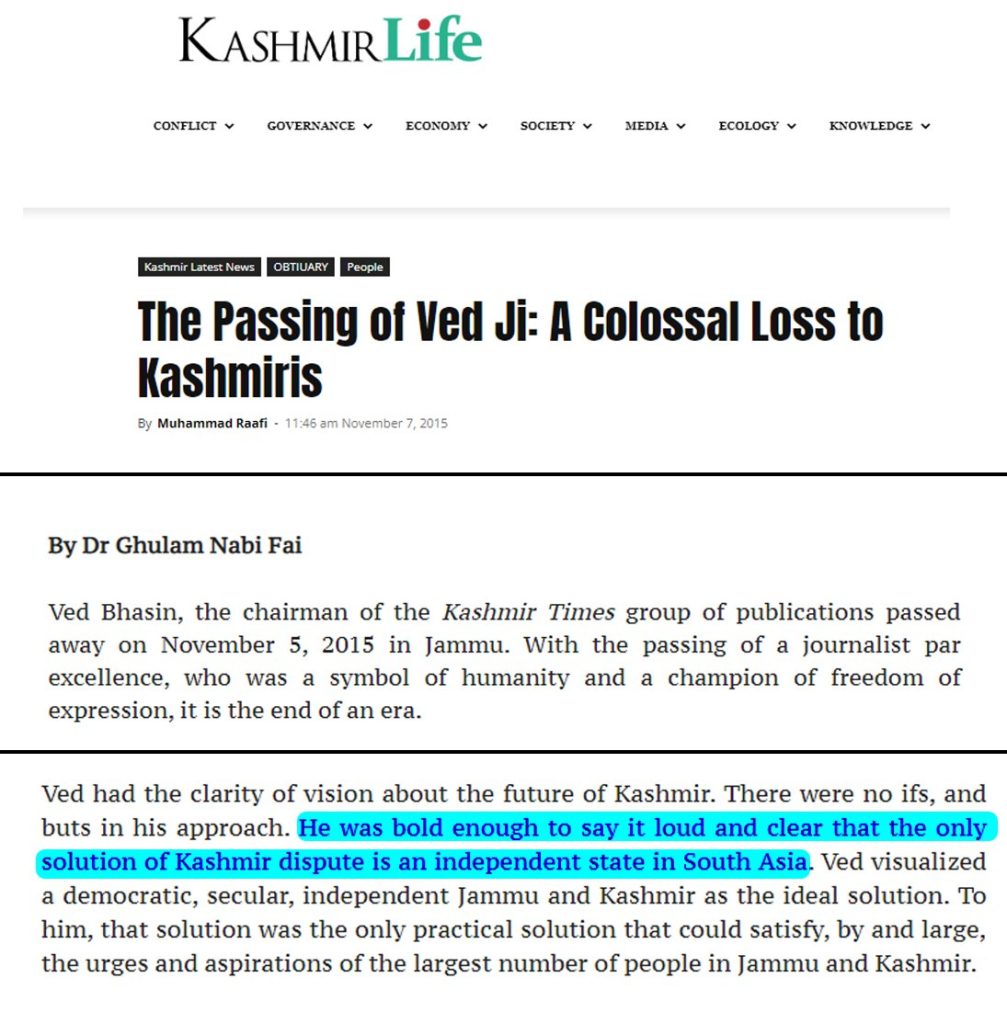
The obituary note revived questions about the newspaper founder’s ideological leanings.
#12 JKLF Remembers Ved Bhasin’s Separatist Positions – 2015
Following Ved Bhasin’s death in 2015, the Jammu and Kashmir Liberation Front (JKLF) and associated networks commemorated him in Pakistan and elsewhere.
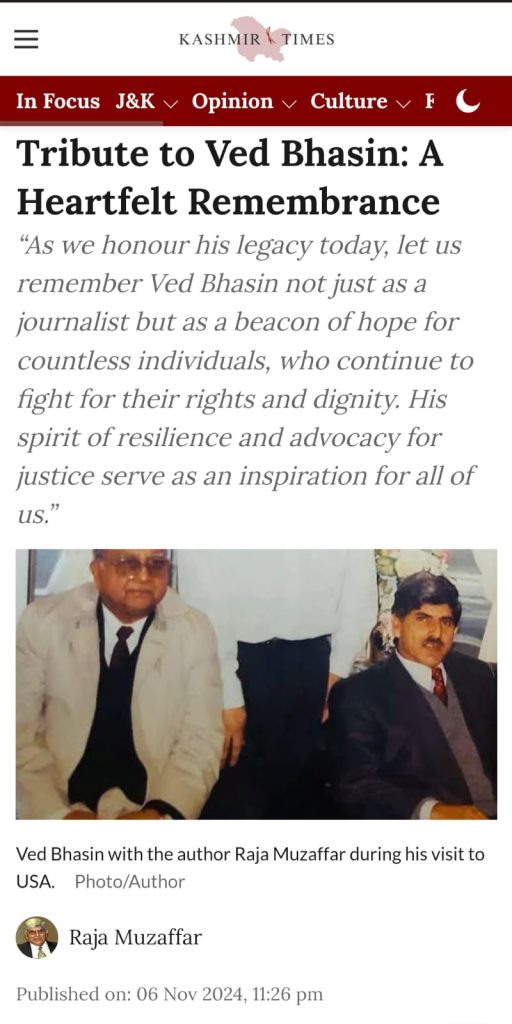
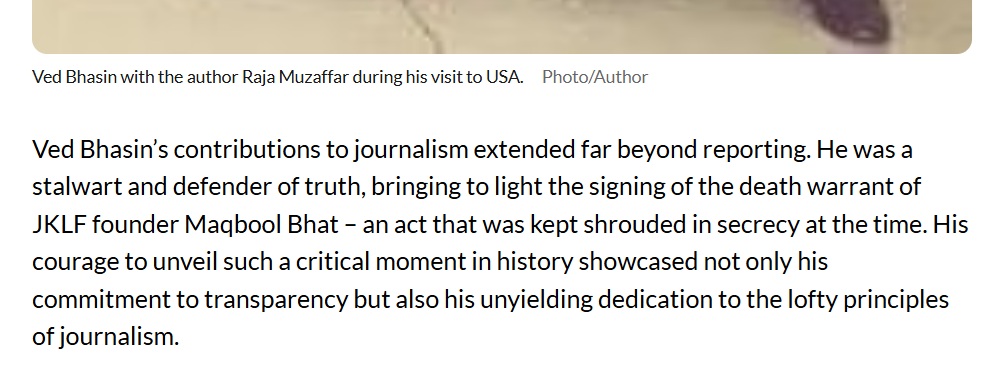


The tributes highlighted Ved Bhasin’s sympathy for separatist positions, including support for JKLF founder Maqbool Bhat. These memorial events showed the esteem in which separatist groups held him, reinforcing earlier allegations of his alignment with Pakistan-backed narratives. For critics, this reinforced concerns about the ideological inheritance of Kashmir Times under his daughter Anuradha Bhasin.
#13 Articles Glorifying Afzal Guru and Maqbool Bhat – 14 February 2014
On 10 February 2014, a year after Parliament attack convict Afzal Guru was executed, Anuradha Bhasin wrote in Countercurrents portraying Guru as a victim of Indian injustice and describing him as a “martyr of India’s arrogance.”
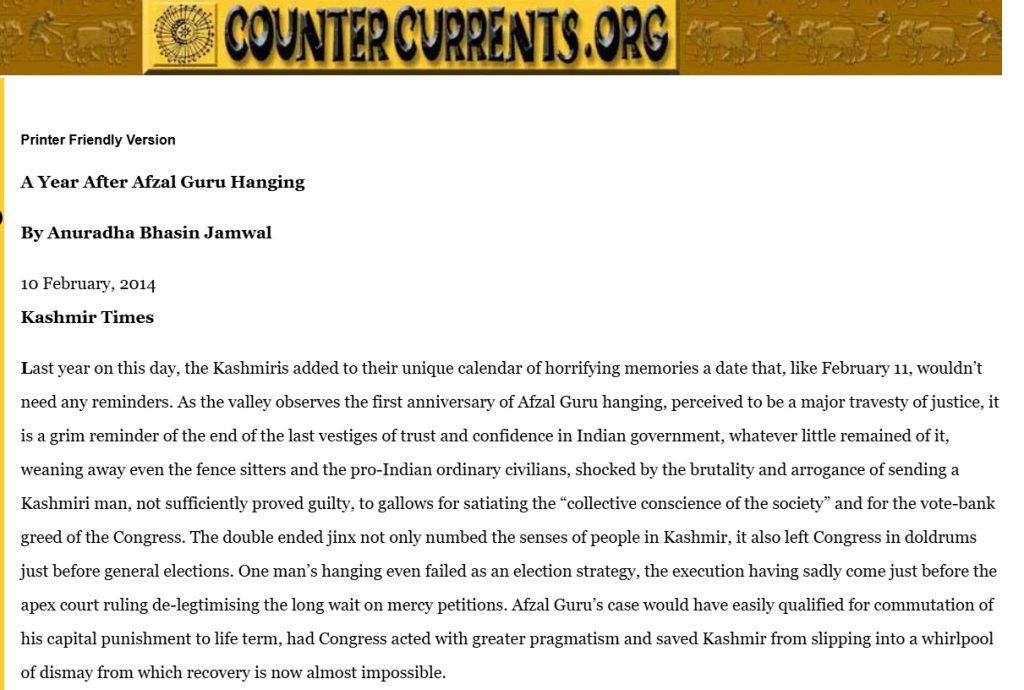

She argued that he lacked a fair opportunity to defend himself.
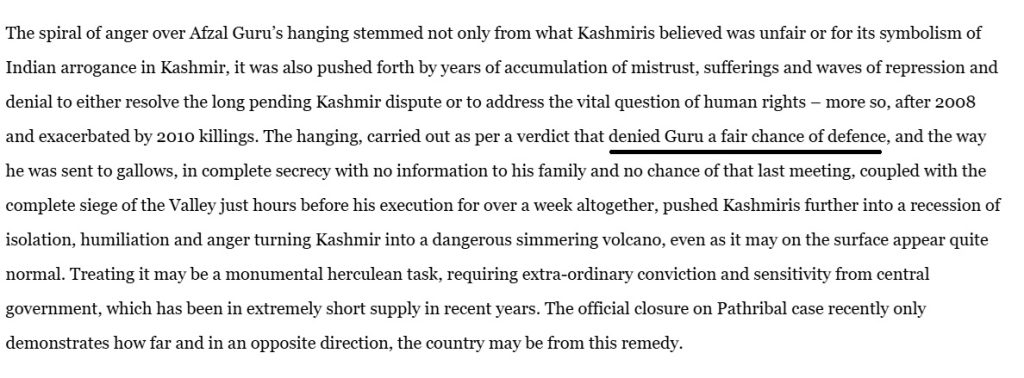

The article also expressed sympathy for separatist leader Maqbool Butt, executed in 1984.
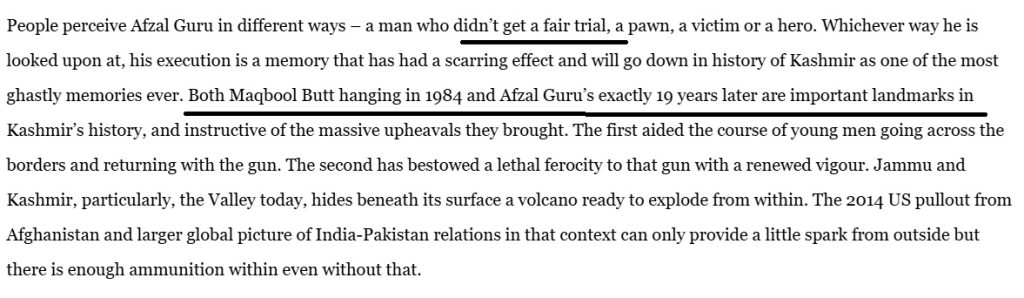

This piece can be seen as overt glorification of convicted terrorists and a continuation of separatist-aligned editorial rhetoric.
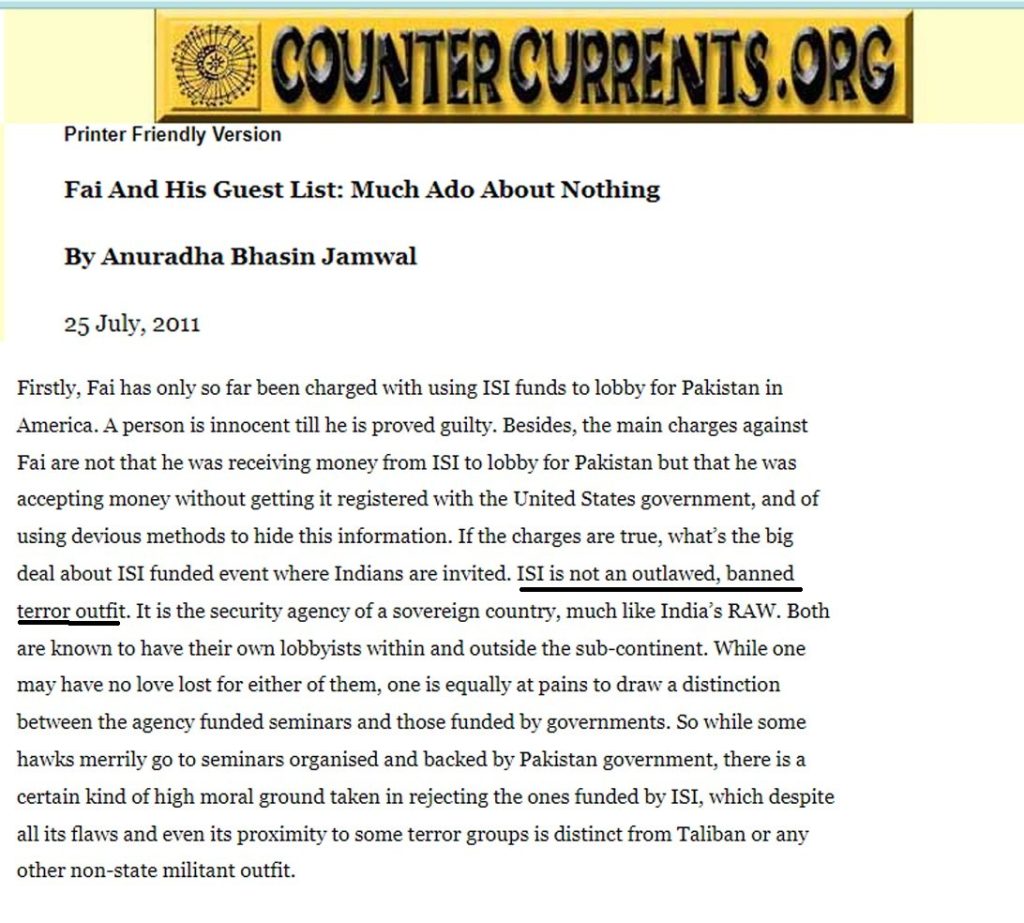
#14 Bhasin Defends ISI-Linked Lobbyist Ghulam Nabi Fai – 25 July 2011
On 25 July 2011, after U.S. authorities charged Ghulam Nabi Fai with using ISI funds for anti-India lobbying, Anuradha Bhasin wrote a long article defending him. She downplayed the charges, argued the ISI was “not an outlawed outfit,” and criticised Indian media for exposing his Pakistan-backed operations.

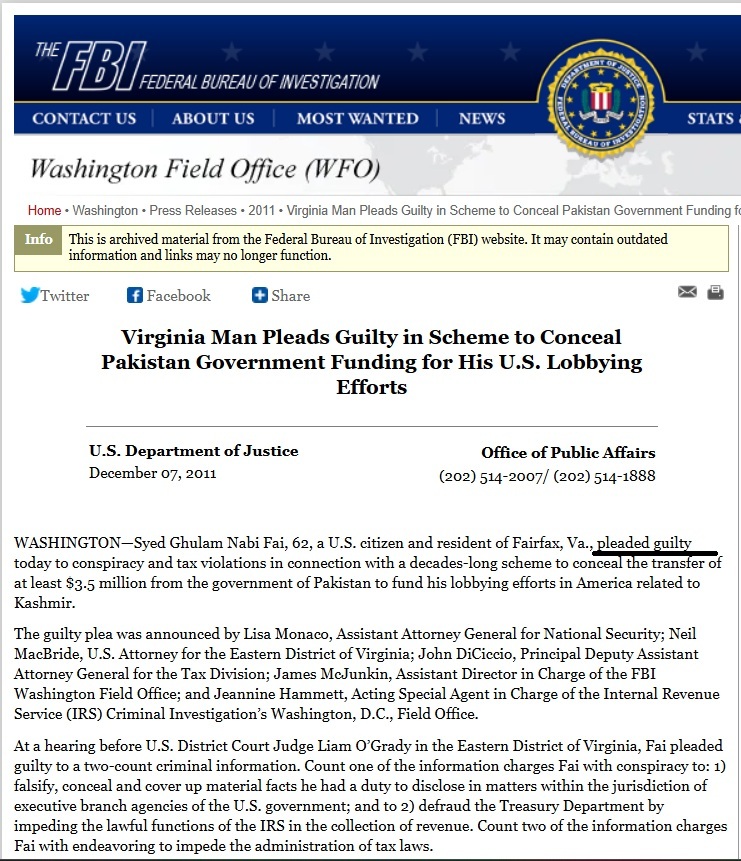
Despite Fai later pleading guilty to concealing ISI funding and being jailed, Bhasin continued associating with his networks.

In 2015 she was featured at the International Kashmir Conference where Fai remained a key figure.
#15 EPW Paper Portraying Security Forces as Oppressors – 10 July 2010
On 10 July 2010, Bhasin published an Economic & Political Weekly paper titled Fuelling Rage in Kashmir. She described Indian security forces as brutal actors responsible for killing Kashmiri youth, referencing the death of a nine-year-old boy. The paper argued that forces responded excessively even to stone-pelting protests and suggested that government “insensitivity” was provoking public anger.
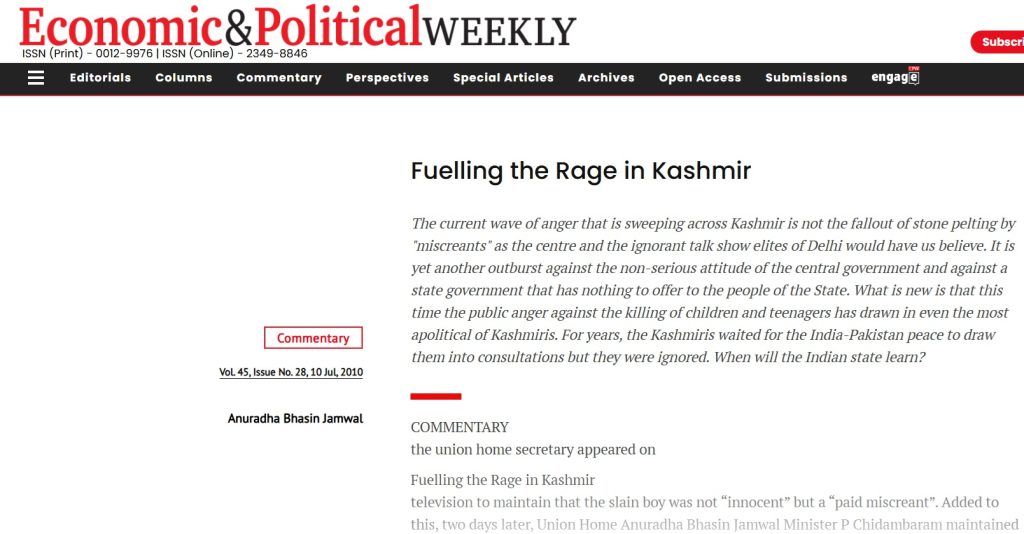

Critics said the article selectively portrayed security responses while ignoring separatist violence.
#16 Participation in ISI-Linked Fai Conferences – 20–21 July 2006
Between 20–21 July 2006, Ved Bhasin and Anuradha Bhasin attended conferences in the U.S. organised by ISI operative Ghulam Nabi Fai and his Kashmir American Council. Attendees included ISI-linked figures such as Ejaz-ul-Haq, along with academics like Angana Chatterji and activist Gautam Navlakha.

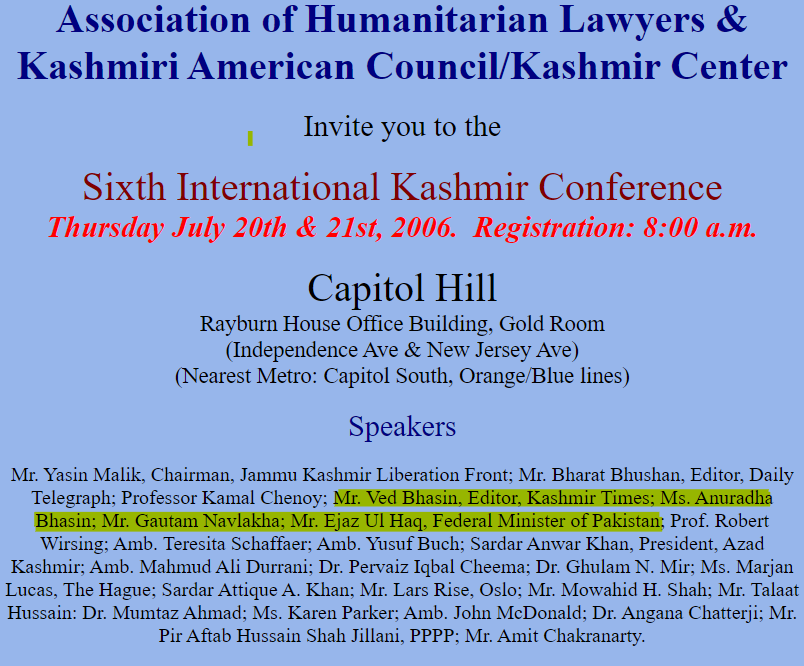
These events later came under scrutiny after Fai’s conviction for secretly funnelling ISI money into anti-India lobbying. Attendance at these conferences has been cited as early evidence of alignment with Pakistan-backed advocacy networks.
Subscribe to our channels on WhatsApp, Telegram, Instagram and YouTube to get the best stories of the day delivered to you personally.