


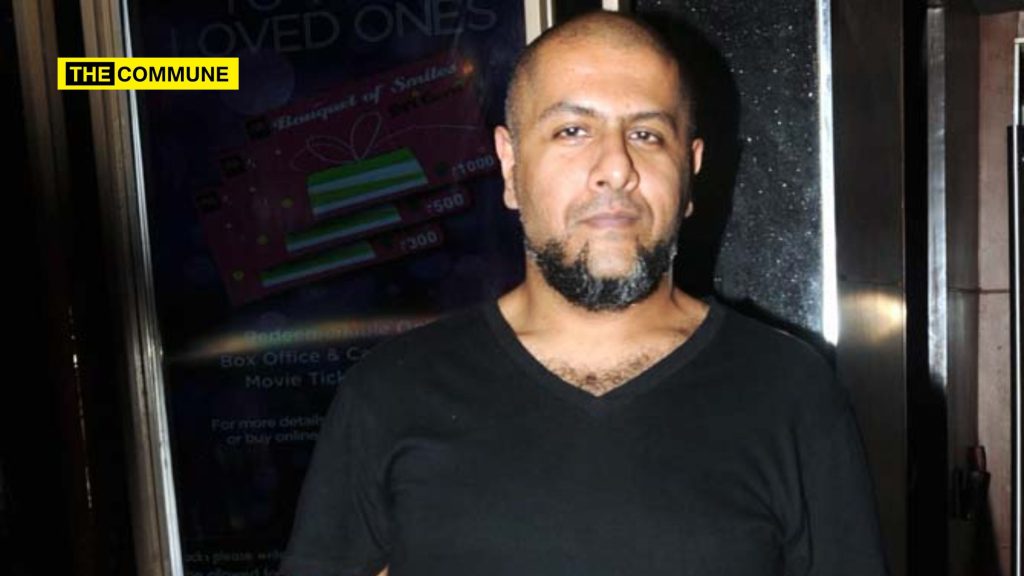
On 5 January 2026, the Supreme Court rejected the bail petitions of Umar Khalid, who has been described by investigative agencies as a “key conspirator” in the Delhi riots case. Following the court’s decision, a video posted by music composer Vishal Dadlani began circulating widely on social media.
In the video, Dadlani claimed that a clip allegedly showing Umar Khalid raising anti-national slogans was doctored. However, Umar Khalid has previously made controversial statements at multiple public forums, including remarks in support of Kashmir’s independence and comments critical of the Supreme Court in connection with the Afzal Guru case.
This report is based on ten significant events related to Vishal Dadlani’s life and career, drawn from music records and publicly available information spanning the period from 1973 to 2025.
Background and Early Life
Vishal Dadlani was born on 28 June 1973 in Mumbai, Maharashtra, into a Sindhi family that had long been settled in the city. He completed his schooling at Hill Grange High School and later enrolled at Jai Hind College, University of Mumbai, where he studied for about two years between 1989 and 1990. He subsequently completed a Bachelor of Commerce (B.Com) degree from H.R. College of Commerce and Economics, Churchgate. During his college years, his interests shifted decisively from academics toward rock music and live performance, laying the foundation for his future career in music.
Formation of Pentagram and Entry into Music
During his college years, Dadlani gravitated toward rock music, which led to the formation of “Pentagram,” one of India’s earliest and most prominent Indian rock bands. The band became known for its alternative sound and live performances, helping establish a non-film music culture in urban India. This phase marked Dadlani’s transition from an aspiring musician to a recognized performer and composer, eventually opening the door for his entry into mainstream Bollywood music as both a singer and music producer.
Playback Singing and Film Music Career
As a playback singer and composer, Vishal Dadlani delivered several commercially successful and popular songs across genres. His notable tracks include “Dhoom Again,” “Kurbaan Hua,” “Jee Le Zaraa,” “Marjaani,” “I Feel Good,” “Jab Mila Tu,” “Tu Meri,” “Swag Se Swagat,” “Bala,” and “Har Fun Maula.” Known for his energetic voice and contemporary style, Dadlani has contributed to over 280 songs. In 2004, as part of the Vishal–Shekhar duo, he won the Filmfare R.D. Burman Award for New Music Talent for Jhankaar Beats, and in 2012 received the IIFA Award for Best Background Score for Ra.One.
Television Career and Exit from Indian Idol
Vishal Dadlani became a household name on television as a judge on the popular singing reality show Indian Idol, first appearing in the role in 2013. His direct style of judging and on-screen persona attracted both popularity and criticism. On 8 April 2025, Dadlani officially exited the show, ending a long association that had significantly amplified his public visibility beyond the music industry.
Association with the Aam Aadmi Party
Dadlani’s political engagement began during the early phase of the India Against Corruption movement in 2011, which later gave rise to the Aam Aadmi Party. In 2015, he actively supported the party by contributing to its campaign messaging and composing the election song “Paanch Saal Kejriwal.” In 2020, he again backed the party by singing the campaign song “Lage Raho Kejriwal” for the Delhi Assembly elections and publicly campaigned for party candidates in areas such as Ramesh Nagar.
2016 Jain Monk Controversy and Apology
On 26 August 2016, Dadlani courted controversy after commenting on Jain monk Tarun Sagar Maharaj’s address in the Haryana Assembly. His remarks, perceived as offensive, triggered widespread backlash. The Punjab and Haryana High Court directed him to appear before Ambala Police for investigation. Facing intense criticism, Dadlani visited Tarun Sagar Maharaj in Chandigarh on 21 September 2016, where he publicly apologised by folding his hands, bowing his head, and holding his ears. He subsequently announced his withdrawal from active political campaigning while stating emotional attachment to AAP.
Support for Kanhaiya Kumar in Sedition Case
On 27 February 2020, Dadlani publicly opposed AAP’s decision to grant sanction for prosecution in a sedition case against Kanhaiya Kumar and others. The case stemmed from a 9 February 2016 incident at Jawaharlal Nehru University where allegedly seditious slogans were raised. Delhi Police had filed a chargesheet on 14 January 2019. Dadlani criticized the party’s stance, leading to a visible rift between him and the political organization he had previously supported.
Remarks on Former CJI Ranjan Gogoi
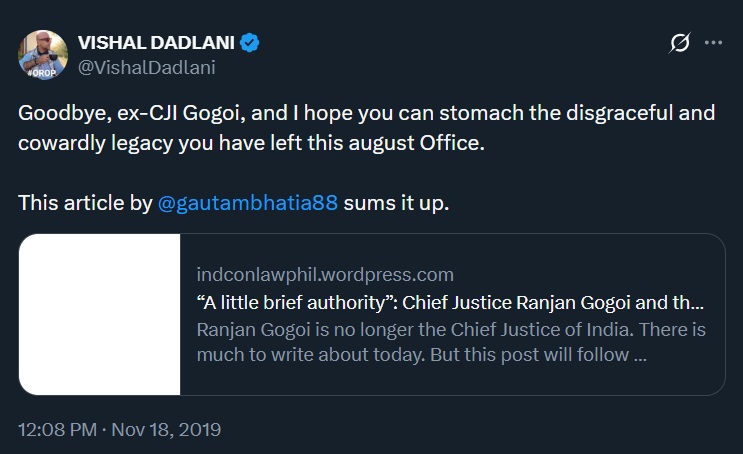
On 18 November 2019, following the retirement of former Chief Justice of India Ranjan Gogoi, Dadlani posted a tweet making sharp and critical remarks about Gogoi’s judicial legacy. The tweet, posted a day after Gogoi’s retirement on 17 November 2019, drew strong public reactions and criticism, with many accusing Dadlani of crossing the line in his commentary on the judiciary.

Comments on India–Pakistan Conflict
On 6 June 2024, Dadlani described the India–Pakistan conflict in political terms, urging peace and diplomacy over war in a public post following a ceasefire.
Kangana Ranaut Incident
In June 2024, he supported the CISF constable Kulwinder Kaur, who had slapped actor and MP Kangana Ranaut at Chandigarh airport. Dadlani stated that if the constable lost her job, he would help her secure employment, attributing her actions to prolonged emotional distress.
Takes a Jibe At ‘Vande Mataram’ debate
On 10 December 2025, on the occasion of the 150th anniversary of India’s national song Vande Mataram, a 10-hour debate was held in the Lok Sabha. Reacting to this, music composer Vishal Dadlani posted a video on Instagram. In the video, he sarcastically said: “Hello brothers and sisters, there’s big good news for you. Yesterday our Parliament — India’s Parliament — spent 10 hours debating Vande Mataram. Because of this debate, India’s unemployment problem has been solved, the IndiGo problem has been solved, the air pollution problem has been solved. Imagine, a poem was debated for 10 hours. This debate is funded by your tax money. One minute in Parliament costs ₹2.5 lakh. Ten hours means 600 minutes. Do the math.”
बॉलीवुड गायक विशाल ददलानी ने संसद में 8 दिसंबर को ‘वंदे मातरम’ पर हुई 10 घंटे लंबी बहस पर नाराज़गी जताई है।
उन्होंने सोशल मीडिया पर प्रतिक्रिया देते हुए कहा कि,
“इस बहस के कारण लगता है जैसे बेरोज़गारी, इंडिगो की समस्या और प्रदूषण (हवा का मुद्दा) सब हल हो गए हैं।”
इस तरह उन्होंने… pic.twitter.com/PfGsL16BhB— Dhruv Rathee Satire (@DhruvRathenx) December 9, 2025
Umar Khalid Support
On 5 January 2026, after the Supreme Court of India rejected bail pleas of Umar Khalid and Sharjeel Imam in the Delhi riots case, a video of Dadlani went viral in which he claimed that videos showing Umar Khalid raising anti-national slogans were doctored.
विशाल ददलानी है आम आदमी पार्टी के कई मंच पर देखा गया है
जब जैन मुनि तरुण सागर जी महाराज हरियाणा विधानसभा में गए थे तब इस नीच ने जैन मुनि का बेहद घटिया और अभद्र और अश्लील मजाक उड़ाया था
आज यह विशाल ददलानी कह रहा है कि राइट विंग जो क्लिप उमर खालिद की दिखा रहे हैं वह डॉक्टर्ड… pic.twitter.com/oqofQdDoaa
— 🇮🇳Jitendra pratap singh🇮🇳 (@jpsin1) January 6, 2026
Panama Papers Link
In 2016, Dadlani’s name surfaced in the Panama Papers leak, linking him and family members to investments via British Virgin Islands entities such as Sunny Blessing Holding Inc. These transactions are currently under investigation by the Enforcement Directorate.
Subscribe to our channels on Telegram, WhatsApp, and Instagram and get the best stories of the day delivered to you personally.