


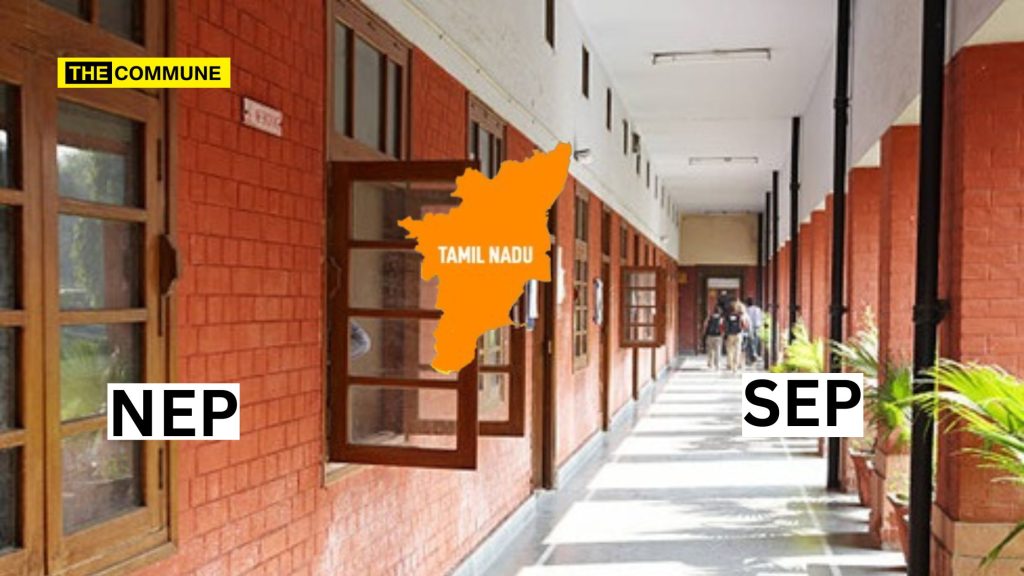
With no State Education Policy (SEP) for higher education yet released, Tamil Nadu’s state universities have begun implementing several components of the National Education Policy (NEP), officials told TNIE. This comes despite the ruling DMK’s vocal opposition to some aspects of the national policy.
The state government released the SEP for school education earlier this month, following prolonged delays. However, the higher education component of the policy remains pending, even though a committee tasked with drafting the SEP submitted its report in July 2024.
Meanwhile, universities are under pressure from central agencies such as the University Grants Commission (UGC) and the National Assessment and Accreditation Council (NAAC), which link funding and recognition to NEP compliance. Officials said this has compelled many institutions to adopt NEP measures despite the absence of a state-level policy.
For example, the UGC had set a deadline of December 31, 2024, for universities to register with the Academic Bank of Credits (ABC), designed to facilitate multiple entry and exit options for students—a key NEP feature opposed by the DMK. Publicly available data shows that 17 of 22 state universities have already registered and begun implementing ABC.
“If we defied the mandate, we would have lost all opportunities to get funding from the UGC,” said an official from the University of Madras, a sentiment echoed across other state universities. Another registrar noted that 14 state universities currently do not have a vice-chancellor, further straining their administrative capacity.
Several universities have also taken steps to align with NEP’s recommendations on curriculum and institutional structure. The University of Madras, Madurai Kamaraj University, Bharathiar University, Bharathidasan University, and Manonmaniam Sundaranar University have renamed their Human Resource Development (HRD) centres as Malaviya Mission Teacher Training Centres, following UGC directives.
Alagappa University has integrated the Indian Knowledge System (IKS), promoting courses in temple architecture and arts. Anna University has launched courses such as Ariviyal Tamil (Scientific Thought in Tamil) and Tamilar Marabu (Heritage of Tamils) since 2023, in line with NEP’s IKS framework.
The University of Madras also planned to introduce dual degree programmes, a key NEP initiative, but postponed implementation pending the SEP.
Officials said NAAC reporting requirements further compel universities to adopt NEP-aligned measures. “Universities have to submit annual reports to NAAC, including NEP-related initiatives. Ignoring them could directly impact rankings,” said one vice-chancellor. Another added that while major reforms like four-year undergraduate programmes and multiple entry-exit systems are yet to be fully implemented, around 70% of NEP recommendations have been adopted, often under different nomenclature such as curriculum revamping and outcome-based learning.
E. Balagurusamy, former vice-chancellor of Anna University, described the delay in releasing the SEP as an “administrative crisis” that leaves universities directionless, with students bearing the consequences. L. Jawahar Nesan, former member of the SEP committee, also criticised the SEP for school education as resembling NEP rather than creating a unique policy for Tamil Nadu, cautioning that higher education reforms could face similar shortcomings.
Higher education department officials said the SEP is in its final review stages and is expected to be released soon.
(With inputs from The New Indian Express)
Subscribe to our channels on Telegram, WhatsApp, and Instagram and get the best stories of the day delivered to you personally.