


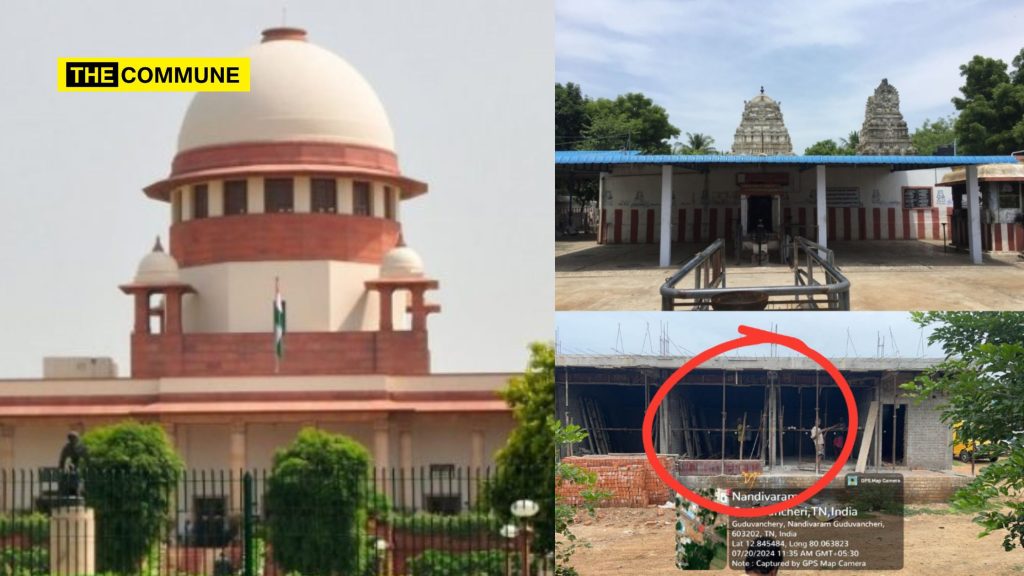
In a significant setback for the Tamil Nadu Hindu Religious and Charitable Endowments (HR&CE) Department, the Supreme Court of India has rejected its Special Leave Petition, effectively upholding a pivotal ruling by the First Bench of the Madras High Court. This judgment puts a firm stop to the construction of commercial complexes using temple funds and properties.
Good News! Advocate B. Jagannnath of Madras High Court does it again.
The @tnhrcedept which is present in Hindu Temples by FRAUD (and only by FRAUD) went on appeal against an order of Hon'ble 1st Bench of Madras High Court secured by Advocate Jagannath – where the… pic.twitter.com/NUGo3S25Uv
— trramesh (@trramesh) May 26, 2025
Case Overview
On 9 January 2025, the First Division Bench of the Madras High Court, headed by the Chief Justice, delivered a landmark decision that nullified the tender process for building a commercial complex on land and with funds belonging to Sri Nandeeswarar Temple in Nandivaram village, Chengalpet District. The court emphasized that under the Tamil Nadu Hindu Religious and Charitable Endowments Act, 1959, surplus temple funds must only be used for clearly defined religious or charitable purposes, not for commercial development.
The case originated from a Public Interest Litigation (PIL) filed by temple devotee P. Baskar, who challenged the legality of the proposed commercial project. Represented by Advocate B. Jagannath, the petitioner argued that the HR&CE Act restricts the use of temple funds to activities like promoting Hindu religious practices, feeding devotees (annadhanam), and supporting the poor through free marriages—citing Sections 36(1), 36(A), 36(B), and 66(1) of the Act.
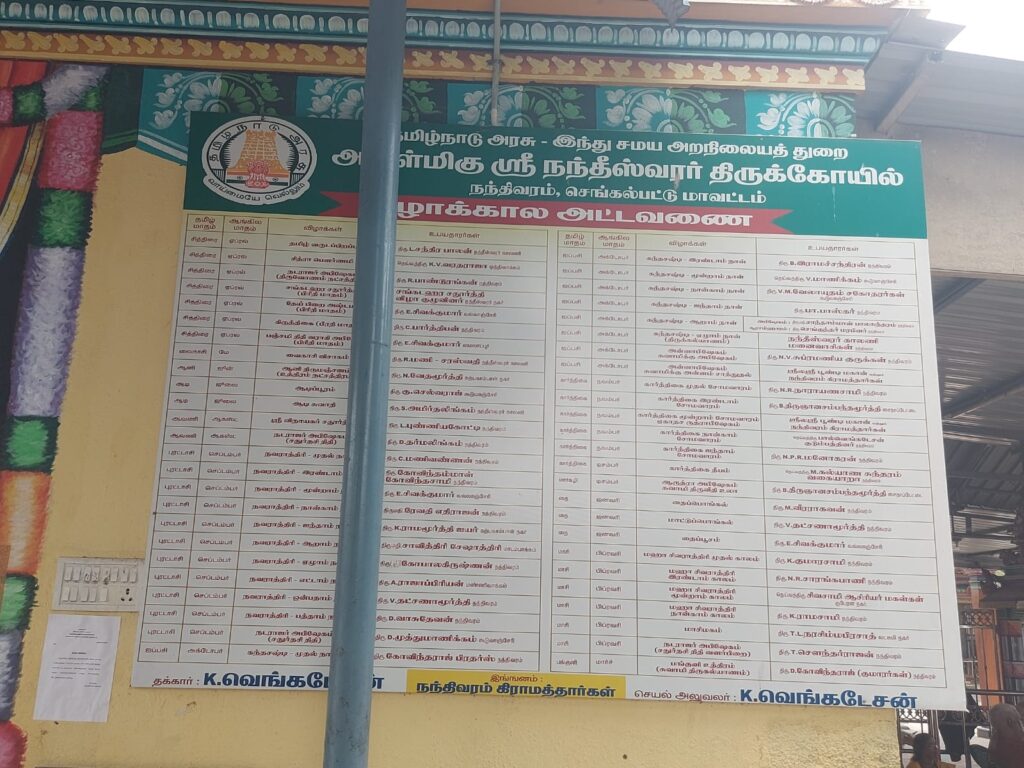

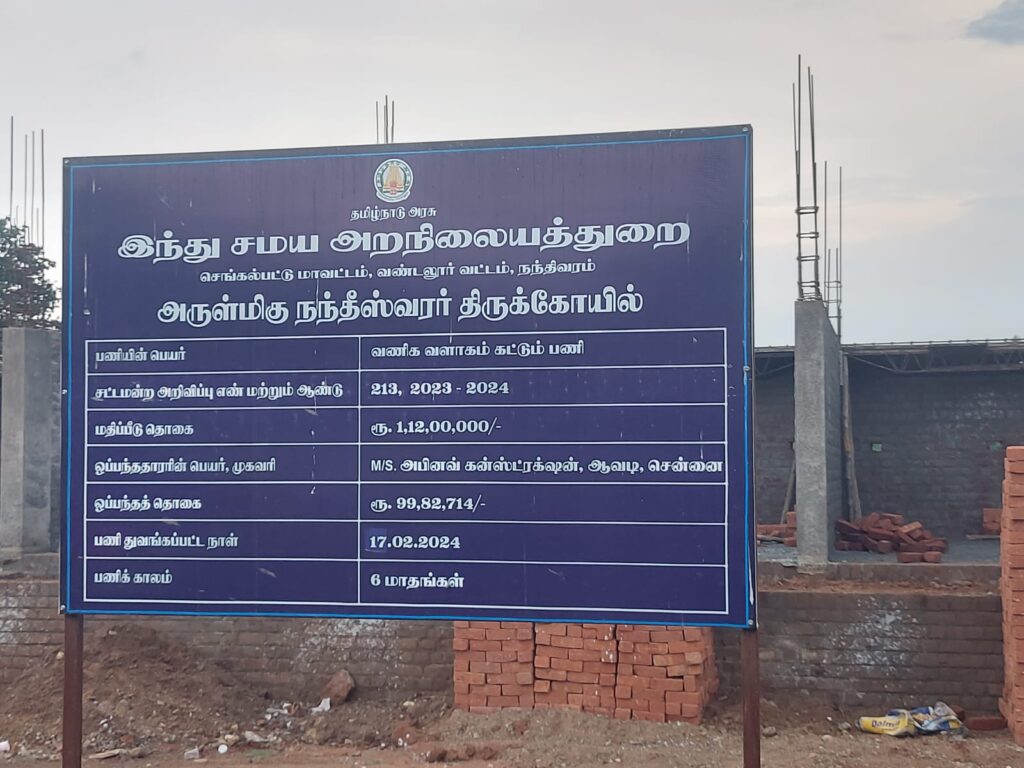
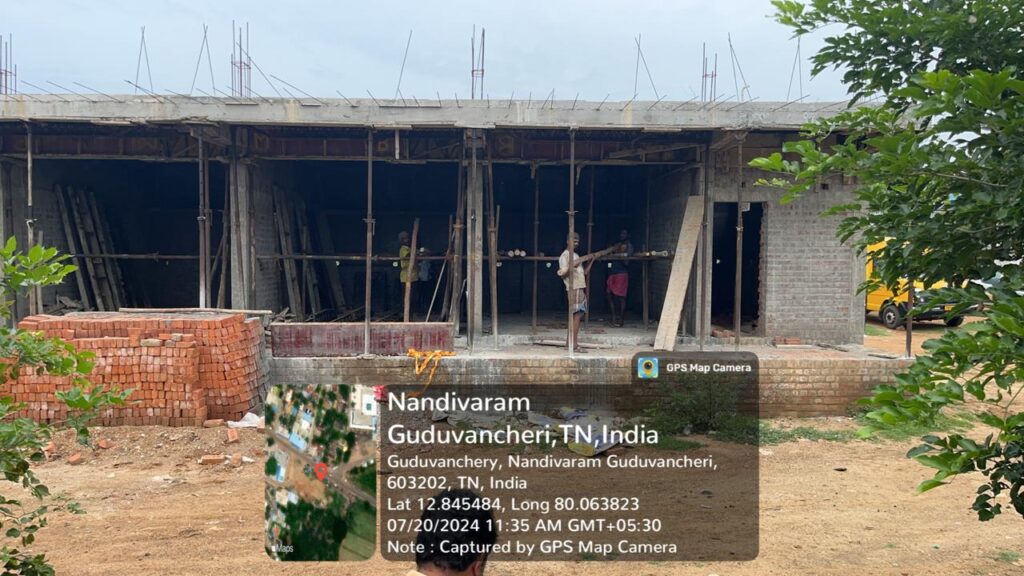

The Bench also considered a contempt petition (Cont. P. 3306 of 2024) against HR&CE officials for allegedly defying a court-issued interim stay, which had earlier barred any progress on the construction. The High Court extended the stay and consolidated both matters for hearing.
Government representatives—including the HR&CE Commissioner, Chengalpet District Collector, and other officials—were represented by Government Pleader Edwin Prabhakar and Special Government Pleader Arun Natarajan. During proceedings, the SGP informed the court that a five-member trustee board was being constituted, and assured that the commercial space would exclude alcohol, meat, and tobacco vendors, focusing only on temple-related products.
Despite these assurances, Advocate Jagannath asserted that the legality of such a commercial undertaking couldn’t be justified, as the HR&CE Act does not permit the use of temple funds for such purposes. He maintained that the absence of a direct provision for commercial construction rendered the project unlawful.
Court’s Observations
The Bench concurred with the petitioner’s arguments and noted the lack of a feasibility study or economic assessment from the HR&CE Department. It observed that investing surplus funds in fixed deposits could yield better financial returns—about 7.5%—without compromising legal compliance.
In its judgment, the court annulled the tender notice and directed that any existing structures on the property be repurposed strictly in line with the HR&CE Act—such as facilities for free marriages or annadhanam sheds. With that, the court concluded the writ petition and the associated contempt case.
Wider Impact
This verdict is seen as a major victory for devotees and a serious blow to unauthorized use of temple assets. It reinforces that temple funds must strictly be used for religious and charitable functions as outlined by law. The ruling also has broader implications, potentially influencing similar cases—such as proposed commercial ventures at temples in places like Thiruvannamalai.
This decision is being widely celebrated as a crucial measure in safeguarding temple resources from mismanagement and ensuring adherence to the legal framework governing religious institutions in Tamil Nadu.
Subscribe to our channels on Telegram, WhatsApp, and Instagram and get the best stories of the day delivered to you personally.