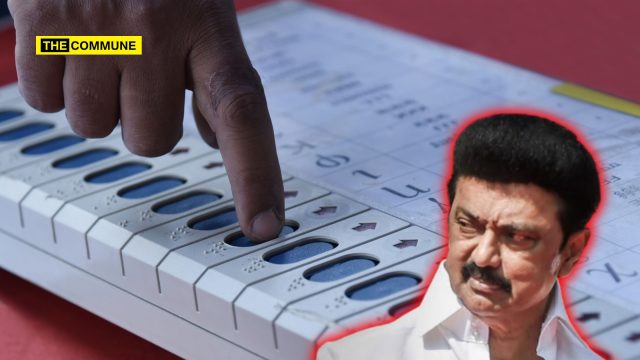
The Supreme Court is set to examine the extent to which the contents of electronic evidence must be proved after such evidence has been authenticated through a certificate under Section 65B of the Indian Evidence Act, in a case arising from a challenge to the 2011 election of former Deputy Chief Minister and DMK leader M K Stalin from the Kolathur Assembly constituency.
A Bench of Justices J K Maheshwari and Vijay Bishnoi is hearing an appeal filed by AIADMK leader Saidai S Duraisamy against a Madras High Court judgment that dismissed his election petition challenging Stalin’s victory in the 2011 Tamil Nadu Assembly elections. Stalin is now the Chief Minister of Tamil Nadu.
The dispute centres on video footage relied upon by Duraisamy to substantiate allegations of corrupt practices during the election campaign. According to the petitioner, videos of certain incidents were recorded and later transferred onto compact discs. These video CDs were challenged by Stalin on the ground that they lacked proper certification under Section 65B of the Indian Evidence Act.
Before the High Court, official witnesses testified regarding the production of the CDs. Relying on these testimonies, the High Court held that the authenticity of the CDs could not be doubted. The court also took into account a certificate issued under Section 65B (4) by one of the official witnesses and concluded that the CDs were admissible as secondary evidence.
However, despite holding the electronic evidence to be admissible, the High Court concluded that the allegations of distribution of money at the places identified by Duraisamy, with the consent of Stalin or his election agent, were not proved. The election petition was therefore dismissed, prompting Duraisamy to approach the Supreme Court.
Senior Advocates Kapil Sibal and Amit Anand Tiwari are appearing for Stalin, while Senior Advocate Dama Seshadri Naidu is representing Duraisamy.
During the hearing on the previous day, a broader concern regarding the capping of election expenditure was raised. Sibal submitted that it was for Parliament to address the issue of exorbitant election expenses. When arguments resumed, Sibal contended that while the CDs might have been produced and certified, the contents of the videos still required to be proved through cross-examination. He argued that such proof was lacking because the official witnesses could only depose about the production of the CDs, and not about the contents of the videos, including where and how the recordings were made.
Arguments were primarily advanced by Naidu, who took the Bench through the allegations made in the election petition and the evidence relied upon in support. He submitted that the High Court had erred by applying the standard of proof “beyond reasonable doubt” instead of the civil standard of “preponderance of probabilities” applicable to election petitions. The Bench specifically questioned him on the material relied upon to establish that the alleged distribution of money among voters was carried out with Stalin’s consent.
The Bench also indicated that the legal issue regarding the extent to which the contents of electronic evidence need to be proved, even after compliance with Section 65B, would require consideration.
In his election petition, Duraisamy had accused not only Stalin, but also his election agents and DMK party workers in Kolathur, of engaging in systematic bribery of voters. He alleged that the DMK employed the so-called “Thirumangalam Formula” and distributed money through methods such as “Community Feedings”, courier services, concealment of currency in newspapers, “Arathi Plate Contributions”, and slips issued to purchase consumer items.
According to the petition, Stalin, his election agent and party functionaries illegally distributed amounts ranging from Rs. 500 to Rs. 10,000 to voters from the date of nomination until the date of polling. It was further alleged that these activities took place with the consent and knowledge of Stalin, and that even on counting day, orders of the Election Commission of India were violated. Stalin was ultimately declared the returned candidate by a margin of 2,739 votes.
Duraisamy also claimed that on the eve of polling, the police seized a truckload of money intended for distribution among voters, and that DMK party workers objected to the inspection of the vehicle. He further alleged that Stalin’s wife, Durga Stalin, along with the then Mayor of Chennai, supervised the distribution of money and gifts to voters on behalf of Stalin.
In support of this allegation, Duraisamy referred to a Tamil magazine, Snehidhi, citing an interview of Durga Stalin in which she allegedly stated that after polling was over, she asked her husband, M K Stalin, to provide “cot” and necessary financial assistance to persons to whom she had made assurances during the campaign.
The Supreme Court is continuing to hear the matter.
Source: LiveLaw
Subscribe to our channels on Telegram, WhatsApp, and Instagram and get the best stories of the day delivered to you personally.