


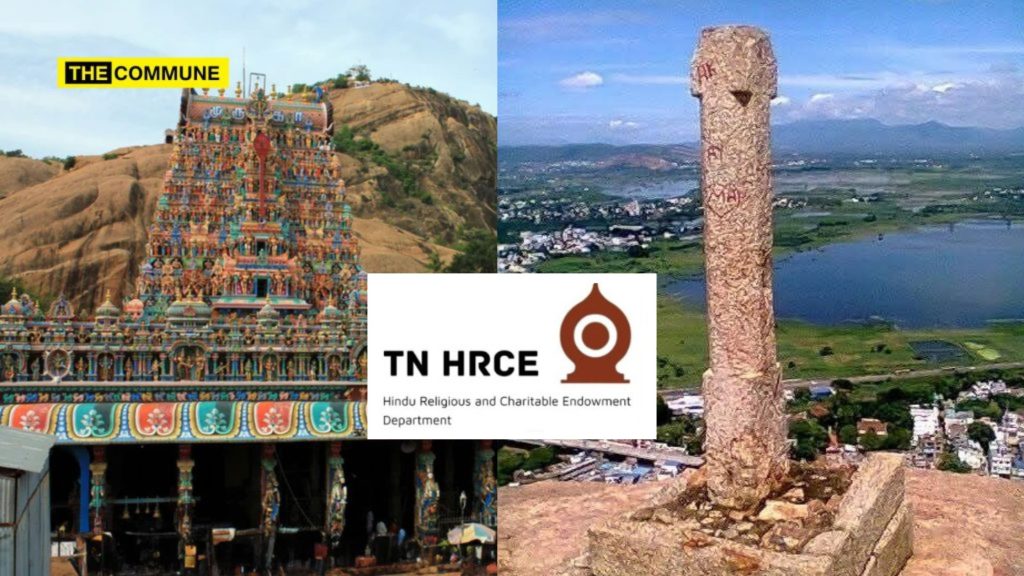
Senior advocate Valliyappan, appearing for the Hindu devotees in the Thirupparankundram hill dispute, on Wednesday accused the DMK government in Tamil Nadu of advancing multiple and contradictory claims about the deepathoon at the site without producing any evidence. He made the remarks while speaking to reporters after the court hearing.
Addressing the media, Valliyappan said the State government, the Hindu Religious and Charitable Endowments (HR&CE) Department and the police had all taken a stand against the petitioners and, in effect, against the temple itself. He said their position so far had been that there was no such structure as a “deepathoon” (lamp pillar) at the site.
“Everyone is saying different things. Some say it is a survey stone, some say it belongs to the Jain period, and some say it is just a granite stone,” Valliyappan told reporters. He alleged that if the government’s claims were correct, it should have produced documentary or expert evidence before the court. “They have not submitted any evidence to show that it is a survey stone or a Jain structure. These arguments are being made only to divert the issue,” he said.
Valliyappan asserted that the pillar stood on land identified as temple property and not within the Dargah area. He said the devotees had submitted photographs of similar deepathoon (lamp pillars) from around twenty temples, including Murugan temples at Palani and Thiruthani and several Shiva temples in Tamil Nadu and Karnataka, to show that such structures were traditionally installed in a similar arrangement.
Explaining the ritual practice, the senior advocate said a copper vessel was placed atop the pillar with a cloth wick and ghee or oil and that the lamp was lit only once a year, on the day of Thirukarthigai. He said lighting the lamp for a single day would not cause harm or disturbance to followers of any faith and could be done under temple supervision and police protection.
Referring to historical practices, Valliyappan said that in earlier times, when there was no electricity, lighting a lamp on a hilltop served both practical and spiritual purposes, with the flame visible from a distance and symbolising the divine jyoti. He also referred to the traditional practice of lighting the ‘sokkappanai’ at the foothills before lighting the lamp at the summit.
Rejecting the claim that the pillar belonged to the Jain period, Valliyappan said Jains generally performed penance in caves and did not construct temple structures of this nature. He reiterated that the State had failed to substantiate its claims with evidence and was advancing shifting explanations to avoid recognising the structure as a temple deepathoon.
The case relating to the Thirupparankundram hill dispute is ongoing before the Madurai Bench of the Madras High Court.
“Tamil Nadu Govt did not submit evidence for calling it survey stone or Jain structure, they did so to divert issues.”
– Hindu Munnani’s lawyer Valliyappan on Thriupparankundram row pic.twitter.com/69Mo4z1ySL
— News Arena India (@NewsArenaIndia) December 17, 2025
Subscribe to our channels on WhatsApp, Telegram, Instagram and YouTube to get the best stories of the day delivered to you personally.