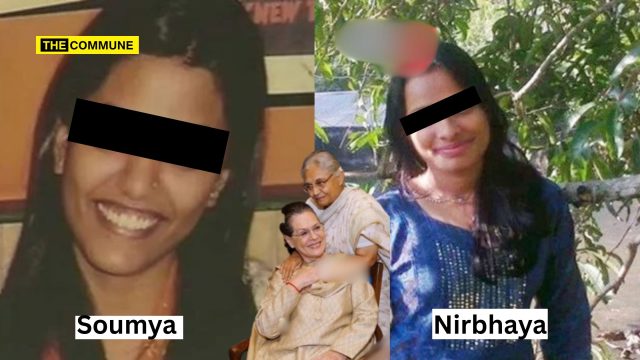
On the morning of 30 September 2008, Soumya Vishwanathan, a 25-year-old news producer with Headlines Today, left her Jhandewalan office at 3:03 AM after covering a breaking news event. She called her father at 3:15 AM to say she was on her way. Within thirty minutes, she was dead. A gang of robbers had trailed her car on Nelson Mandela Marg, fired a country-made pistol at her head, and fled, leaving her slumped in her car near the divider, barely 300 metres from her home in Vasant Kunj.
Four years later, on the night of 16 December 2012, a 22-year-old physiotherapy intern, later called Nirbhaya, boarded a bus in Munirka with a male friend after watching a film. Six men on board beat her friend unconscious with an iron rod, dragged her to the rear of the bus, and gang raped and tortured her for over an hour as the bus drove through Delhi’s streets. She was thrown from the moving vehicle and died thirteen days later in a Singapore hospital.
Two women. Two nights in Delhi. Two devastating failures of law and order. Both under the same Congress Chief Minister – Sheila Dikshit.
Fifteen Years, One Chief Minister, Zero Accountability
Sheila Dikshit governed Delhi continuously from 1998 to 2013 – fifteen uninterrupted years as Chief Minister under the Congress banner. Both Soumya Vishwanathan’s murder and the Nirbhaya gangrape occurred on her watch. Both exposed the catastrophic state of policing in the capital. And in both cases, the government’s response was identical: deflect, dismiss, and blame.
After Soumya’s murder, Dikshit did not announce enhanced night patrolling. She did not question why a young woman could be shot dead in one of Delhi’s most upscale neighbourhoods at 3 am without a single police response. She told reporters: “Driving all by herself in a city (pause) that people believe is… I mean one should not be adventurous, but I am really really sorry for her family.”
A journalist was dead. The Chief Minister’s conclusion: she asked for it.
When Delhi Burned, Congress Reached for Insults
The Nirbhaya case triggered one of the largest spontaneous protests post-Independence. Thousands poured into India Gate in the freezing December of 2012, demanding answers from the government. Congress’s response was to attack the people in the streets.
Abhijit Mukherjee, Congress MP and son of then-President Pranab Mukherjee, looked at the women protesting and declared them “sundori, sundori mahila – highly dented and painted,” adding that he doubted they were real students at all, since “women of that age are generally not students.” His own sister publicly apologised on his behalf. Congress took no disciplinary action whatsoever.
Meanwhile, Dikshit attempted to shift accountability to the Central government – conveniently forgetting that the same Congress party ran the Centre through the UPA government simultaneously. Delhi Police reported to the Central Home Ministry. Congress was governing both.
The Cover-Up Posture – Years Later
The most damning admission came not in 2012, but in 2019, when Dikshit sat down for a television interview and said of the Nirbhaya case: “Sometimes you ignore rapes, just a little thing in the newspaper… little children being raped… and one was made into a political scandal.”
The brutal gang rape of a 22-year-old, her torture with an iron rod, and her death – a “little thing.” A “political scandal.” In the same interview, she said the case was “blown out of proportion by the media.”
This was a former Chief Minister of Delhi, speaking six years after leaving office, still refusing to accept any responsibility for the city she had governed for fifteen years.
Justice That Came Too Late for the Families
Neither family received timely justice.
In the Nirbhaya case, the four convicts were hanged in March 2020, over seven years after their conviction, following a prolonged legal battle in which Congress leaders were notably absent from any advocacy for speedy justice.
In Soumya Vishwanathan’s case, the wait was even longer. Five men were convicted in October 2023 – fifteen years after the murder. Four received life sentences. Her father, MK Vishwanathan, 82, died just weeks after seeing the conviction, one day after what would have been his daughter’s 41st birthday, having spent fifteen years seeking justice for a crime that happened in a Delhi where the Chief Minister thought his daughter had been “too adventurous.”
TV Journalist Soumya Vishwanathan was shot dead while driving home from work at night
*Le Congress CM Sheila Dikshit
– She got killed because she was adventurous
Soumya’s parents finally got justice in 2023 https://t.co/ylpsKwUU9u pic.twitter.com/lfprTadEjO
— Muji Singh Rangi (@mujifren) March 25, 2026
A Governance Record Written in Inaction
What the two cases establish together is not coincidence – it is pattern. A Congress-ruled Delhi where:
- Women returning from work alone were considered reckless, not victims deserving of protection
- Protesters demanding accountability were dismissed as “dented and painted” social climbers
- A rape case that shook the nation was called “blown out of proportion” by the government responsible for letting it happen
- Police constables refused to respond to the Nirbhaya incident, citing jurisdictional disputes and faced no consequences
- Investigations dragged for over a decade before any conviction came
Fifteen years of Congress governance in Delhi did not produce safer streets. It produced bolder victim-blaming.
Subscribe to our channels on WhatsApp, Telegram, Instagram and YouTube to get the best stories of the day delivered to you personally.