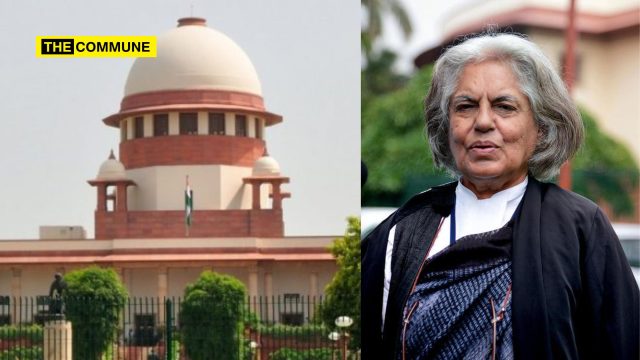
Senior advocate and amicus curiae Indira Jaising has urged the Supreme Court to reconsider the statutory age of consent in India, advocating for it to be lowered from 18 to 16 years. Her recommendation came in the form of written submissions in the ongoing matter of Nipun Saxena v. Union of India, where she is assisting the court.
Jaising argued that the current legal provisions particularly the Protection of Children from Sexual Offences Act (POCSO), 2012, and Section 375 of the Indian Penal Code unfairly criminalize consensual sexual activity between teenagers aged 16 to 18. According to her, this blanket criminalization infringes on the constitutional rights of adolescents and fails to distinguish between consensual and coercive acts.
She emphasized that equating consensual adolescent relationships with abuse undermines the evolving autonomy and maturity of young people. Highlighting that the age of consent was fixed at 16 for over seven decades before being raised to 18 by the 2013 Criminal Law (Amendment) Act, Jaising pointed out that this change occurred without substantive debate and went against the recommendations of the Justice Verma Committee, which had advised retaining the age at 16.
Her submission also cited biological and social studies showing that adolescents today experience puberty earlier and are capable of forming informed romantic and sexual relationships. Referencing data from the National Family Health Survey, she noted that sexual activity among teens is not rare.
Jaising raised concern over a sharp rise 180% between 2017 and 2021 in POCSO cases involving teenagers between 16 and 18. She observed that a significant number of these complaints were filed by parents disapproving of their children’s inter-caste or interfaith relationships, often against the wishes of the girls themselves. Such legal actions, she warned, push adolescents into hiding, forced marriages, or unnecessary legal entanglements instead of promoting healthy, informed conversations.
To remedy this, Jaising proposed a “close-in-age” exception, which would prevent criminal charges under POCSO and IPC when both parties involved are between 16 and 18 and the relationship is consensual. She described the existing framework as arbitrary and detrimental to the best interests of children, urging the court to recognize that consensual sexual activity between adolescents in this age group should not be treated as abuse.
Drawing from international and Indian legal precedents, including the Gillick competence principle in the UK and India’s landmark Puttaswamy ruling on privacy, Jaising underscored that the right to personal autonomy includes the ability to make informed decisions about one’s own body an entitlement that should also apply to adolescents.
She also pointed to observations made by various High Courts, including Bombay, Madras, and Meghalaya, where judges have criticized the automatic prosecution of teenage boys under POCSO. These courts, she said, have called for distinguishing genuine abuse from mutually consensual acts.
In her conclusion, Jaising requested that the Supreme Court declare that consensual relationships between adolescents aged 16 to 18 should not fall under the scope of sexual abuse laws. She also advocated for reviewing Section 19 of POCSO, which mandates reporting such acts arguing that it deters young people from accessing medical assistance or counseling.
“Sexual autonomy is an essential part of human dignity,” she asserted, adding that denying adolescents the freedom to make informed choices about their bodies violates fundamental rights under Articles 14, 15, 19, and 21 of the Constitution.
(With inputs from The Hindu)
Subscribe to our channels on Telegram, WhatsApp, and Instagram and get the best stories of the day delivered to you personally.