


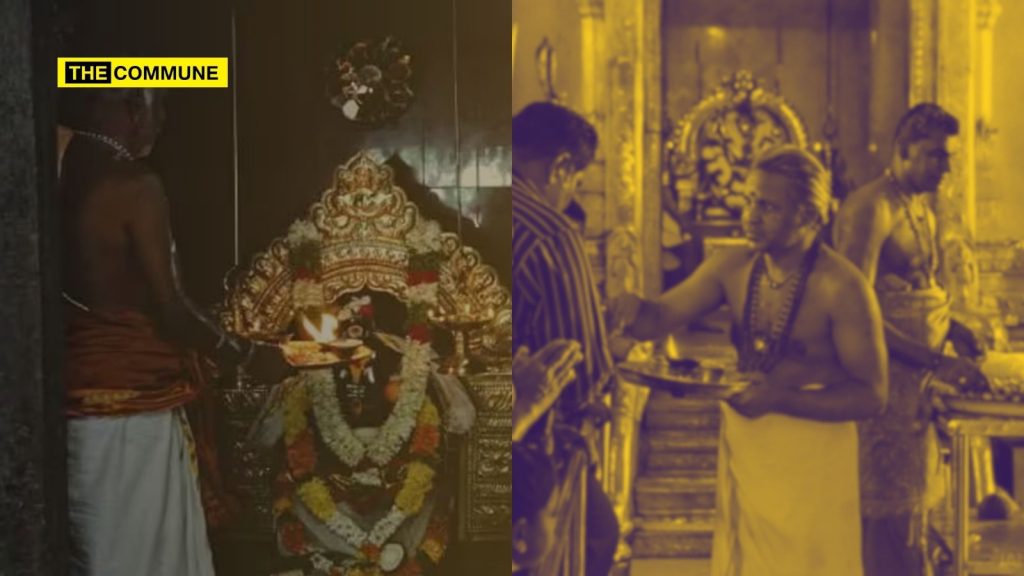
In Tamil Nadu, where temples stand as timeless symbols of spirituality, culture, and heritage, the guardians of these sacred spaces—the archakas (priests)—are fighting a silent battle for survival. Despite their indispensable role in preserving religious traditions and serving devotees, archakas are often reduced to living in abject poverty, their salaries a pittance, and their dignity stripped away by bureaucratic overreach. The recent controversy surrounding the HR&CE (Hindu Religious and Charitable Endowments) Department’s attempts to control temple offerings is just the tip of the iceberg in a systemic issue that demands urgent attention.
The HR&CE’s Overreach: Denying Archakas Their Due
In February 2025, the HR&CE Department issued a notice to the Lord Dhandayuthapani Temple in Madurai, prohibiting priests from collecting offerings made by devotees on plates. The department argued that since archakas receive a salary, all offerings belong to the temple and must be deposited into the hundi (donation box). This move sparked outrage among Hindus, forcing the department to retract the notice. However, this is not an isolated incident. Earlier in 2024, a similar directive was issued at the Kuzhandai Velappar Temple because of the allegations that priests at the temple were pressuring devotees to place their offerings on the Archanai plate instead of the hundi.
The question arises: why are archakas forced to depend on plate offerings in the first place? The answer lies in the shockingly low salaries they receive, often far below the minimum wage. The HR&CE’s justification for controlling offerings is not only unjust but also highlights the department’s failure to provide archakas with a livable income.
A Glimpse Into Archakas’ Struggles
The financial plight of archakas in Tamil Nadu is an open secret. While white-collar professionals advocate for higher minimum wages, archakas—who perform a highly skilled and spiritually significant role—are paid salaries that are not even “humanly”. Let’s look at some glaring examples:
Periya Nambi Narasimha Gopalan: The head priest of Sri Rajagopalaswamy Kulasekara Azhwar Temple in Mannarkoil, Tirunelveli, filed a writ petition in 2018 challenging the meagre salaries of temple priests. Despite serving for decades, his salary was a mere ₹750 per month, a significant increase from the ₹250 he earned earlier. Other priests in the region earned as little as ₹19 to ₹215 per month. Gopalan’s petition highlighted the HR&CE’s unjust rule limiting salaries to 40% of a temple’s income, which forces priests in remote temples to manage multiple shrines single-handedly. In April 2023, the Madurai Bench of the Madras High Court ruled in his favor, directing the government to ensure fair pay and benefits for temple staff.
Hon'ble Justice GR Swaminathan has ordered payment of Minimum Wages to temple staff – based on earlier order of Hon'ble Bench of Justice Mahadevan & Justice Audikesavalu. The Temple Archaka was paid Rs. 750/- pm in 2017 by @tnhrcedept & Rs. 2984/- pm after he filed this case pic.twitter.com/lO3ArNG8Iq
— trramesh (@trramesh) April 7, 2023
Sowri Rajan Bhattar: For over six decades, Sowri Rajan and his father served as priests at the Varadaraja Perumal Temple in Ayyur, Tiruvarur, earning a meagre ₹100 and paddy. Despite their dedication, the temple fell into disrepair, and the HR&CE neglected restoration efforts. Sowri Rajan, now over 50, continues daily rituals at six temples without payment for four years. His 86-year-old father dreams of witnessing the temple’s restoration before his passing.
For those who wanted to know more about the dilapidated ancient temple and about the sincere Archaka who gets less Rs. 100. p.m. from Govt administrators – here is the link: https://t.co/V0VdWx8cYi pic.twitter.com/n7GZwVGT8y
— trramesh (@trramesh) October 6, 2021
Ananthu Bhattar: A priest at the Thenthiruperai Divya Desam, Ananthu Bhattar has served for 22 years with unwavering devotion. His salary stagnated at ₹950 for 16 years, and he has never received official confirmation from the HR&CE. Despite his financial struggles, he continues to serve without complaint, rooted in the Bhagavad Gita’s principle of selfless duty.
Anti Hindu policies of successful DMK & AIADMK Govts made priests like Shri Ananthu Bhattar to suffer without permanent jobs in Temples for more than 22 years. He is now on a😞 salary of Rs.950/- per month. Time to throw Govt out of temples. @BJP4India https://t.co/nLSPuESiaE
— trramesh (@trramesh) February 18, 2022
Kapaleeshwarar Temple, Chennai: In 2021, it was revealed that 20 priests at this iconic temple were paid ₹650 per month, while the rest received no salary at all.
About 20 priests in the temple. 3 of them paid ₹650 p.m. rest are paid ZERO salary.
— trramesh (@trramesh) January 13, 2021
Meanwhile, temple funds were misused to purchase an Innova car for the Endowments Minister, with expenses like fuel, repairs, and insurance also borne by the temple.
Sri Kapaliswarar Temple, Chennai – Innova Car bought using Temple funds costing ₹17 lakhs & given to Endowments Minister. Thereafter, Fuel -₹577,350/- Repairs – 269,155/- Insurance – ₹146,859/- all from temple funds. Shameless people. Criminals. @BJP4India @Swamy39 @vhsindia pic.twitter.com/KVRjDPCBeQ
— trramesh (@trramesh) January 13, 2021
Here’s another example of a temple priest who states that he is paid ₹28 per day! In this day and age, can anyone live a decent life with these earnings? Don’t archakas also have families to take care of?
Priest from Tamil Nadu: “We get a salary of only ₹28 per day and with that we are expected to perform all temple duties. If we ask for a salary increase we are told ‘ You are from higher caste, you have already lived well!’ “
by inIndiaSpeaks
These are just a few examples whose stories that have been narrated in social media. There are countless more examples whose stories would never be heard.
The HR&CE’s Misuse of Temple Funds
The HR&CE Department controls 46,241 temples in Tamil Nadu, including 43,712 Hindu temples. Of these, 34,725 temples have an annual income of less than Rs. 10,000, while only 586 temples earn over Rs. 10 lakh annually. Despite this vast network, the department has failed to ensure fair wages for archakas. Instead, temple funds are often misused for non-religious purposes, as seen in the Kapaleeshwarar Temple case.
The HR&CE’s rule limiting salaries to 40% of a temple’s income is particularly egregious. It disregards the fact that priests in remote temples often manage multiple shrines and perform duties beyond their job descriptions, including cleaning, security, and maintenance. This rule not only violates the Minimum Wages Act but also Article 21 of the Constitution, which guarantees the right to a decent life.
Why Plate Offerings Matter
The HR&CE’s attempt to control plate offerings is not just about money; it’s about dignity. When a devotee offers a plate of food or money to a priest, it is a gesture of gratitude for their service. Denying archakas this income is akin to denying a waiter their tips. As renowned Tamil news reader Shobana Ravi aptly put it, “God will not tolerate priests who are hungry.”
உணவகம் செல்கிறேன். உணவருந்தி முடித்ததும் அன்பாக உபசரித்த வெய்ட்டர் சிப்பந்திக்கு மனமகிழ்ந்து டிப்ஸ் தருகிறேன். அதை உணவகம் பி டு ங் கி க் கொள்வதில்லை. அது நாகரிகம்.
கோயிலுக்குப் போகிறேன். என் தெய்வத்தை அழகாக அலங்கரித்து கர்ப்பக்ரஹத்துக்கும் பக்தர்களுக்கும் இடையே முன்னும்…
— Shobana Ravi, Author. (@ShobanaRaviNews) February 10, 2025
The comparison to a waiter is not meant to be demeaning – A waiter earns a set salary and keeps the tips left by customers. While archakas do not earn decent pay, why can’t they, who perform a far more specialized and spiritually significant role, receive the same treatment? Why must the HR&CE confiscate what devotees willingly give them as sambhavanai?
What The Govt Must Do
The plight of Tamil Nadu’s archakas is not just a religious issue; it is a labour issue. The HR&CE Department has no right to deny archakas their due or control their earnings. The matter belongs in labour courts, where the rights of these dedicated individuals can be upheld.
The government must:
Ensure Fair Wages: Archakas must be paid at least the minimum wage, with salaries commensurate with their skills and responsibilities.
Revise the 40% Rule: The arbitrary cap on salaries must be abolished, and temple funds should be used to support priests and temple maintenance.
Restore Autonomy: Temples should be allowed to manage their finances independently, with local communities playing a role in their upkeep.
End Misuse of Funds: Strict measures must be taken to prevent the misuse of temple funds for non-religious purposes.
The archakas of Tamil Nadu are not just employees; they are the custodians of our spiritual heritage and Hindu culture. It is time to honour their service with the dignity and respect they deserve. The HR&CE’s actions are not just an affront to the priests but to the millions of devotees who hold these temples dear. Let us stand together to ensure that those who serve the gods are not left to suffer in silence.
Subscribe to our channels on Telegram, WhatsApp, and Instagram and get the best stories of the day delivered to you personally.