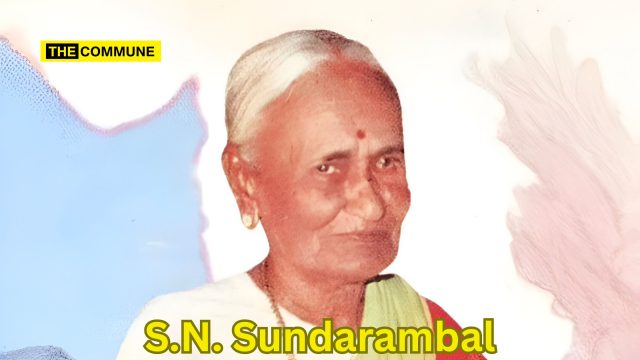
S. N. Sundarambal, born on 7 October 1913, in Veerapandi, Tiruppur, was a fearless freedom fighter and tireless social worker whose life was dedicated to the causes of India’s independence and rural welfare. Coming from a well-off family her father, Natchimuthu Goundar, was a respected maniyakkar (local chieftain) Sundarambal could have led a life of comfort. Instead, she chose the path of activism and service, becoming a prominent figure in the freedom movement and later in the field of social reform.
Her journey into the national struggle began at a young age. At just 15, during a Congress gathering in Tiruppur in 1928, she was inspired by Mahatma Gandhi, who urged the crowd to support the freedom movement. In a moment that would mark the beginning of her lifelong commitment, young Sundarambal climbed onto the stage and offered her gold bangles to Gandhi. Impressed but wanting more than just symbolic support, Gandhi encouraged her to take a deeper role in the fight for independence and to adopt khadi, rejecting foreign-made clothes. From that day forward, she wore only khadi garments, symbolizing her devotion to the Swadeshi movement.
Sundarambal’s active role in the freedom struggle saw her participate in numerous protests and Satyagraha campaigns. In 1941, during one such protest, she was arrested along with her infant son and imprisoned in Vellore Central Prison for three months. The following year, when the Quit India Movement was launched in 1942, she once again took to the streets in non-violent resistance, which led to another arrest and a seven-month jail term. Her courage never wavered. In 1943, she spearheaded a major protest in Tiruppur against British rule, resulting in yet another arrest and three more months in prison.
Even after India gained independence in 1947, Sundarambal’s spirit of activism did not diminish. She turned her attention to agricultural and rural issues, especially the welfare of farmers in Tiruppur district. Her commitment to grassroots causes led her to organize several demonstrations for farmers’ rights, and even in the 1970s, she continued to be arrested for leading protests.
A turning point in her post-independence life came after meeting Vinoba Bhave, the noted Gandhian and social reformer. Inspired by his ideology, she established an orphanage in Angeripalayam, Tiruppur, which reflected her enduring dedication to community welfare.
S. N. Sundarambal passed away on 20 August 2007, in Tiruppur, leaving behind a legacy of courage, humility, and unwavering service to society. Though she had two sons, both had predeceased her. Today, she is remembered not only for her contributions to India’s freedom but also for her relentless efforts to uplift the underprivileged and marginalized long after the nation had won its independence.
Subscribe to our channels on Telegram, WhatsApp, and Instagram and get the best stories of the day delivered to you personally