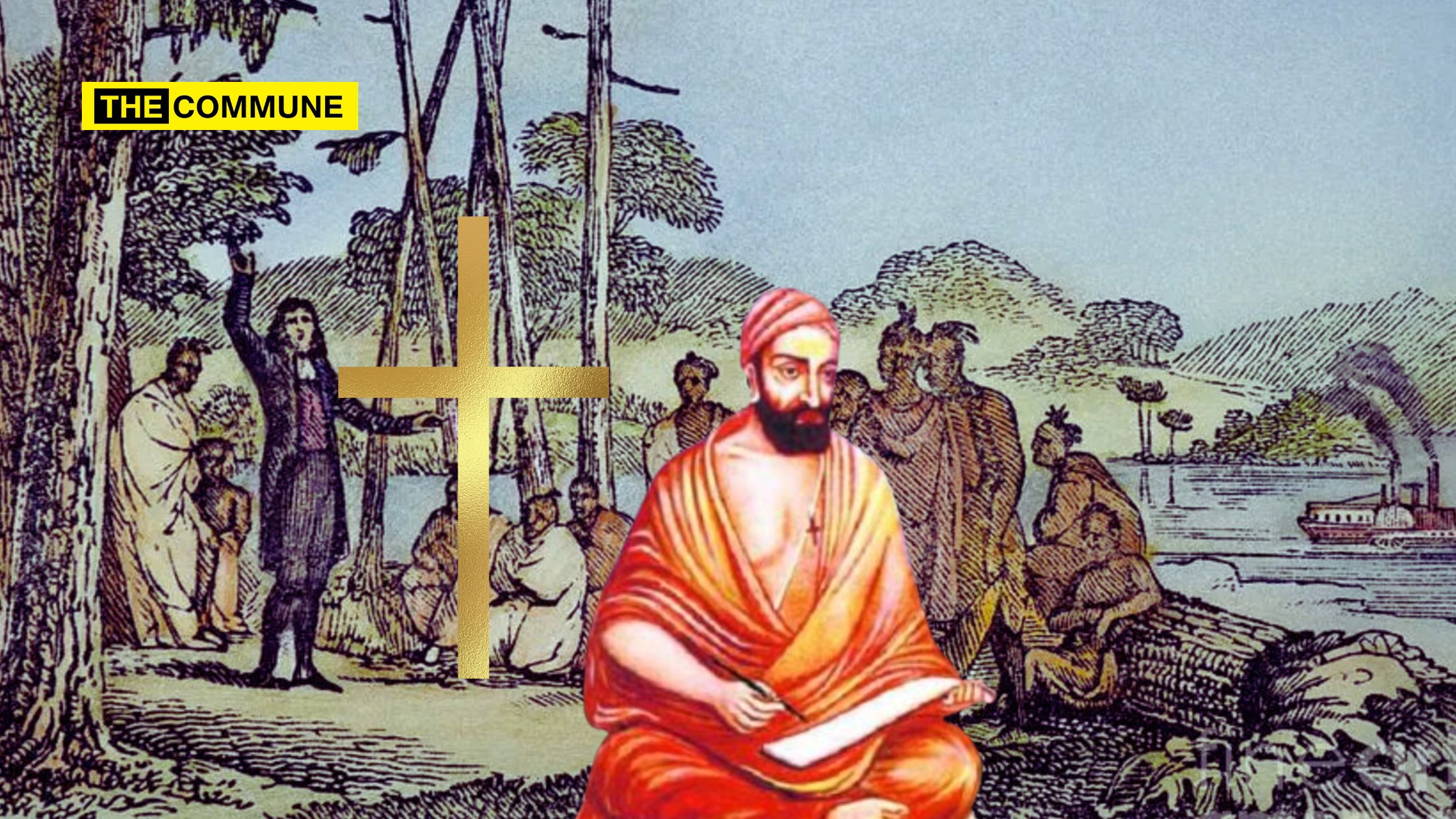
Did you know that an early Jesuit missionary in India, with the sole aim of converting devout Hindus, resorted to an elaborate mix of deception and clever tactics to spread Christianity? The story of Robert de Nobili, the Jesuit missionary known as the “Roman Brahmin,” is indeed an eye-opener. In the early 17th century, he adopted the guise of a Brahmin in South India, learning Sanskrit and Tamil, dressing in traditional Brahmin attire, and even presenting Christianity as a “fifth Veda” to appeal to upper-caste Hindus.
Nobili’s mission was a response to the failed conversion attempts by earlier European missionaries in the 15th centaury who struggled to convince Indians to embrace Christianity. During this period, Indians viewed Westerners as “uncivilized” due to their dietary habits, excessive drinking, and lack of hygiene. This made it almost impossible for missionaries to make any headway. Nobili, however, was determined to change this, believing the only way to succeed was to “Hinduize” Christianity.
He began by reinventing himself as a Brahmin. He abandoned his missionary robes and instead wore saffron robes, applied a tilak on his forehead, and wore the sacred thread. He even shaved his head, leaving a ponytail, and adopted a vegetarian diet, eating once a day like other Brahmins. Nobili moved into the Brahmin quarters of Madurai, where he hired a Brahmin scholar to master Sanskrit, Tamil, and Telugu. He became the first European to study Hindu texts and was impressed by the intellectual depth of Hindu philosophy.
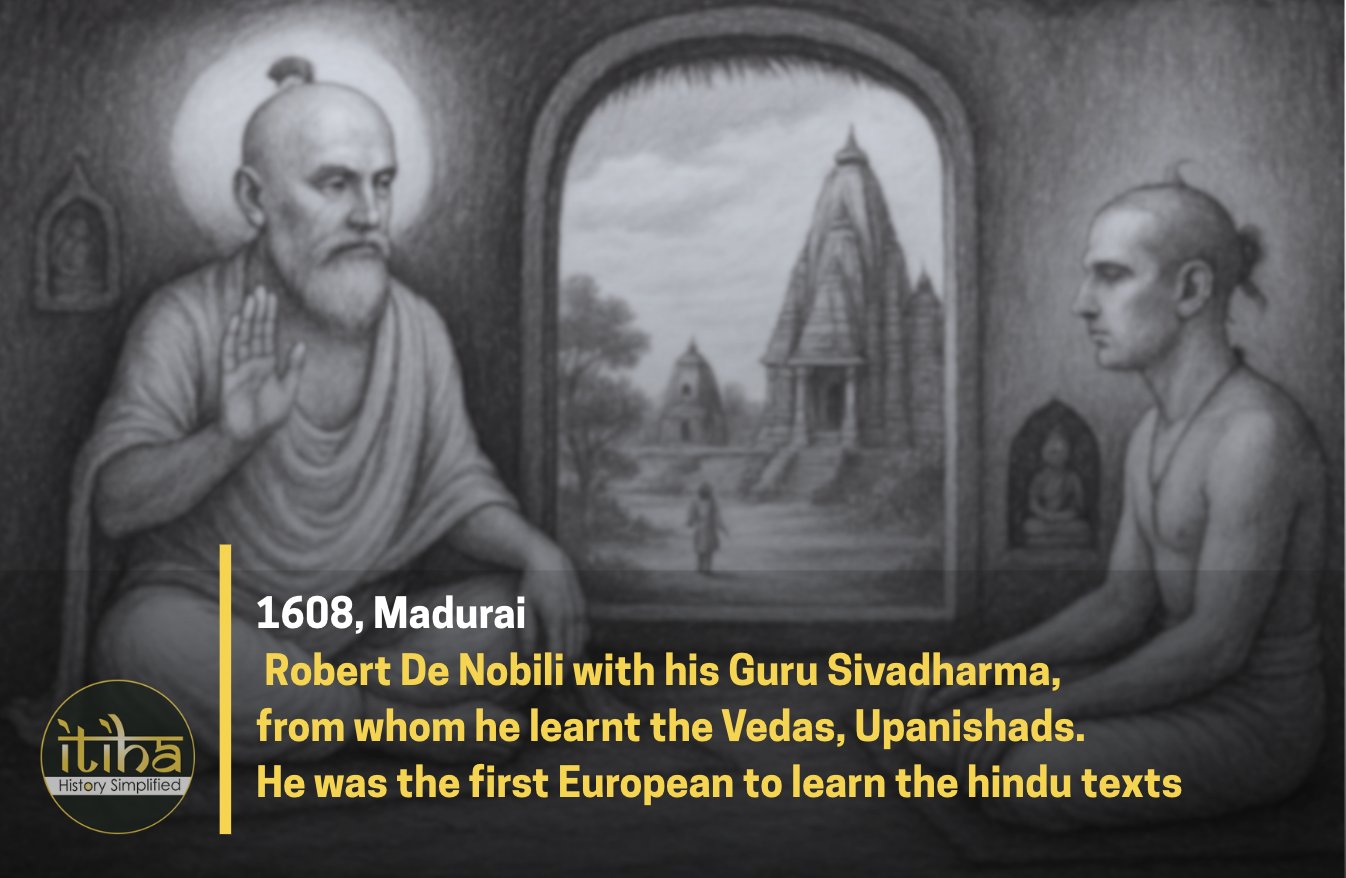
Once he understood Indian traditions, Nobili rebranded Christianity through a Hindu lens. He equated Christian concepts with familiar Hindu terms: God became “Brahman,” salvation was seen as “Moksha,” and Christian grace was presented as “Prasadam.” He even called parts of the Bible the “Yesur Veda” (the Veda of Jesus), and the church became a “Kovil” (temple), while pastors were referred to as “Gurus.”
But Nobili’s manipulation didn’t end there. He fabricated a narrative in which Christianity was presented as a lost Indian tradition. He claimed that Christianity was just another path among the many spiritual traditions in Hinduism, making converts unaware that they were actually embracing a different religion. He went as far as to claim that he had found the “fifth Veda,” which was actually Christian theology cleverly disguised in Sanskrit.
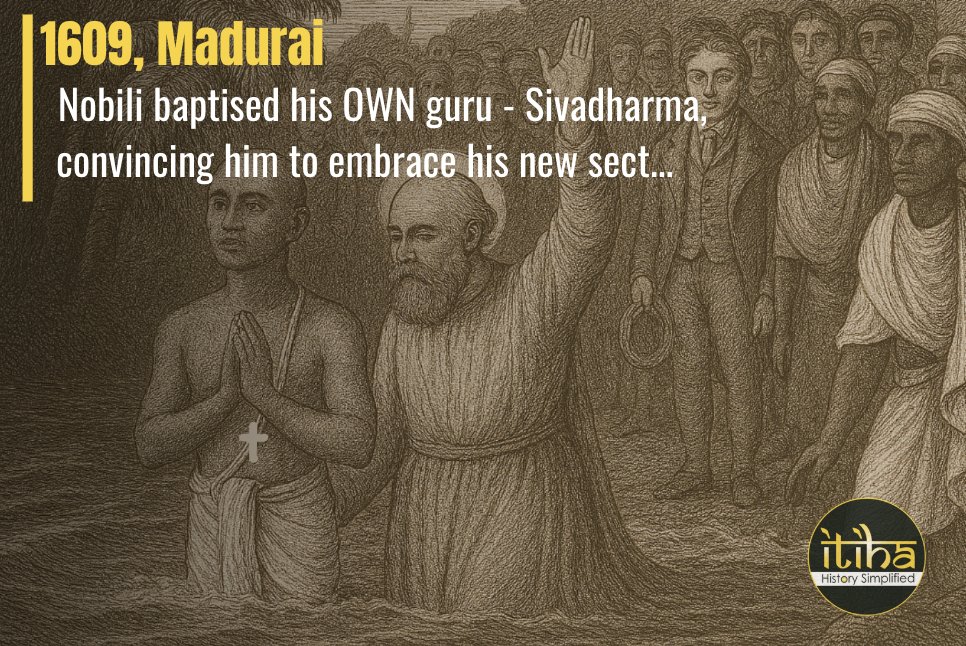
To further his deception, the churches he built resembled Hindu temples, avoiding any European symbols. Converts were allowed to continue practicing Hindu customs such as wearing the sacred thread, performing rituals, and celebrating festivals, as long as they refrained from idol worship. He even Christianized the sacred thread ceremony (Upanayanam), interpreting the three threads as symbols of the Holy Trinity, with a Christian cross incorporated into the ritual.

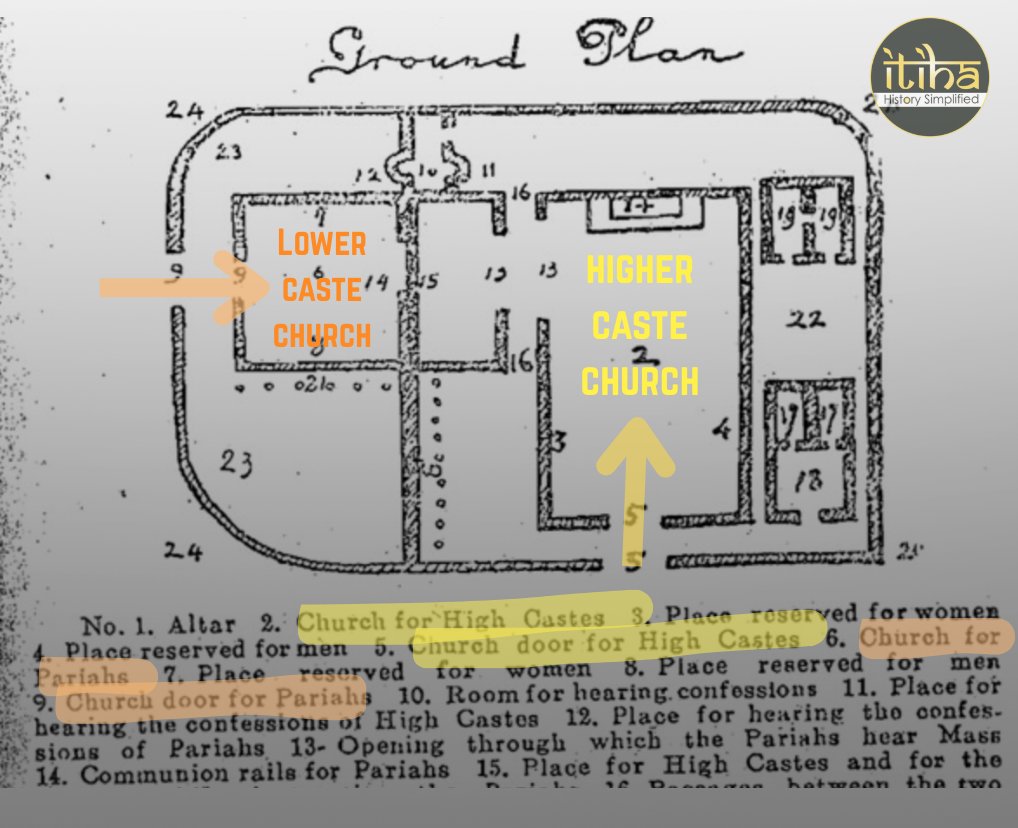
Despite this, Nobili’s version of Christianity still involved significant segregation. Upper-caste converts were kept separate from lower-caste ones, with different churches, burial grounds, and even separate entrances. Lower castes were excluded from church management, and discrimination continued within the church community. Interestingly, unlike other missionaries who focused on converting lower castes, Nobili specifically targeted Brahmins and upper-caste Hindus, believing that their conversion would eventually lead to lower-caste conversions through a “trickle-down effect.”
Nobili faced suspicion from the local Brahmin community, who suspected him of being a foreigner due to his appearance. Once, an assembly of 800 Brahmins confronted him, and he defended himself by claiming he wasn’t just any foreigner but a “Twice-born Sannyasi” from Rome, born into nobility. To further validate his claims, he obtained a certificate from Rome, which he displayed on his door, declaring himself a “Romaca Brahmana” (Roman Brahmin). At times, he even claimed to be a descendant of Lord Brahma. Some of the missionaries he inspired later even resorted to using skin-darkening lotions to avoid the obvious signs of their foreign origins.
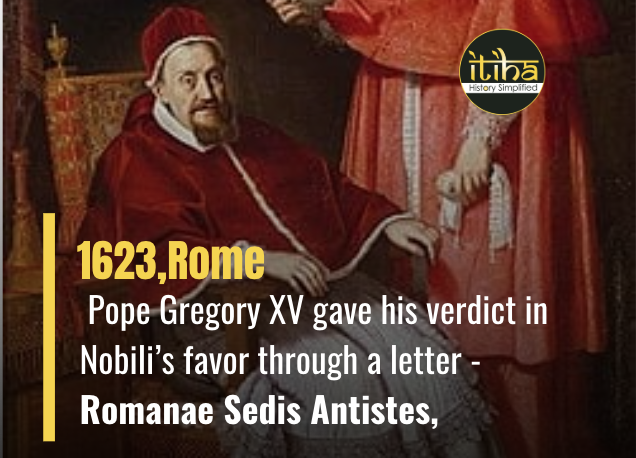
Despite facing opposition both from the local Hindu community and the Church, Nobili continued his mission. The Church initially disapproved of his methods, as they believed he was adulterating Christian teachings. However, Nobili defended his approach by arguing that early Christianity had adapted Greco-Roman culture and rites, and he was simply doing the same in India. Eventually, Pope Gregory XV ruled in his favor, allowing him to continue his work with some restrictions.
Nobili’s controversial legacy lives on. Despite being rejected by many during his lifetime, today he is honored across India, with several schools, a college, and even a statue dedicated to him. He is remembered as a figure who bridged two cultures—though his tactics remain highly debated. Ironically, a missionary once dismissed as a fraud is now celebrated as a significant figure in the history of Christian missions in India.
(This article is based on an X Thread By Itiha)