Director Premkumar has launched a stringent critique against a section of film reviewers, whom he holds responsible for creating a toxic environment that hinders the success of Tamil films, specifically citing the reception of his own film, Meiyazhagan.
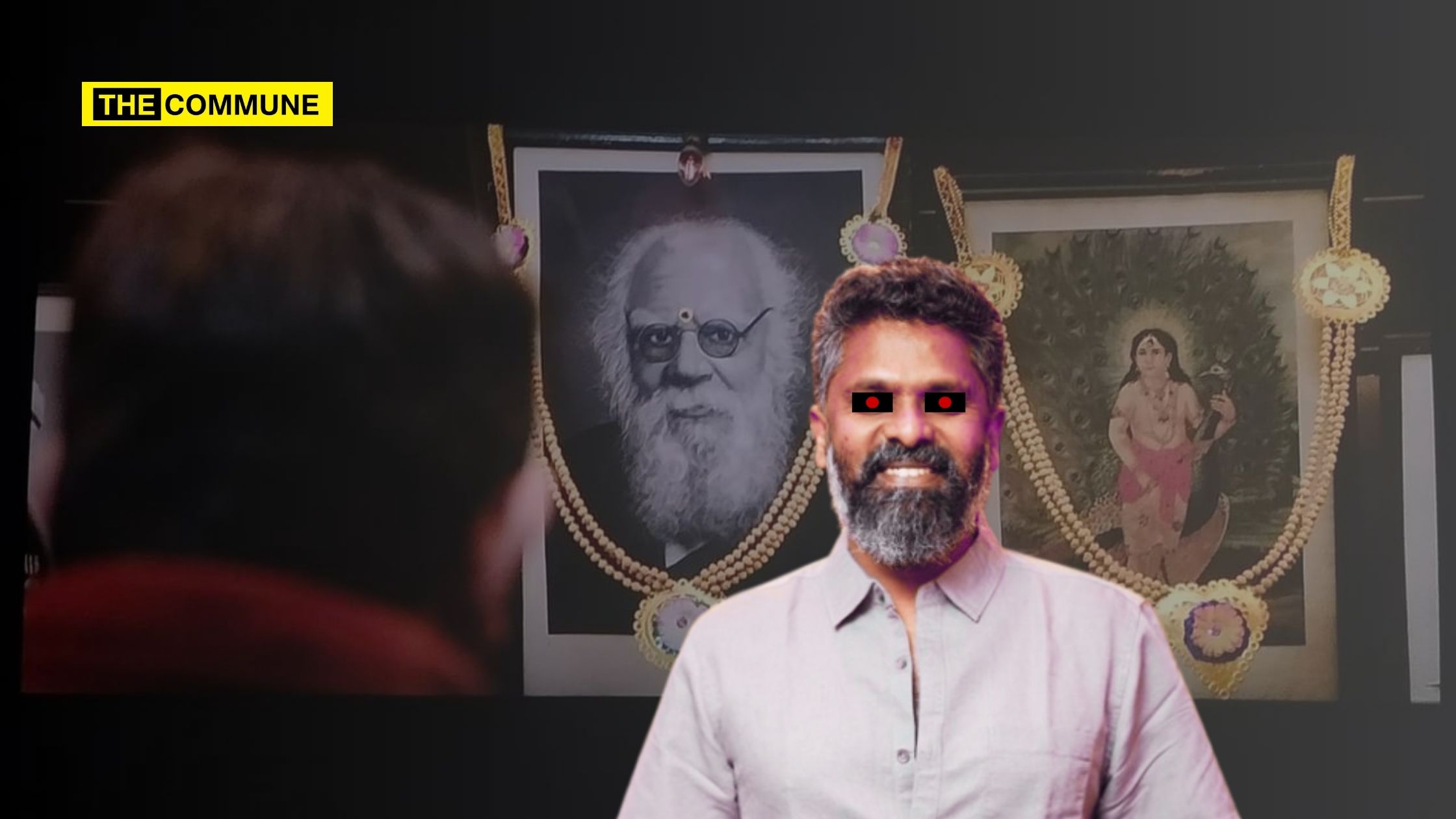
The same director justified showing portraits of EV Ramasamy Naicker (hailed as ‘Periyar’ by his followers) and Hindu God Murugan in the same frame, saying that Tamil people celebrate EVR as much as Murugan.
“Tamil people are like that. As much as we go to a Murugan Temple, we celebrate Periyar too. He is literally like a clan deity for us. Because if he had not fought, I’m not sure if we would’ve got this much rights. A few were there before and after, but the impact that he gave is almost in our genes. Even to this generation, he’s relevant as youngsters proudly wear t-shirts that say ‘I’m Periyar’s grandson’. We should venerate him.“, the Dravidianist director said.
In a recent conversation with critic Baradwaj Rangan, Premkumar delineated between genuine cinephiles and what he termed “mainstream reviewers,” accusing the latter of incompetence, personal agendas, and damaging negativity.
The Core Accusation: Reviewers as a “Bottleneck”
Premkumar’s central argument is that reviewers have become a significant obstruction between a film and its audience, more damaging than traditional threats like piracy. He asserts that while audiences on OTT platforms watch films “objectively and with taste and interest,” the theatrical experience is spoiled by these intermediaries.
“Their only aim is to say something or the other to bring down the film. They have other agenda also,” he stated. He expressed his frustration at having to “escape the bottleneck that they create” for a film to find its audience, which often only happens after its OTT release.
On ‘Targeting’ Meiyazhagan and Tamil Industry Bias
Premkumar provided a specific example of this bias with the response to his Tamil film, Meiyazhagan. He revealed that several reviewers criticized the film not on its cinematic merits, but for not being made in Malayalam, a sentiment he found deeply disheartening.
“What they said is that you should have made it (Meiyazhagan) in Malayalam. People here celebrate films from other states. Many people scolded me for making it a Tamil film. I felt very sad,” he said. This, to him, highlighted a parochial bias where Tamil reviewers are quicker to celebrate content from other industries while undermining local productions. He perceives this as a major reason for the underperformance of certain Tamil films, which might find appreciation elsewhere.
Questioning Reviewer Credibility and Motives
Premkumar questioned the qualifications and motives of these critics, suggesting that their negativity stems from personal failure. “Maybe these people tried to get into cinema and couldn’t flourish there and came here, so is that causing a problem? Or whether they are arrogant about deciding the ‘weight of the cinema’?”
He dismissed the argument that reviewers speak from a “layman’s perspective” as “wrong,” retorting, “Who are you to decide? Leave it to the audience.” He illustrated his point with examples of what he considers absurd critiques, such as a reviewer questioning the ease of nurturing a parrot depicted in a film. “They said in the review that raising a parrot caused someone to vacate their home!”
A Culture of “Legalized Negativity”
The director described the tone of such reviews as “very uncivilized” and derogatory, citing a review for his highly acclaimed film 96 that attacked a senior director. He labeled this pervasive attitude a “mental illness.”
“Negativity has been legalized inside them. That has become a way of life for them. You can’t even talk to them, they will answer you with the same negativity,” he argued. He also criticized the common practice of labeling films a “one-time watch,” asking, “They say you can watch it once, how can you say that? How do you decide?”
Premkumar ended with a warning about the long-term consequences of this environment. He contrasted the supportive ecosystems of the Malayalam and Telugu industries with the scattered and negative atmosphere in Tamil cinema.
“Many people have started making films in other languages, leaving Tamil – they are not able to handle this negativity,” he said, indicating a brain drain of talent. He placed the ultimate responsibility on the audience, whom he feels are being misled. “If you keep betraying us, how will we make good films? You won’t get; you don’t deserve it.”
He concluded with an analogy, comparing the late appreciation for films to a village saying: “you didnt give a glass of water to them when they were alive but now come to give milk (ritual) dead. The audience has to be responsible; they don’t have any other go.” For Premkumar, the damage is done when the film is in theaters, and late praise on OTT is a hollow victory.
Subscribe to our channels on Telegram, WhatsApp, and Instagram and get the best stories of the day delivered to you personally.