


A rapid series of defence-related “exclusive” reports published by Reuters ‘journalist’ Saad Sayeed in the December 2025 and January 2026 has triggered scrutiny over narrative construction and the repeated amplification of unverified claims originating from Pakistani officials and military-linked sources.
Within a span of six days, Reuters published multiple reports projecting Pakistan as an emerging global arms exporter engaged in multi-billion-dollar negotiations across South Asia, the Middle East, and Africa. The reports were primarily authored by Reuters journalist Saad Sayeed, whose bylines suddenly reappeared in quick succession after nearly a year of absence from Reuters’ Pakistan-focused reporting.
When OpIndia reported this news a couple of days ago, his MuckRack profile stated that he was based out of Hong Kong but his biography in the same page stated he was based out of Islamabad, Pakistan.
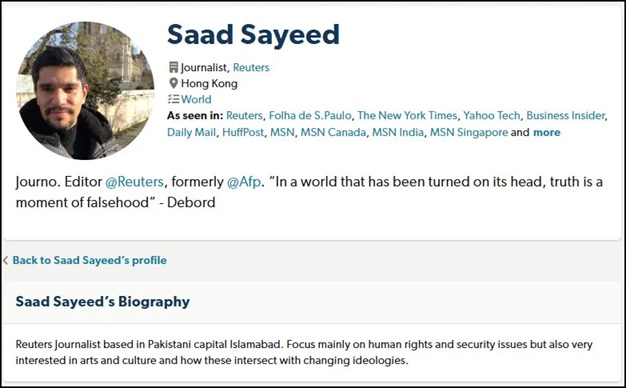

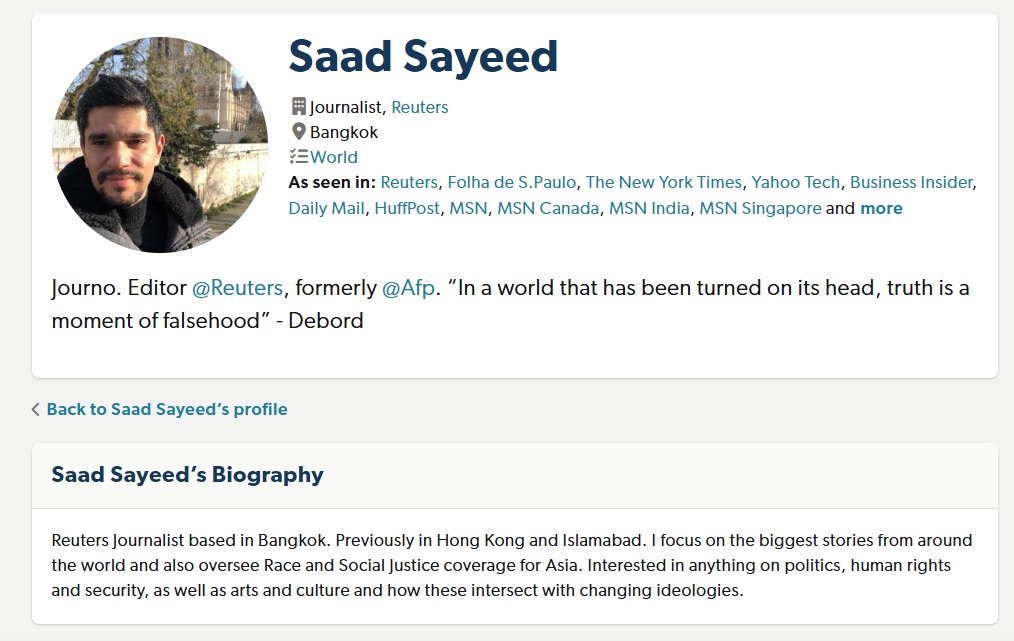
As we publish this report on 15 January 2026, his bio has changed and so has his location. The profile claims he is based out of Bangkok.

Back-To-Back Reporting
The back-to-back reporting sequence began on 7 January 2026, when Reuters published two defence exclusives by Saad Sayeed.
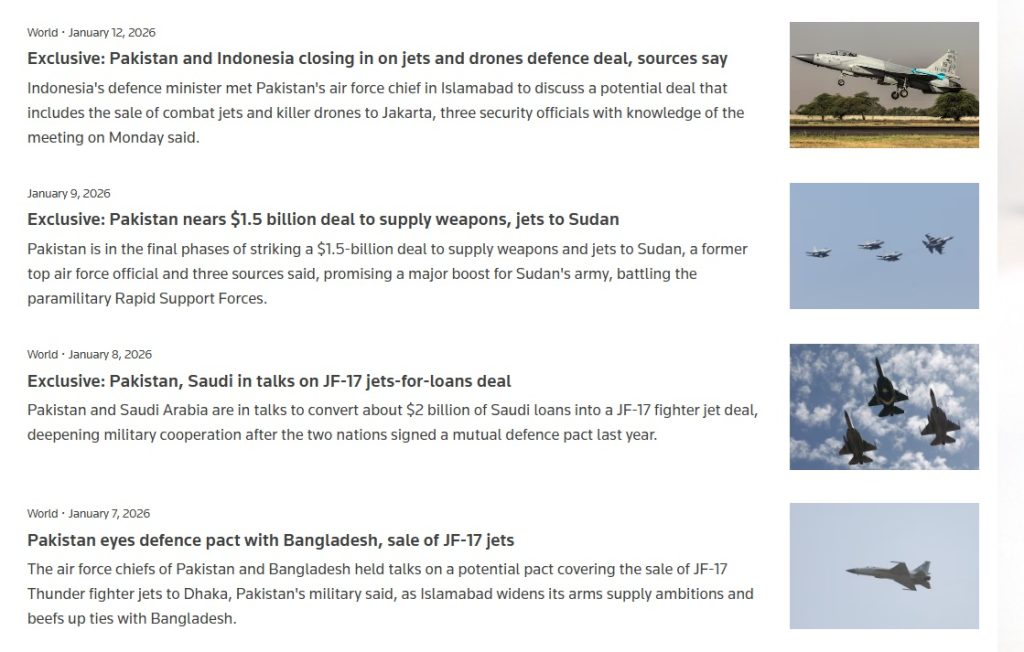

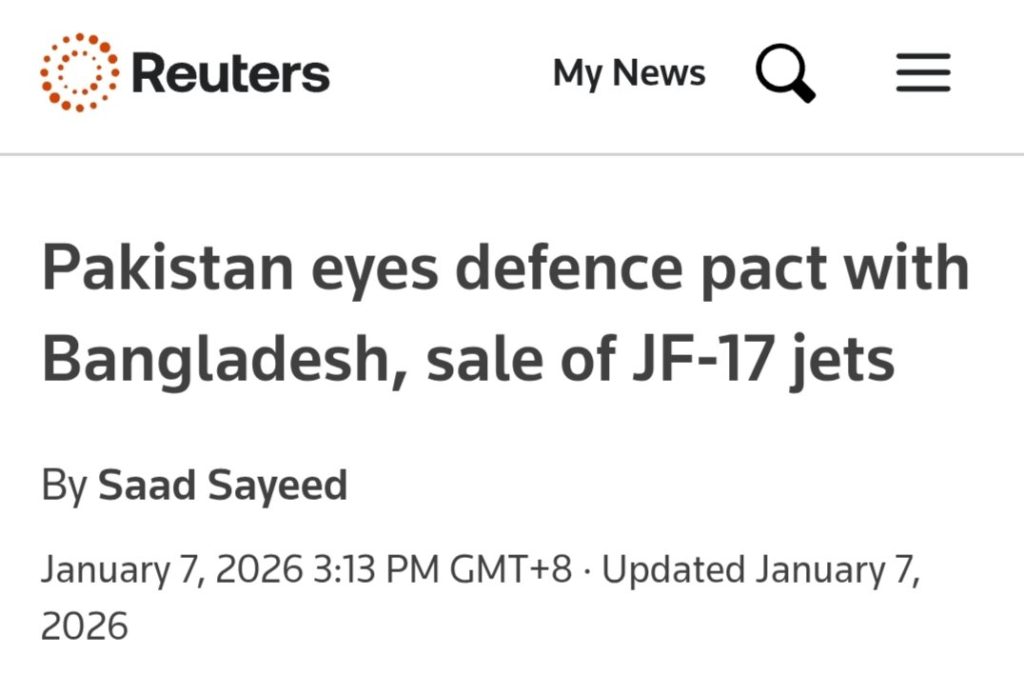
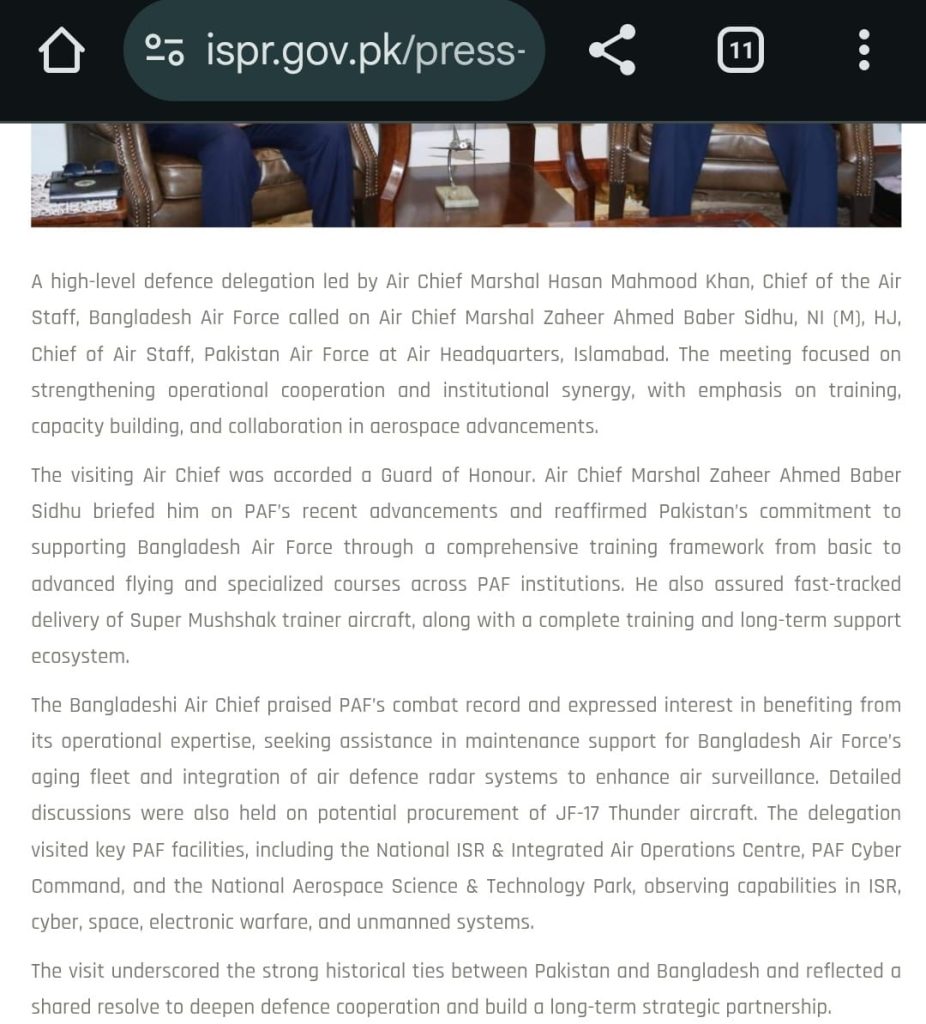
The first report published on 7 January 2026, claimed that Pakistan was in talks with Bangladesh for a defence cooperation package involving JF-17 Thunder fighter jets and Super Mushshak trainer aircraft.

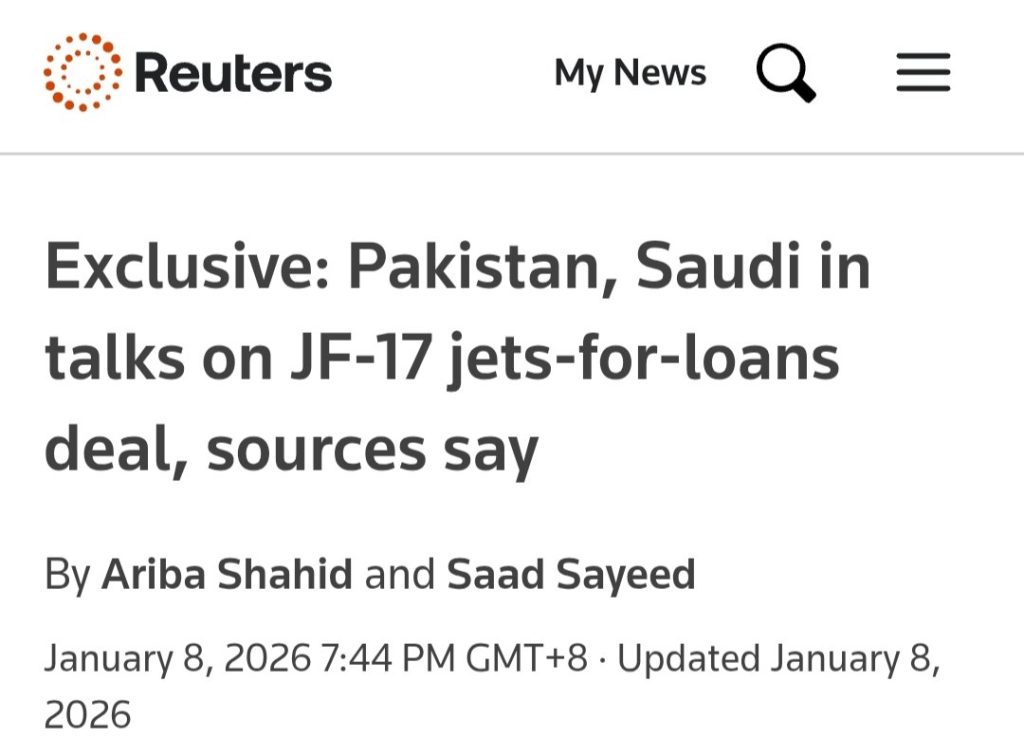
The second report on 8 January 2026, suggested that Saudi Arabia was considering converting existing loans to Pakistan into a potential $4 billion defence deal, again centred on the JF-17 platform.

Both reports emphasised that the aircraft was “combat-proven,” citing the May 2025 India–Pakistan conflict that followed India’s launch of Operation Sindoor. Operation Sindoor was initiated after the Pahalgam terrorist attack, in which 26 Hindu tourists were killed by Pakistan-sponsored terrorists, according to Indian authorities.
The Reuters reports asserted that Pakistan was marketing the JF-17’s performance against India as evidence of its battlefield credibility, despite the absence of publicly verifiable proof supporting these claims.
In the Bangladesh-related report, Pakistan’s Defence Minister Khawaja Asif was quoted as claiming that a surge in defence exports could make assistance from the International Monetary Fund unnecessary within months. The statement appeared without accompanying economic analysis or countervailing expert assessment.

Context: Pakistan’s Economic Position
The optimistic framing stood in contrast to Pakistan’s recent financial history. Over the past several years, Pakistan has approached the IMF multiple times for bailout packages amid inflationary pressures, foreign exchange shortages, and mounting debt obligations. In addition to IMF assistance, Pakistan has relied heavily on loans from China, Saudi Arabia, and other bilateral partners, often under stringent conditions.
Sudan and Indonesia Added to the Narrative
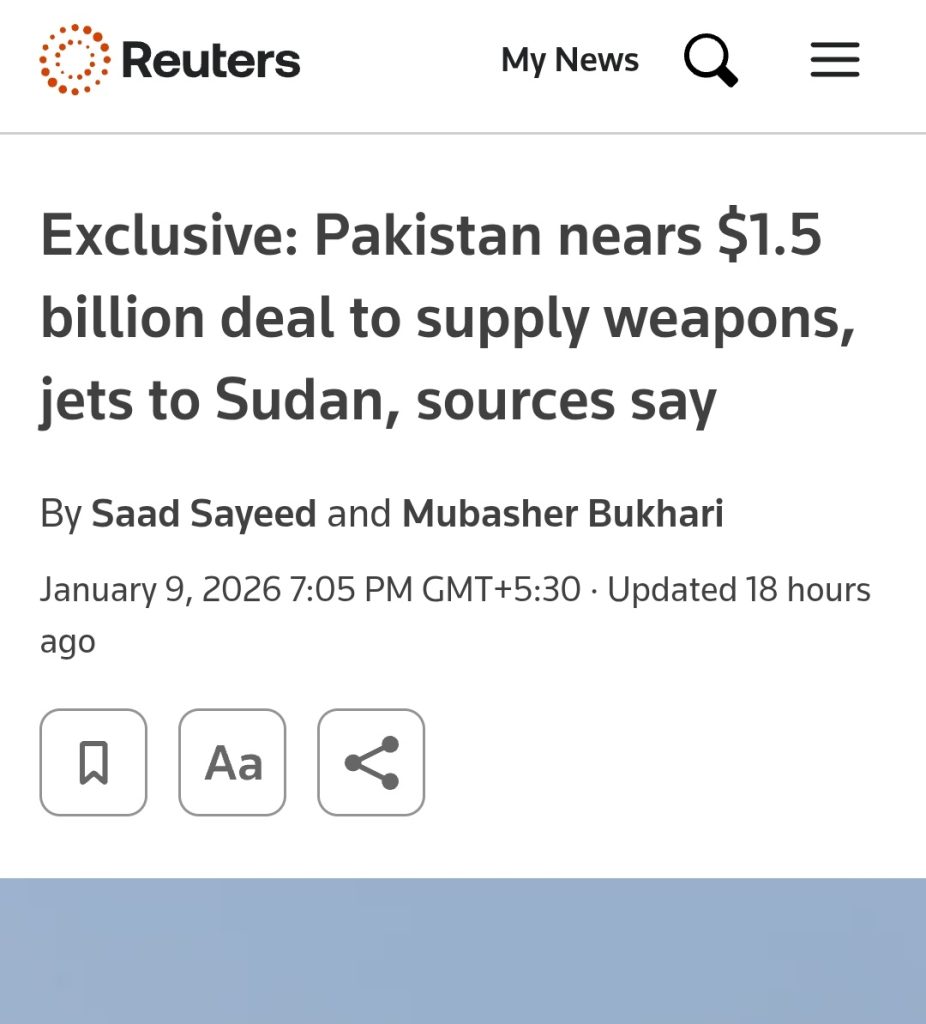
On 9 January 2026, Reuters published another “exclusive” claiming that Pakistan was nearing a $1.5 billion arms deal with Sudan, covering aircraft, drones, and air defence systems.
The report appeared despite the ongoing civil war in Sudan and amid questions surrounding Pakistan’s own air defence capabilities. During the May 2025 conflict, Indian officials stated that Pakistan’s air defence systems failed to intercept Indian missiles, while India’s air defence neutralised drone and missile attacks following Pakistan’s retaliation.
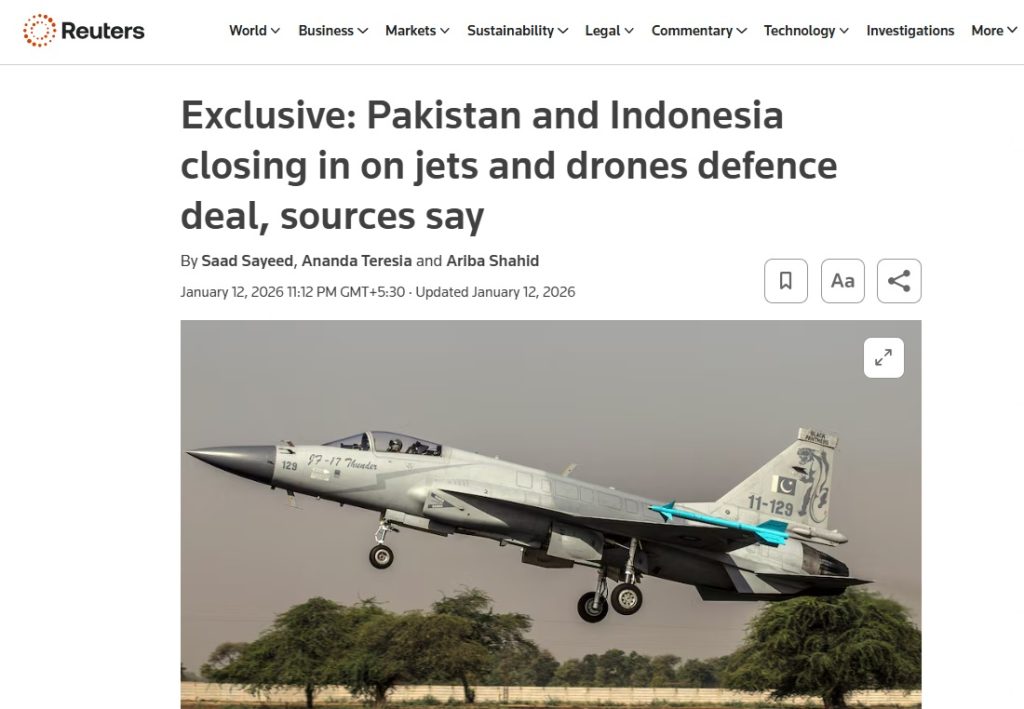
On 12 January 2026, Reuters published yet another exclusive claiming that Indonesia was in advanced talks to acquire over 40 JF-17 fighter jets and Shahpar drones from Pakistan. This marked four Pakistan-centric defence exclusives in under one week, all reinforcing a similar trajectory of Pakistan as a rising arms exporter.

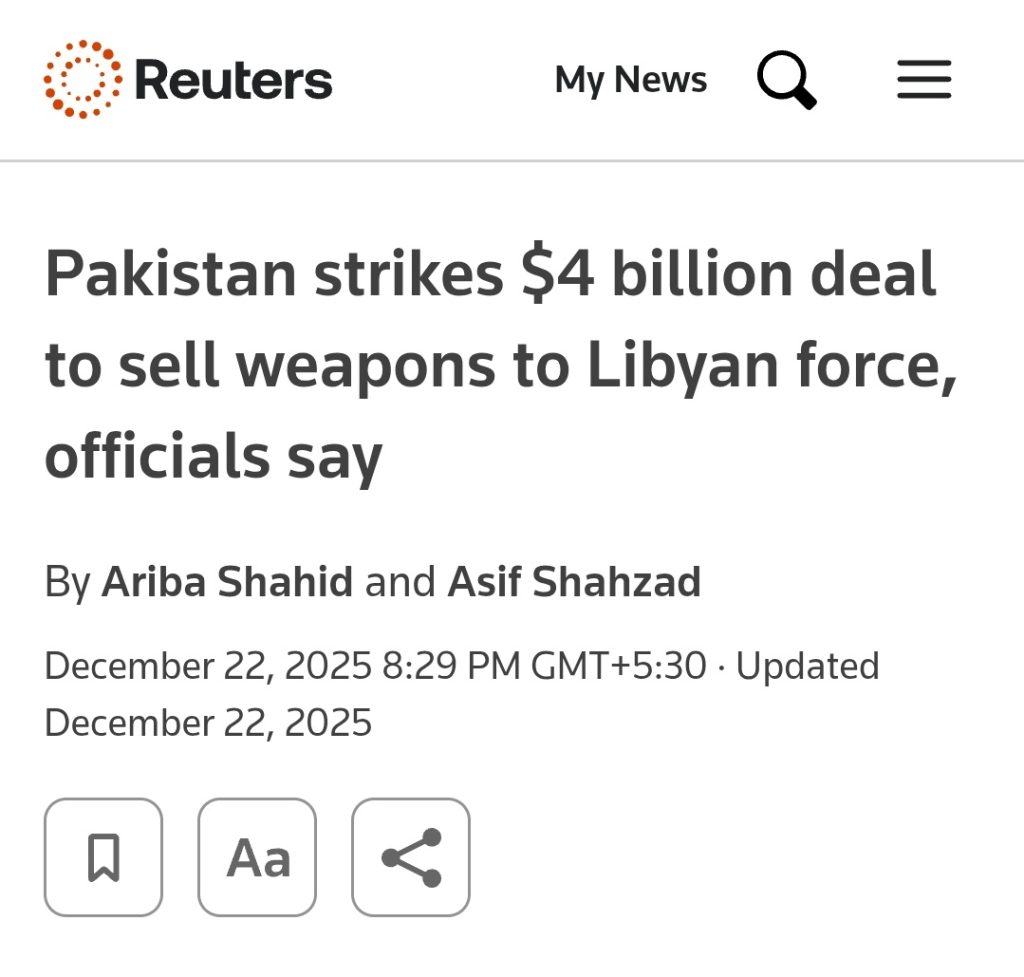
Back in December 2025, there was a report on Pakistan selling arms to Libya as well.

Anonymous Source Patterns Raise Questions
Across all the reports, sourcing followed a consistent pattern. Key claims were attributed to unnamed officials described as “sources close to the military” or “sources with knowledge of the matter.” Additional commentary was provided by retired Pakistani air marshals who were said to have been informally briefed on defence developments.
Where official statements were cited, they generally acknowledged meetings or discussions rather than confirming deal sizes, funding structures, delivery timelines, or final agreements. The substantive elements of the reports, financial values, scope, and certainty rested almost entirely on anonymous or semi-detached sources.
While anonymity is not unusual in defence reporting, observers note that the repeated reliance on similar categories of unnamed sources, without named independent analysts or dissenting assessments, raises questions about verification and balance.
Internal Citation Loop Within Reuters
Another notable feature across the reports was the dense cross-referencing within Reuters’ own coverage.
The Indonesia article referenced the Sudan, Saudi, and Bangladesh reports. The Sudan report cited the Saudi and Bangladesh discussions along with a previous Libya deal. The Saudi and Bangladesh pieces cited each other. Several of these articles were written by Saad Sayeed, while others were co-authored with Reuters journalists Mubasher Bukhari, Ananda Teresia, Ariba Shahid, and Asif Shahzad, all of whom have published extensive Pakistan-focused reporting.
Media analysts note that such internal citation loops can create the appearance of corroboration even when the underlying sources remain unchanged, potentially reinforcing a narrative without independent validation.
Consistently Favourable Framing
Across the reports, Pakistan’s defence ambitions were framed as economically transformative and strategically successful.
In the Sudan report, the humanitarian implications of supplying arms to a conflict zone were mentioned briefly but secondary to claims that Pakistani weapons could “revive” the Sudanese military. The Indonesia report acknowledged Jakarta’s broader fighter jet considerations but positioned the Pakistani offer as competitively advanced without comparable scrutiny of performance claims or geopolitical trade-offs.
The cumulative framing foregrounded Pakistan’s prospective gains while offering limited engagement with risks such as sanctions exposure, arms proliferation concerns, or regional instability.
Source: OpIndia
Subscribe to our channels on Telegram, WhatsApp, and Instagram and get the best stories of the day delivered to you personally.