It took the spilled blood of an Odisha migrant worker in Tiruttani — hacked by a gang of drug addicts —for Pa Ranjith, a propaganda filmmaker who has monetised caste aesthetics, to come out of his cocoon and preach at length. He wrote of a “heart trembling” at the inhuman cruelty, blamed the state’s “negligence” on drug culture, invoked the holy trinity of the Constitution – Liberty, Equality, Fraternity – and condemned the “dangerous trend” of othering the “Vadakkan” (North Indian).
திருவள்ளுர் மாவட்டம், திருத்தணியில் நடந்த மனிதமற்ற கொடூர செயலை கண்டு நெஞ்சம் பதறுகிறது!
அண்மைக்காலமாகத் தமிழகத்தில் அதிகரித்துவரக்கூடிய போதைப் பொருள் கலாச்சாரத்தைத் தடுக்கத் தவறிய ஆட்சியாளர்களுடைய மெத்தனப் போக்கே இதுபோன்ற சம்பவங்களுக்கு முக்கிய காரணம். இத்தகைய குற்றச் செயல்கள்…
— pa.ranjith (@beemji) December 30, 2025
It was plain performative wokeness, a sanitized, state-approved version of anguish that carefully vacuumed out any trace of his own industry’s and his own artistic projects’ complicity in creating the very hellscape he now pretends to mourn. Pa. Ranjith can be considered one of the factors in driving the Pullingow culture.
What Is This Pullingo Culture?
The word Pullingo gained prominence after a Gaana song “Enga Pullingo Ellam Bayangaram” went viral a few years ago.
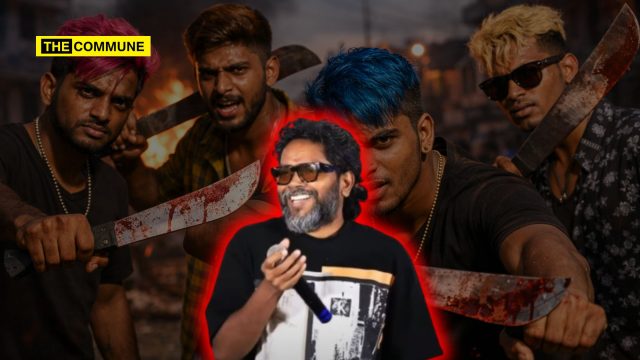
This has evolved into a distinct subculture with a massive online presence, sustained by countless social media profiles. Offline, this identity is often signalled through flashy hair colours, customised motorcycles particularly Dio scooters, and tight-fitting jeans.
Today, the term is commonly used to describe youths associated with rash driving, disruptive street conduct, and exaggerated social-media bravado—traits evident in the attackers of the Odisha migrant worker.
Pa. Ranjith, An Enabler
To lecture these drug-addled, morally vacant teenagers on “constitutional values” is like preaching to a pack of rabid dogs. The assumption that these youths possess a framework to understand fraternity or liberty is a fatal fantasy. They are products of a culture that has systematically dismantled all traditional frameworks of morality – family, religion, community restraint -and replaced them with a curated, cinematic rebellion that glorifies the very anarchy Ranjith now condemns. They don’t quote Ambedkar; they mimic the swagger of the gangsters in the films his cinematic universe has normalized.
And herein lies the rotten core of Ranjith’s contradiction. For years, he and his cultural ecosystem have weaponized “subaltern art” as a political cudgel. In the name of elevating the oppressed, they have aggressively mainstreamed a few Gaana artistes. Let’s drop the pretense: a significant portion of this musical genre’s popular lyrics are a cesspool glorifying rowdyism, drunken bravado, misogyny, women sexualization, substance abuse, and a violent, anti-establishment posture. Yes, there are sprinklings of social justice – a thin veneer of political correctness over a thick core of decadence. Ranjith’s films, while narratively advocating for the oppressed, are visually and auratically drenched in this very macho of the marginalised, often romanticizing the outlaw as the only true revolutionary.
You cannot spend a decade aestheticising ghetto rebellion, painting the “rowdy” as a tragic hero fighting a corrupt system, and then act shocked when boys in a real ghetto, devoid of your narrative’s political scaffolding, enact the style without the substance. You gave them the costume, the attitude, the soundtrack of violence, and then feign horror when they wear it. His cinema, and that of the ‘gangster-genre’ wave he indirectly legitimised, didn’t just reflect a culture; it actively designed its wardrobe.
His sermon’s most nauseating part is the sudden, convenient invocation of “Constitutional values.” This from a strand of activism that has made a sport of demonizing a particular way of life as “Brahminical.” Carnatic music? Oppressive. Bharatanatyam? Brahminical. Academic merit? A sly tool of caste exclusion. The relentless push isn’t to add, but to replace; not to elevate the subaltern to classical platforms, but to tear down the classical and declare the rubble as liberation. The goal seems less about empowerment and more about inverted majoritarianism, where whatever the perceived “oppressor” caste does must be vilified, and whatever the “oppressed” does must be celebrated, even when it is morally and socially degenerative.
The tragic result is what we see: a generation being severed from aspirational disciplines (arts, sciences, meritocracy) and fed a diet of corrosive “counter-culture.” This isn’t liberation; it’s a trap. It swaps one hierarchy for another – exchanging the possibility of excellence for the prison of perpetual, stylized grievance. It tells a young man that becoming a doctor is “their system,” but becoming a local tough with a slick reel is “authentic.” Social media has then turbocharged this, turning the gaana-gangster pose into a viral currency.
So, when Ranjith piously calls for “fraternity,” one must ask: Fraternity between whom? His entire political project is built on highlighting difference, historical grievance, and separateness. His films, for all their final-frame unity messages, are two-hour journeys through the anatomy of division. To now preach a sudden, generic “Indian fraternity” after the bloodshed is the height of directorial duplicity. It’s a post-credit scene that rings hollow after the main feature’s relentless focus on conflict.
Very diplomatically, without naming the government or the actual culprits, he says, “Issues like drug culture, weapons culture, and social division should not be approached as isolated factors. All of these are interconnected.”
This is a masterful dodge – a statement so broadly true it is meaningless, allowing him to nod sagely at societal collapse without ever specifying the links in the chain he himself has helped forge. For the crucial, unasked question remains: What is the cultural engine that interconnects them? Who provided the aesthetic that bonds the drug, the weapon, and the divisive identity into a single, seductive package of “cool”? Who filmed the slow-motion sequences where substance abuse looks like rebellious ecstasy and the gleam of a weapon signifies power? Who packaged the outlaw life, steeped in this toxic trifecta, as the only authentic form of resistance? The connection he hints at is not an abstract social phenomenon; it is a product. And its most influential mood boards have been the very films that he and his cinematic school have produced. The blood in Tiruttani has a hue that matches the colour palette of this gritty, grim, and glorified violence.
The final insult is his call for police to act against violent reels. This from a filmmaker whose heroes defy the police as a matter of principle, where the khaki uniform is often the villain. You cannot spend your career painting the state’s punitive arm as intrinsically oppressive and then, when your aesthetic spawns real monsters, call upon that same arm to clean up your mess.
The tragedy is doubled. A migrant worker is attacked in this case; more news is coming out that at various instances migrant workers ended up dead. And the Tamil boys, who should have been his brothers, are his assaulters, (and in the other case, their murderers) their minds poisoned by a cocktail of cheap drugs and cheaper cinema masquerading as political art. Pa Ranjith’s sermon is not a solution; it is a sequel – another performance, designed to absolve the performer. But the audience is no longer buying it. The screen has broken, and the real violence is now playing in our streets. The director, for once, doesn’t get to yell “cut.”
Subscribe to our channels on Telegram, WhatsApp, and Instagram and get the best stories of the day delivered to you personally.