


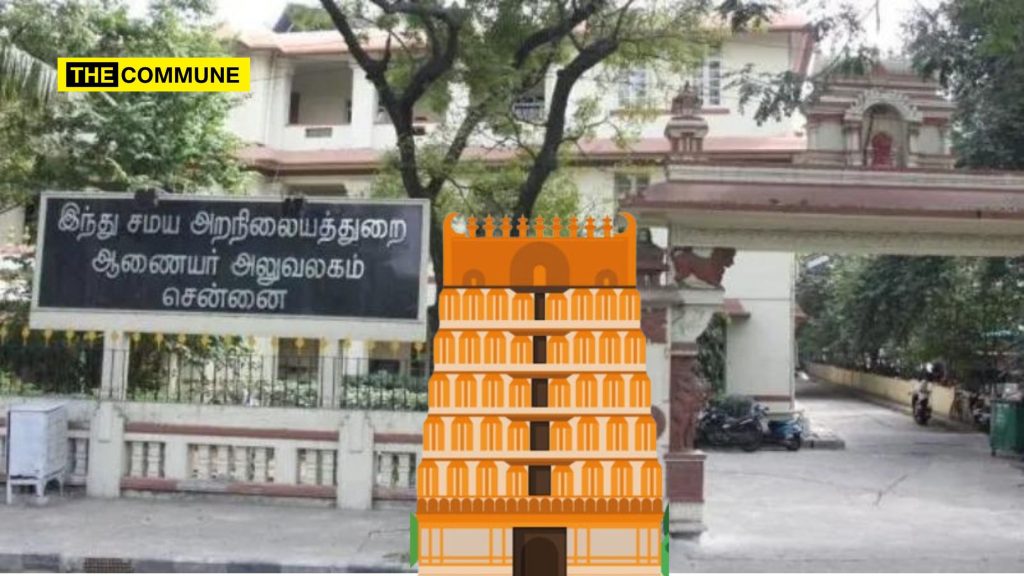
An unusual and controversial response from the Hindu Religious and Charitable Endowments (HR&CE) Department to a Right to Information (RTI) query has triggered widespread criticism, especially amid ongoing reports of large-scale irregularities involving temple properties in Tamil Nadu.
In a recent RTI reply, the department claimed that disclosing the names of individuals leasing temple lands could endanger the lives and safety of its officials. This justification, now circulating widely on social media, has drawn sharp public backlash—raising concerns that the department is either deliberately withholding information or shielding those involved in mismanagement and alleged fraud.
The incident stems from Tirunelveli district, where an RTI was filed seeking details about the Seethalai Sivalingeswarar Temple in Urumankulam village, Radhapuram taluk. The temple, which falls under the jurisdiction of the Hindu Endowments Department, was the subject of a request by a Chennai-based individual named Ramalingam. The RTI sought information on temple practices, including whether daily rituals are conducted, the priest’s salary and identity, the date of the last renovation, and most significantly, information about the temple’s immovable properties.
While the department confirmed the existence of immovable assets, it admitted it had no information about whether these properties generated any income. However, when asked who the current tenants were and who was managing these temple lands, the Public Information Officer gave a startling response, “disclosing the tenants’ identities was deemed unsafe due to potential threats to life and property.”
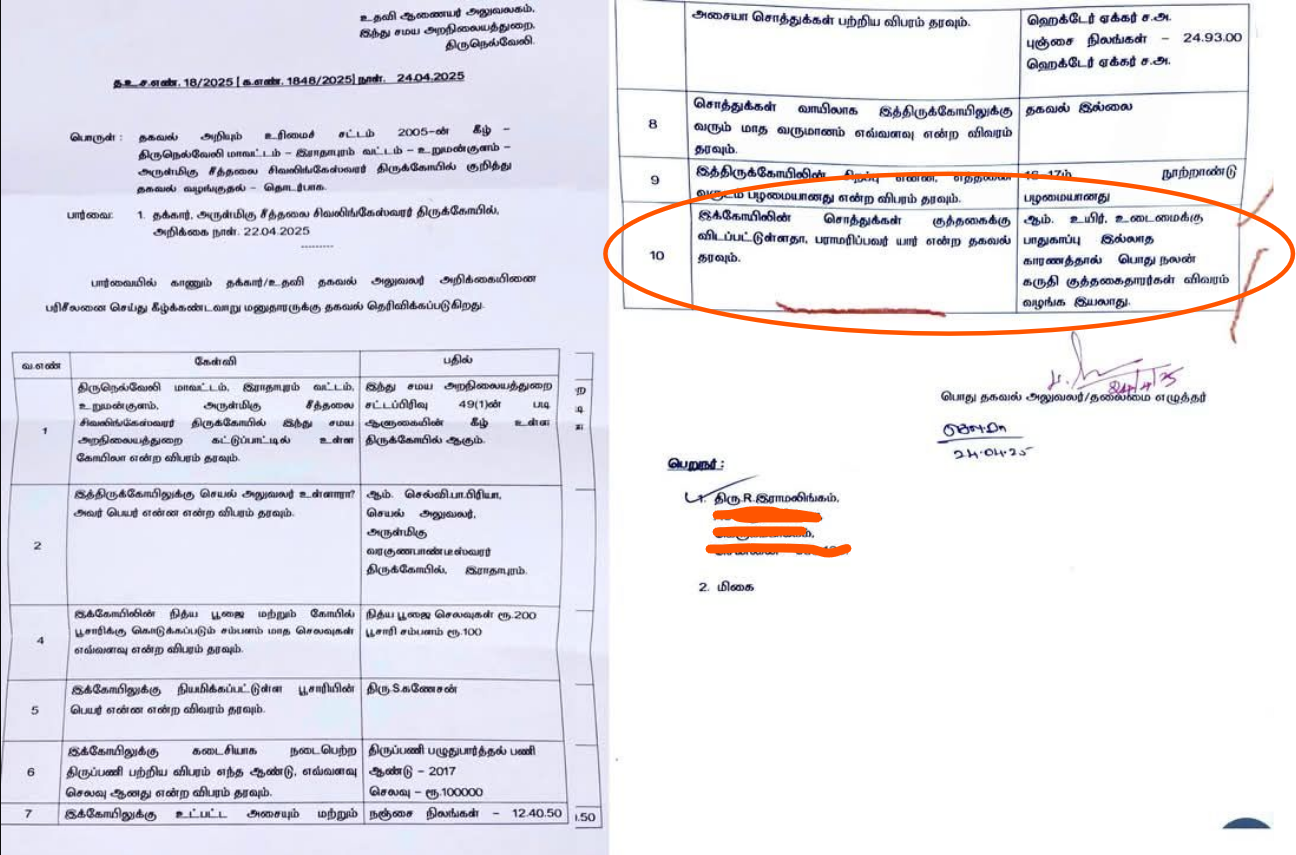

This statement has raised serious concerns about the extent of control exercised by tenants over temple assets and the apparent inability—or unwillingness—of the department to act. Critics argue that if officials fear retaliation, it signals a breakdown in law enforcement and governance, especially when sacred and public assets are involved.
What is even more troubling, observers note, is the department’s inaction despite reportedly receiving no income from leased temple properties. There appears to be no initiative from senior HR&CE officials to reclaim these lands or hold tenants accountable.
The response has intensified public demand for transparency and accountability in the management of temple assets, with calls for a deeper investigation into whether systemic corruption and collusion are being overlooked under the guise of safety concerns.
(With Inputs From Dinamalar)
Subscribe to our channels on Telegram, WhatsApp, and Instagram and get the best stories of the day delivered to you personally.