


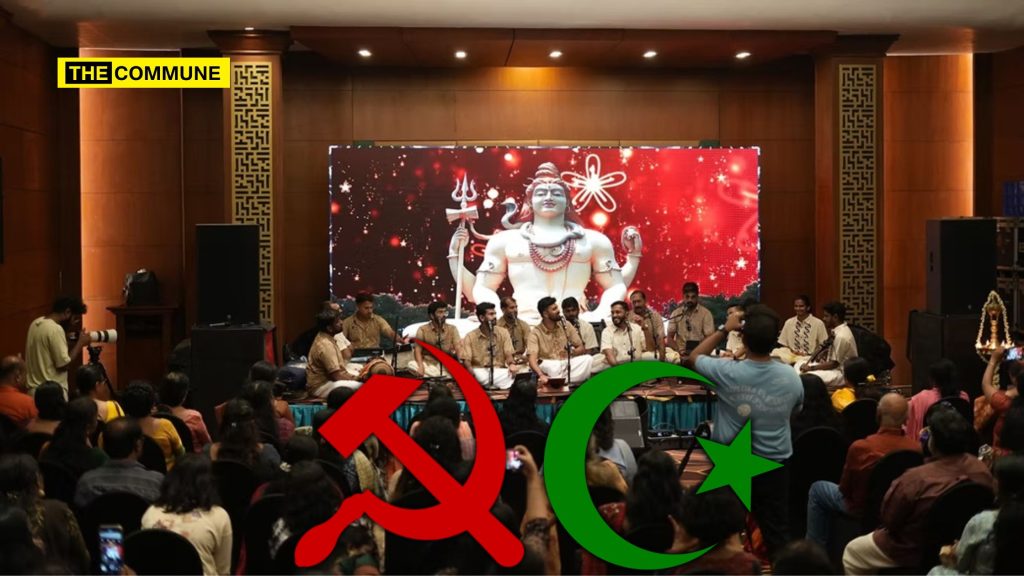
It is reported that the Kerala-based bhajan group Nandagovindam Bhajans, which has gained significant popularity among youth and devotees, has come under sustained criticism and coordinated backlash on social media platforms over the past week.
According to reports, the group known for performing devotional music at temples and cultural festivals across Kerala and outside the state, has witnessed a surge in online campaigns questioning its activities, intent, and growing public presence. The group is said to attract large crowds wherever it performs, including at temple festivals and cultural events, with recent programmes reportedly drawing overwhelming attendance.
It is alleged that the criticism intensified as the group’s popularity grew, particularly among young people, and as its performances began to feature prominently in temples and public spaces. Social media posts by Communists and Jihadis circulating against the group have reportedly claimed that such bhajan initiatives are part of a broader ideological or political mobilisation, a charge that supporters of the group have rejected.
It is further alleged that some online posts and commentaries by these Communists and jihadis have sought to portray bhajan groups as instruments of covert social or political engineering, despite the programmes being presented as devotional or cultural in nature. Supporters have countered these claims by stating that bhajans and similar devotional gatherings are long-standing cultural practices in Kerala, especially during temple festivals and religious seasons, and are not confined to any political agenda.

Reports also indicate that criticism has not been limited to online commentary, with apprehensions expressed that sections of the media may amplify the allegations. At the same time, it is claimed that supporters view the backlash as part of a broader resistance to the increasing participation of youth in temple-based cultural and devotional activities.
It is alleged that the debate has widened into a larger discussion on social media about religious expression, cultural practices, and the boundaries of secularism in public spaces. Posts supporting the bhajan group have described the current developments as reflective of a wider revival of interest in temple traditions and devotional music among younger generations.
Subscribe to our channels on Telegram, WhatsApp, and Instagram and get the best stories of the day delivered to you personally.