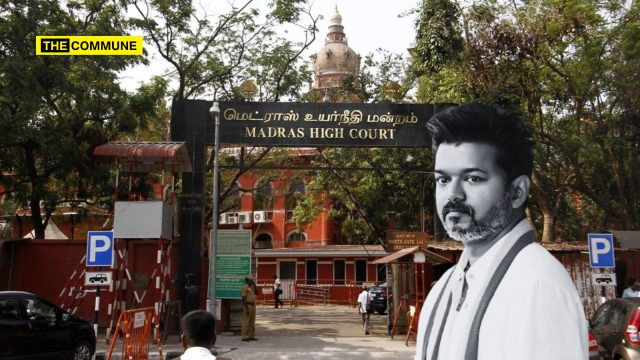
The Madras High Court on Thursday, 26 February 2026, questioned the challenge mounted by Tamilaga Vettri Kazhagam (TVK) against the Tamil Nadu government’s guidelines regulating political roadshows, asking what was objectionable in the rules framed by the state.
The state government had issued the guidelines on 5 January 2026 to regulate roadshows, political processions and public meetings conducted by political parties and organisations.
TVK Joint General Secretary CTR Nirmal Kumar subsequently filed a petition in the High Court seeking to quash the norms. The matter came up for hearing before a Division Bench comprising Chief Justice MM Shrivastava and Justice G Arul Murugan.
Appearing for TVK, counsel argued that the requirement to apply for permission 30 days in advance to conduct public meetings was arbitrary. The petitioner also contended that granting priority to recognised political parties amounted to discrimination and that responsibilities relating to event safety were being unfairly shifted onto political parties.
During the hearing, the Chief Justice questioned what was wrong with the guidelines and noted that they had been framed pursuant to earlier directions of the High Court following the Karur crowd tragedy.
The Bench observed that several parties were being formed “like mushrooms” merely to obtain income-tax exemptions and that many of them do not even contest elections. It asked what was improper in giving priority to established parties that have contested multiple elections and produced MPs and MLAs. The court also sought to know how many elections TVK had contested.
On behalf of the state, it was submitted that the guidelines were not targeted at TVK but applied uniformly to all political parties. The government further told the court that since the norms apply to gatherings exceeding 5,000 people, some organisers were applying for permission claiming attendance of 4,998 persons in order to bypass the rules.
The state also clarified that when multiple parties seek permission for the same venue and time, preference is given to recognised parties, failing which applications are processed on a first-come-first-served basis. It maintained that the rules were framed without discrimination.
After hearing the submissions, the Bench directed the Tamil Nadu government to file its response within three weeks in the petition filed by TVK and adjourned further hearing of the case.
Subscribe to our channels on WhatsApp, Telegram, Instagram and YouTube to get the best stories of the day delivered to you personally.