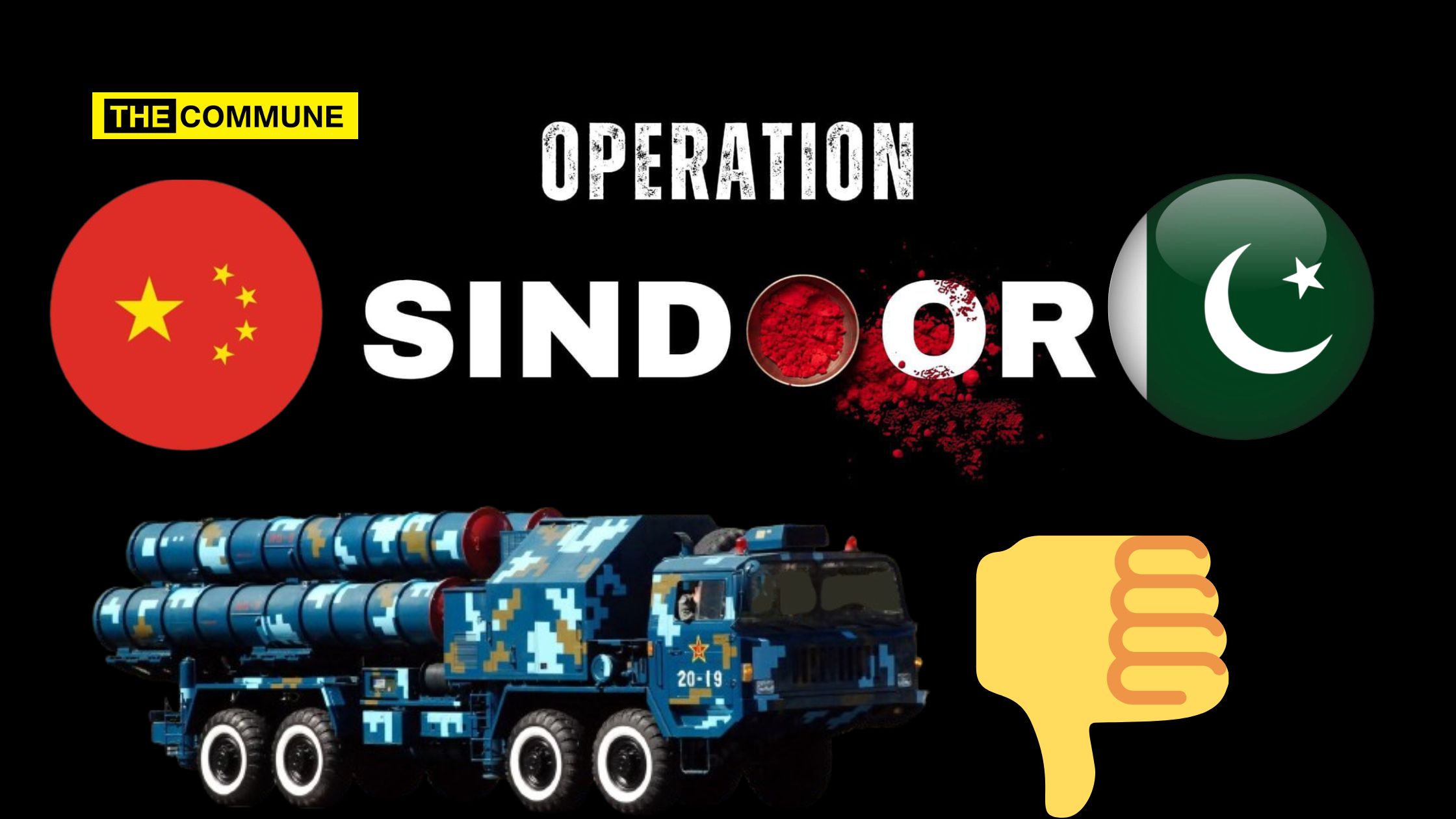
Current news suggests that the HQ9’s terminal missile guidance system, despite its impressive specifications on paper (derived from reverse-engineering the S300 with claims of superior capabilities to the Patriot), is proving ineffective on the actual battlefield. This poses a significant threat to Pakistan.
The Shifting Sands of Air Defence: From Pakistan’s Dominance to a Question Mark
Until 2018, Pakistan’s air defence system was considered more advanced than India’s, and it had reportedly shot down several Indian aircraft in the past. The acquisition of the HQ9 was expected to enhance this capability further. However, India’s acquisition of S300 and S400 systems seems to have altered the equation.
We are now witnessing disappointment and leaks from retired Pakistani officers who had faith in the HQ9 system. Pakistan urgently needs to protect itself from Indian aircraft and would ideally seek an S400 system. However, Russia is unlikely to provide it, and while Pakistan might want to acquire the American Patriot system, its financial situation makes this improbable.
Therefore, Pakistan’s air defence, once seemingly dominant, has become a major question mark, particularly concerning China’s claims.
Tactics to Evade HQ9 Radar and Missiles
Let’s consider the tactics employed by Indian aircraft to evade the HQ9 radar and its missiles. The Radar Cross Section (RCS) of an aircraft like the Sukhoi 30 MK plays a crucial role. A smaller RCS makes an aircraft less visible to radar. It appears that the “shoot and scoot” method is being utilized. While we await official mission briefings for confirmation, certain factors are likely at play.
Firstly, it is a known limitation that the HQ9 radar struggles to detect low-flying aircraft. This has been pointed out by American experts. Secondly, India’s Early Warning Systems and Electronic Countermeasures (ECM) are likely playing a vital role. Radar is the “eye” of the missile system, and to neutralize it, ECM, including jamming devices (possibly the Israeli “Alpha” system and India’s indigenous “Dhruti” radar system), are employed. These systems provide our pilots with accurate warnings about active enemy radars, allowing them to take evasive action or jam the signal.
Furthermore, when attacking with missiles like the Tukula Pavel Bora at a range of 100 km and speeds of Mach 2, the HQ9 radar has a limited window of approximately 25-30 seconds to detect, process, and launch an interceptor. At such close ranges, the HQ9’s ability to effectively counter these attacks is significantly diminished.
Reports indicate that approximately eight HQ9 surface-to-air missiles were fired, with one even landing near an S-35 aircraft – a telling incident.
The F-7 Aircraft and the P-15 Missile: Debunking Pakistani Claims
Pakistani claims of their F-7 aircraft posing a significant threat to the Indian Air Force, capable of emptying our skies, now appear hollow.
The P-15 type PVS missile, with a reported range of 200-250 kilometers and a speed of Mach 3, has also been a subject of analysis. One such missile landed unexploded in Rajasthan and has been secured by the Indian Air Force. This intact missile will undoubtedly be handed over to the DRDO for thorough examination. Allied nations like the USA and Taiwan will also likely be keen to analyze their technology and vulnerabilities. This incident suggests a failure in the P-15’s detonation mechanism.
A Helicopter View: China’s Military Hardware Underperforming
Taking a broader perspective, it is evident that in the current conflict, two out of the three key pieces of Chinese military hardware supplied to Pakistan – the F-7 aircraft and the HQ9 air defence system – are underperforming significantly.
This is underscored by the Pakistani Prime Minister’s recent speech lamenting an attack by 50 Indian fighter jets simultaneously. If the HQ9 system, with its claimed 250 km range, were effective, Indian aircraft should not have been able to approach the border unchallenged, and at least some should have been intercepted.
The Importance of Air Defence Systems: A Bulletproof Vest for the Nation
An air defence system is akin to a bulletproof vest for a soldier – a crucial layer of protection. If this system is compromised, even the most potent offensive capabilities, like nuclear weapons (potentially stationed at Karachi port), become vulnerable. The apparent failure of the HQ9 raises serious questions about the security of Pakistan’s strategic assets.
A One-Sided Comedy: The Failure of Pakistan’s Media Narrative
The Pakistani government’s attempts to control the media narrative surrounding the ineffectiveness of its air defence systems appear to be failing. They seem unable to effectively propagate their own version of events. This weakness in information warfare is concerning.
Global Perception and China’s Arms Trade
Interestingly, several other countries, including Morocco, Egypt, Turkmenistan, Uzbekistan, Iran, Algeria, Serbia, and Turkey (potentially), have purchased or are considering purchasing the HQ9 system. Had the world been effectively informed about its poor performance, China’s arms trade could have suffered a significant setback. This psychological blow could have been a major advantage for China’s adversaries.
It is noteworthy that this critical information is primarily being discussed by online experts and those in open-source intelligence, rather than mainstream high-level discussions.
Acknowledging China’s Civilian Technological Advancements
While acknowledging China’s significant advancements in civilian technology, with their modern and clean cities, the performance of their military technology in this conflict raises serious doubts about their claims in this domain. Despite possessing vast arsenals, the effectiveness of their systems is now under scrutiny.
India’s Drone Warfare: Learning from Ukraine
The second attack reportedly involved UAV drones utilized by India. The notion, prevalent as recently as 2022, that India only used drones for wedding photography and TikTok videos has been decisively shattered. India is now effectively employing both indigenous and imported drone models in warfare, drawing lessons from the conflict in Ukraine. It is encouraging to see our military adapting and our new endeavors succeeding.
The Critical Importance of Propaganda Warfare
However, our apparent weakness in propaganda warfare remains a significant concern. Failing to effectively highlight China’s military shortcomings on the international stage is a missed opportunity.
Subscribe to our channels on Telegram, WhatsApp, and Instagram and get the best stories of the day delivered to you personally.