


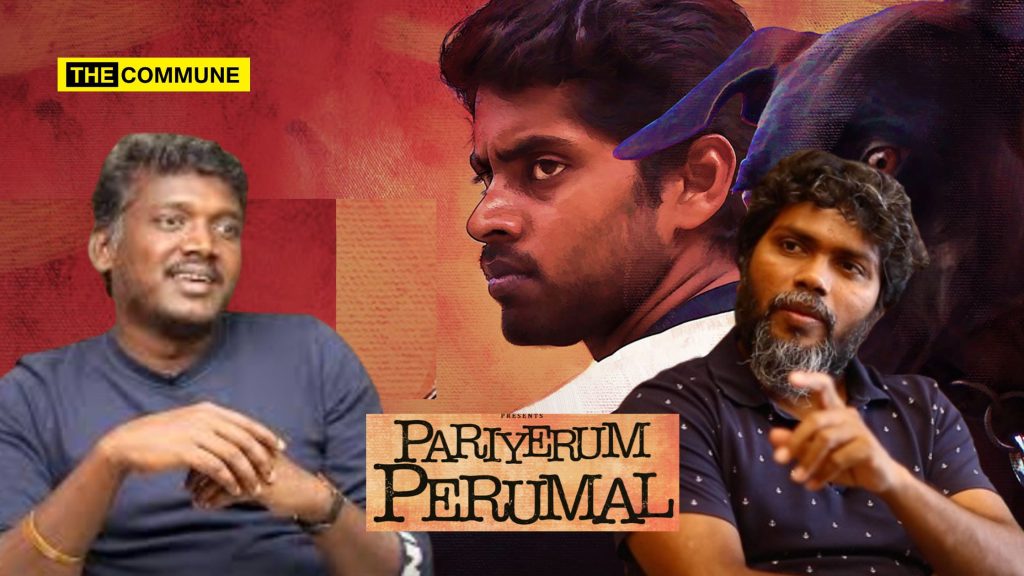
The “triple flop” Dravidianist director Pa Ranjith, known for his ideologically-driven cinema, has once again stirred controversy this time at the Verchol Dalit Literary Festival—by expressing apparent resentment toward the rising success of Mari Selvaraj. In a noticeably bitter tone, Ranjith revisited his association with director Mari Selvaraj, claiming that he was the one who introduced Selvaraj through the critically acclaimed film Pariyerum Perumal. He lamented that, despite being the producer of the film, he has not been duly recognized for its success—an unusual complaint, as industry norms typically celebrate the director as the creative force behind a film’s success or failure.
Ranjith appeared to express envy over Mari Selvaraj’s rising acclaim and attempted to reclaim part of that credit by emphasizing his role in launching Selvaraj’s career. However, Mari Selvaraj has carved his own path through impactful, socially resonant films that have earned both public and critical praise, without relying on ideological narratives as heavily as Ranjith.
Rather than self-reflection, Ranjith used the platform to rationalize his string of underwhelming releases, attributing lack of recognition to others instead of acknowledging potential flaws in storytelling and audience disconnect. He went further to suggest that he has been the sole torchbearer of Dalit-focused cinema and workplace inclusion, seemingly demanding acknowledgment for championing such causes.
Why Kaala Was A Flop – A Pa Ranjith Narrative
Pa Ranjith, in an attempt to explain the commercial failure of his film Kaala, offered a string of justifications during his speech. He said, “What happened during the time of Kaala was that, immediately after Rajinikanth announced his entry into politics, everyone began to write that he was using me. Particularly, what Viduthalai Chiruthaigal Katchi’s Ravi Kumar did then was…,” Ranjith paused mid-sentence, seemingly avoiding direct criticism, and continued, “Some people started writing that I was being motivated and funded by the RSS, that I was portraying Rajinikanth as an Ambedkarite and taking him to the slums. I didn’t know what to make of all this. Kaala is a film that openly opposed RSS ideology and stands till today. I presented that straight away. The conflict is black and white. In the climax, I had said that three colours should unify. I was confused and don’t know what more I was expected to take. I’m confused as to why the film was criticized so much.”
He went on to say that the entire Tamil community turned against Kaala after comments made by Rajinikanth about the Thoothukudi firing incident, claiming that those remarks triggered widespread negative campaigning against the film. Then he lamented that, “No one showed mercy that I was the one who directed it. ‘Ranjith was sold out’. That’s all that mattered. Many others have worked with Superstar Rajinikanth, but they were never sold-out directors, but I was the only one who was.”
Envy Towards Mari Selvaraj? Pa Ranjith’s Attempt To Overshadow His Protégé’s Success
In a later part of his speech, Pa Ranjith appeared to repeatedly downplay Mari Selvaraj’s success, claiming that Pariyerum Perumal—the film that launched Mari’s career—only came to be because of his backing. He seemed intent on reminding the audience that he produced the film and, in doing so, tried to shift the spotlight back onto himself.
Speaking at the event, Ranjith said, “We have made Pariyerum Perumal and released it—it became a huge hit. But what happened at that time was… Pariyerum Perumal was a movie that I invested my own money in. I’m its producer. While releasing the movie, I had previously given some money to my wife for savings. I got that from her and released the movie. But after watching the movie, I saw an article, I think it was Vikatan, they had not even mentioned that it was produced by Neelam Production, but had written that Pariyerum Perumal was awesome. A director wrote ‘Director Ram’s upbringing led to this film being made.’ I’m asking, what is wrong with you praising me? What is the problem with writing ‘Neelam Production’? When a good movie comes out, who is it being produced by?”
Ranjith went on to say that he had no clear expectations about whether the film would succeed. He admitted that only two scenes truly resonated with him. One was the moment where the character says, “I’m going to become a doctor.” After watching that scene, Ranjith told the team, “That alone is enough for me.” The other was the professor’s line, “If you back down in fear, will they spare you?”—a moment that ultimately convinced him to go ahead and release the film.
He concluded by subtly expressing resentment that, “Even then, everyone seemed to have an issue acknowledging that it was a Ranjith production. But fine, let it be. But a Mari Selvaraj rose from that, didn’t he? And now he’s reached great heights, hasn’t he?”
Ranjith Attempt to Claim Sole Ownership Over Dalit Representation Simply To Undermine Mari Selvaraj
Perhaps the most disappointing moment came when flop director Pa Ranjith appeared to craft a narrative positioning himself as the only true advocate for Dalit representation in cinema—while subtly discrediting director Mari Selvaraj’s contributions. In a surprising and divisive remark, Ranjith suggested indirectly a notion that Mari Selvaraj was not committed to offering opportunities or showing preferential support to Dalits in his film projects. He implied that, unlike himself, Mari was reluctant to prioritize the upliftment of marginalized communities in his work.
Ranjith said, “Mari Selvaraj came and asked me how many people have come to work in your production, how many have come to make films, and how many of them are non-Dalits. How many people are working with your movement, and when there are this many non-Dalits, how are you going to respond to the accusations against you? I said I don’t care about that. Yes, I am a Dalit. I live for Dalits. I will give a chance only to Dalits. I don’t care and I don’t understand. I know who I am. Why should I come to you and give a certification in written to trust me? I don’t need it.”
Subscribe to our channels on Telegram, WhatsApp, and Instagram and get the best stories of the day delivered to you personally.