


Aham sannihito yuddhe yadi yuddham samarabhe
Prajanam rakshanarthaya nityam dharmam avapnuyam
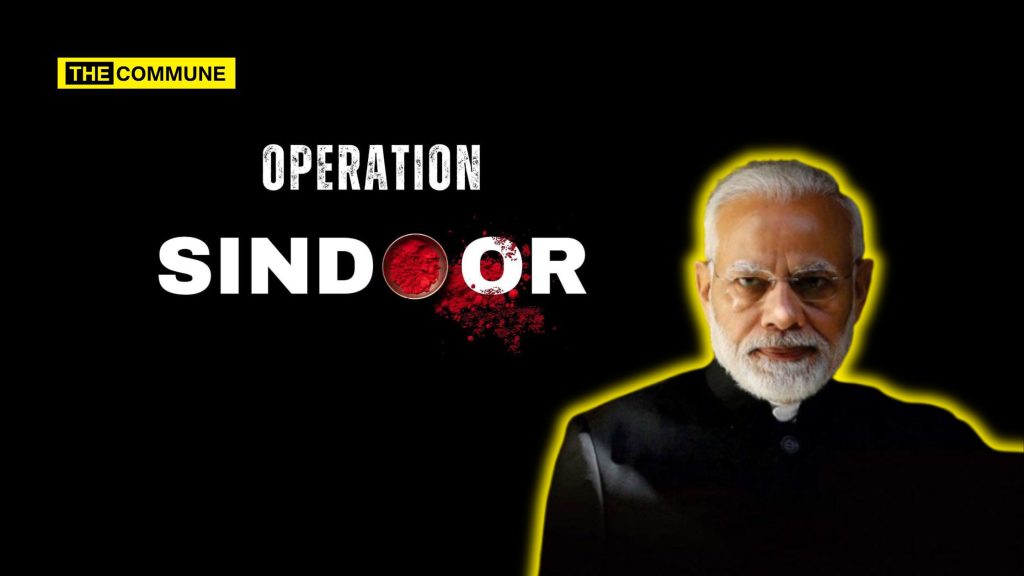
As the Vālmīki Rāmāyaṇa, Yuddha Kāṇḍa, Sarga 36, Verse 13 says, our beloved PM Narendra Modi rushed back to Bharat in the middle of his Saudi Arabia visit after a deadly terrorist attack in Pahalgam, Jammu and Kashmir, in which 26 Bharatiyas were killed based on their religion.
PM Modi returned to strategically plan and successfully execute an operation that should put a full stop to future attacks and ensure the safety of fellow Bharatiyas.
The verse mentioned above states that Lord Rāma declares that he leads from the front, never abandoning his duty when the people are in danger.
Bharat launched Operation Sindoor and assigned our Sthree Shakthi, along with Foreign Secretary Vikram Misri, to lead the briefing of the entire operation, which targeted the nine terrorist bases in Pakistan and PoK. Even after this, Pakistan continued to use drones and shelling to target our religious sites.
In retaliation, we neutralised their air defence system. Our counteroffensive became a historic milestone when India successfully attacked, for the first time, the air bases of a nuclear-armed nation.
Pakistan also targeted medical centres and school premises near Indian air bases. They also shelled Rajouri town, caused property damage, and inflicted injuries on civilians in Ferozepur and Jalandhar. Pakistan continued drone intrusions and heavy artillery, mortar, and small-arms shelling at various locations in India. However, we planned our actions in a dharmic way to target only their terrorist bases, ensuring no civilians were harmed.
Here the dharma yuddha principle is followed as per Mahābhārata, Bhīṣma Parva, Chapter 13, Verses 12–18.
As Arthaśāstra Book 10 – “The Conduct of War states: Chapter 3 – Kinds of Warfare
Trividhaṃ yuddham – manorayuddhaṃ, danda yuddhaṃ, upanayāy yuddhaṃ।
This means the War is of three kinds: War by counsel (diplomacy), War by might (arms), and War by open declaration (legal). It is clear evident that our PM Modi followed the dharmic principles on all 3 ways.
Using Arms
Yuddhena hataḥ santi ca santi aparāṅmukhān
Nāśastrapāṇinaṃ śastreṇa hanyād dharmaḥ sa niviṣṭaḥ
It means one must not attack fallen soldiers, those retreating, or those who are unarmed; this is the conduct of Dharma in war. We fought against our enemies with strength of arms.
Diplomatic Route
PM Modi took a diplomatic approach to share information about Operation Sindoor with key partner countries, members of the United Nations Security Council and the EU. We sent all-party delegations comprising 59 members, including 31 political leaders from the ruling NDA and 20 politicians from other parties who were assisted by former diplomats to convey India’s message of zero tolerance against terrorism. This way, we weakened Pakistan from the other side and acted according to war by counsel.
Legal Route
Apart from this, the Indian government also put in abeyance the Indus Waters Treaty – this has far-reaching consequences for Pakistan, closed the Attari-Wagah border. India also suspended all bilateral trade to impose immediate economic pressure, and revoked visas of all Pakistanis residing in India.
Mahābhārata, Śānti Parva, Chapter 59, Verse 61
Ir enaro hi sadā yuktaḥ prajāṁ ca hahataṁ vrajet।
Ātmā ca tadā rakṣet samprāpte ca viśeṣataḥ॥
It means a king (leader) must always remain alert and actively work for the welfare of his people, especially being vigilant and present during times of crisis.
As stated above, our leader stayed with us during the crisis and redefined India’s policy against terrorism with swift decisions and actions. India’s stand is very clear that water and blood cannot flow together.
G. Prasanna Venkatesan writes on Bharathiya knowledge, Sri Vaishnavism, Puranic and Ithihasa themes, and stories centered on national and social development.
Subscribe to our channels on Telegram, WhatsApp, and Instagram and get the best stories of the day delivered to you personally.