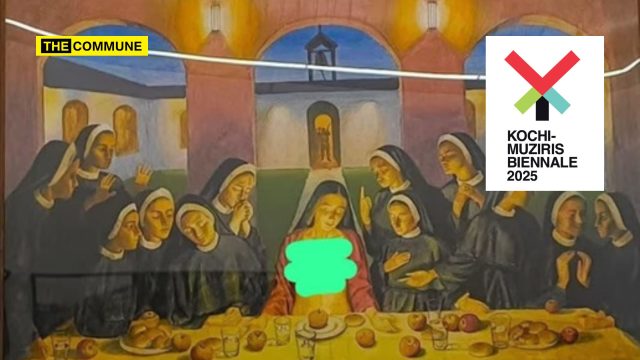
An artwork displayed at the Kochi-Muziris Biennale has triggered protests from Christian organisations in Kerala, leading the Kochi Biennale Foundation to temporarily shut down one of its exhibition venues, citing law-and-order concerns during the New Year period. The controversy centres on a painting by artist Tom Vattakuzhy, exhibited as part of the ‘Edam’ exhibition at the Garden Convention Centre, which Christian groups alleged misrepresented Leonardo da Vinci’s iconic depiction of the Last Supper and hurt religious sentiments.
Christian bodies, including the Kerala Latin Catholic Association and the KCBC Vigilance Commission, objected to the visual parallels drawn between the artwork and the Holy Mass, arguing that sacred Christian imagery had been distorted. Complaints were submitted to the Chief Minister and the Cultural Affairs Minister, seeking removal of the artwork and a probe into how it was cleared for display. Following protests and warnings of agitation, the Biennale Foundation closed the venue for a few days, stating that the police were unable to guarantee adequate security amid New Year celebrations.
However, the Biennale administration and curators firmly refused to remove the artwork. The Kochi Biennale Foundation maintained that taking down the work would amount to censorship and a violation of artistic freedom. Curators clarified that the artwork was inspired by a literary and theatrical tradition, depicting the historical figure (a German spy) Mata Hari in the moments before her execution, and was not intended as a commentary on Christian theology. The artist, who comes from a Christian background, also asserted that the work was rooted in humanist values shaped by his upbringing and not meant to offend any faith. Despite sustained objections, the Biennale stood by the decision to retain the artwork, opting instead for dialogue with protesting groups.
When Loyola College Exhibition Derogated Bharat Mata & Hindu Symbols
This incident reminds one of events that unfolded at the Loyola College in Chennai in 2019. During a cultural festival, an art exhibition featured paintings that were derogatory towards Hindu symbols and sentiments. One painting depicted ‘Bharat Mata’ (Mother India) in a manner associated with the #MeToo movement, while others portrayed Hindu icons like the ‘trishul’ associated with violence, and even depicted Prime Minister Narendra Modi in a controversial light.
The reaction from Hindu groups, including the BJP and RSS, was one of immediate and strong condemnation. They denounced the paintings as a malicious insult to Hindu traditions and national icons, lodging formal police complaints and announcing large-scale protests.
Only after sustained protests and political pressure did Loyola College step in to remove the offending artworks. The college issued an apology, stating that the paintings had been taken down once the objections were brought to the notice of the management. The organisers acknowledged that the exhibits had caused offence and sought to defuse the situation by withdrawing them, bringing the episode to a close.
When MF Hussain Derogated Goddess Saraswati
The episode has also revived a wider debate on selective outrage and artistic double standards in India’s cultural discourse. Remember how Hindu deities have repeatedly been depicted in obscene, demeaning, or provocative forms by artists such as MF Husain and others, with liberal and Left-leaning circles routinely defending such works in the name of artistic freedom. In contrast, in the present case involving Christian religious symbolism, organised church bodies were able to mobilise protests strong enough to force the temporary closure of the venue, placing pressure on organisers and compelling the artist to issue public explanations.
The present controversy has exposed real intolerance backed by institutional power. While Hindu sentiments are often dismissed as expendable, Christian groups were able to effectively shut down an exhibition and demand the removal of a work they found objectionable, raising questions about whether one rule applies to Christianity and another to Hindu beliefs in India’s art and cultural spaces.
Christians outrage over a painting in Kerala after an artist showed Mata Hari in place of Jesus Christ.
A church body shut down the exhibition, saying it will be allowed to reopen only after the painting is removed.
When Hindu gods were mocked, leftists termed it “artistic… pic.twitter.com/GpRMn9F0uZ
— OpIndia.com (@OpIndia_com) January 1, 2026
Subscribe to our channels on Telegram, WhatsApp, and Instagram and get the best stories of the day delivered to you personally.