A few hours outside Bengaluru, on a once-barren patch of land in Doddaballapur, an unusual school day begins with birdsong and the smell of wet red earth. What was dry and barren land just a few years ago is now a terrain of young forests, vegetable gardens, and mud-brick classrooms where children run barefoot, their plates filled with warm, nourishing food grown a few meters away.
This place is Freedom Land, the soul campus of The Healing Circle Trust and Creative School, a homegrown answer to years of the Macaulayite model of education, quietly raising a generation rooted in Indic civilizational values and Indian soil, not in borrowed disdain for their own culture.
Beyond Macaulay: Education That Does Not Alienate Children From Their Roots
For nearly two centuries, the dominant template of Indian schooling has been what Macaulay wanted: to create brown sepoys who think and feel like pale imitations of their colonial masters. The cost of this has been visible everywhere; children who grow up fluent in English but estranged from the land beneath their feet, ashamed of their traditions, and trapped in a marks-and-job race that leaves their inner life stunted.
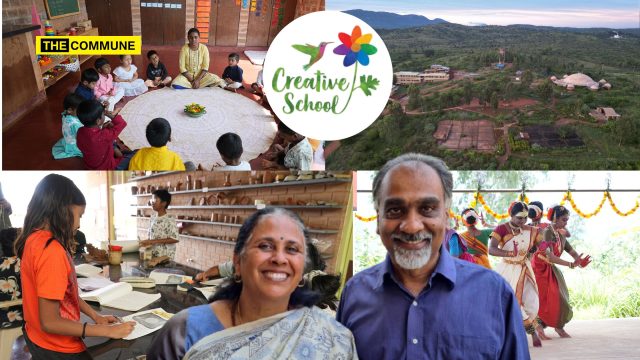
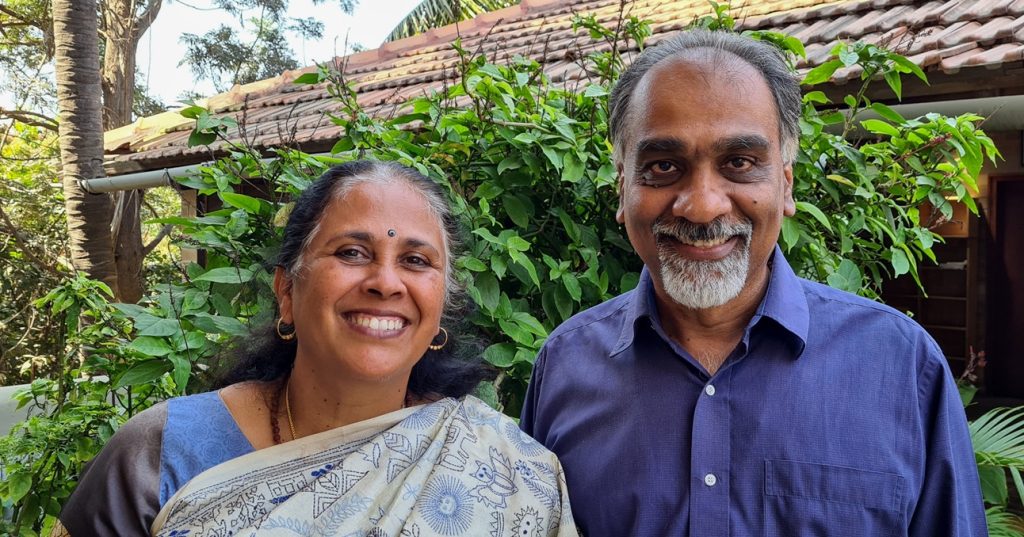
The Healing Circle Trust, founded in 2010 by Jayashree Ashok and B Ashok after leaving corporate careers in Seattle, offers a very different visualisation of what a school can be. Inspired by the integral education philosophy of Sri Aurobindo and The Mother, Creative School in North Bangalore and Freedom Land in Doddaballapur treats each child as a whole being – physical, emotional, intellectual, social, and spiritual, whose education must deepen, not erase, their connection to self, community, and dharma.
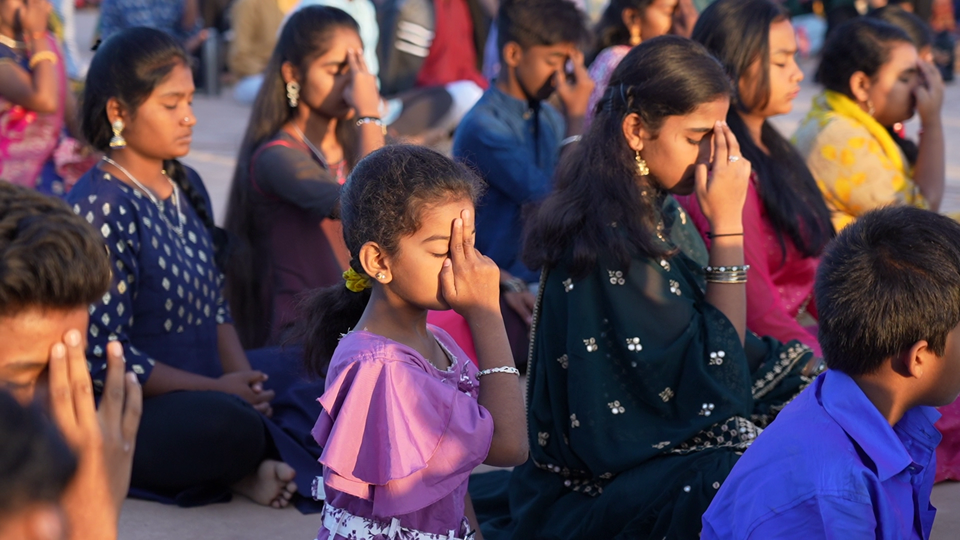
Here, meditation, yoga, seva, and silence are as natural a part of school life as mathematics and science; the aim is not to mass-produce clerks, but to nurture conscious human beings who can serve Bharat and the world from a place of inner clarity.
Freedom Land: Bhoomi As Living Classroom
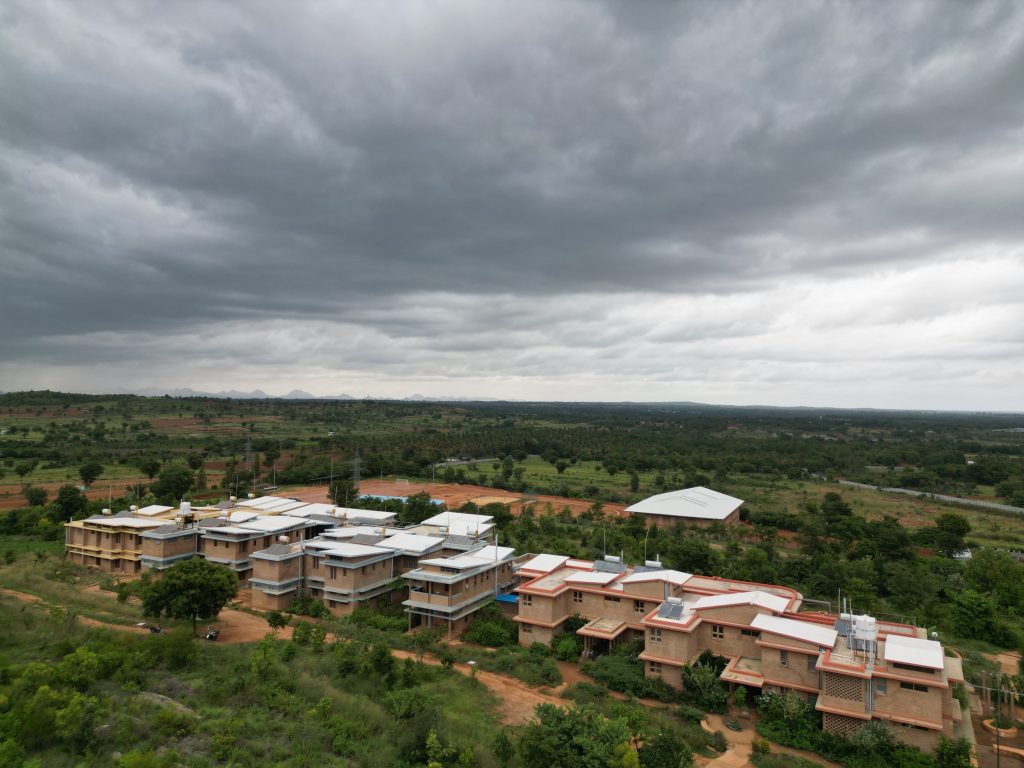
When the team first stepped onto the 34-acre Freedom Land campus, much of the soil was eroded, water-scarce, and almost bare of trees, in a drought-prone area that had lost its green cover and seen water sources dry up. Instead of responding with more concrete and air-conditioning, they chose to allow the land to heal and let it become their first teacher.
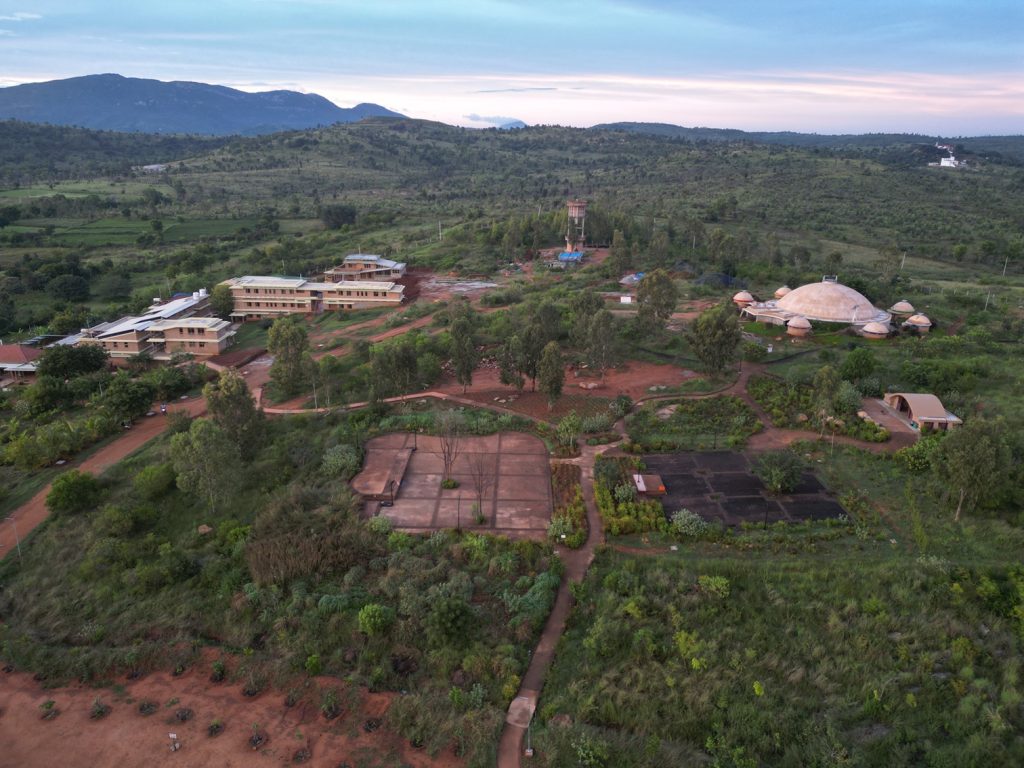
Through the “1000 Together” initiative, thousands of students, parents, villagers, and volunteers have, over five years, planted more than 14,000-16,000 native, sacred, medicinal, and fruit-bearing trees on this once-barren soil. They have dug swales, bunds, soak pits, recharge wells and ponds that hold the monsoon and send it back gently into the aquifers, slowly restoring the local water table.
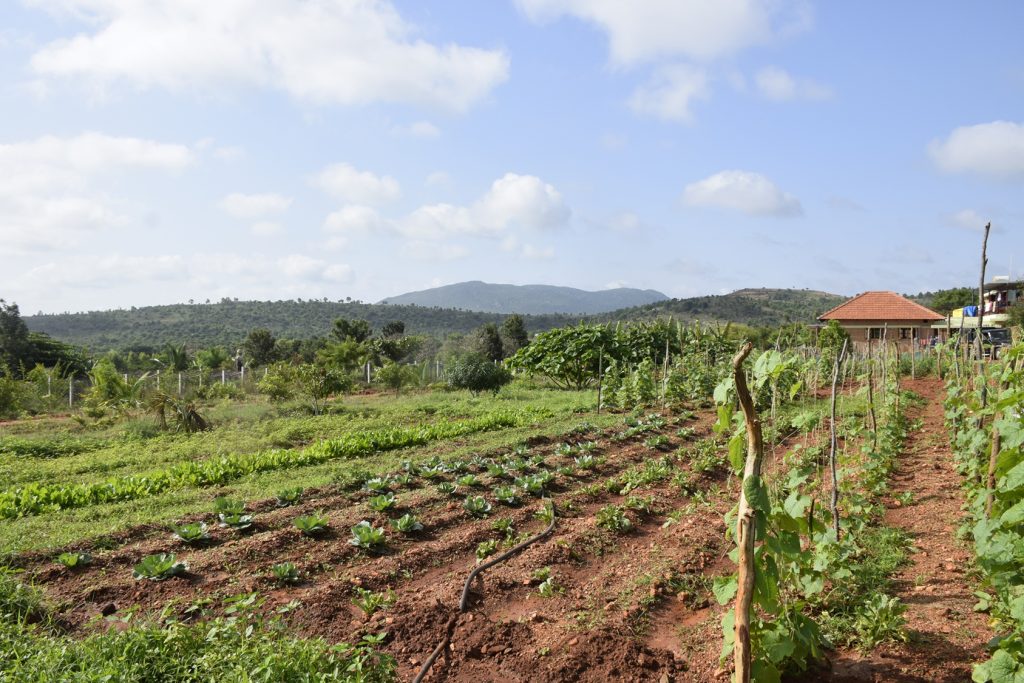
Today, only about 10% of the campus is built up; the rest is consciously left to forests, orchards and fields, making the land itself a living textbook in ecology, interdependence, and reverence for nature. Around 40% of the school’s vegetables and nearly all its leafy greens now come from its own organic farms, tended by farmers, teachers, children and local community working together, so that food is experienced as prasad from the earth, not as a packaged commodity.
Equal Desks, Equal Plates: Nearly 160 Children Learn Free
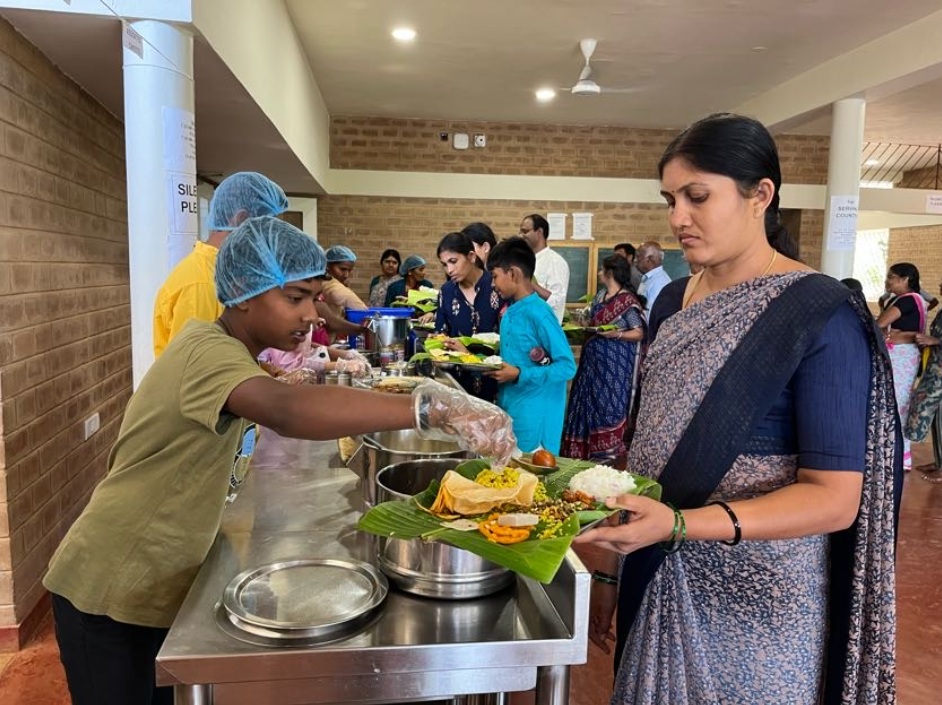
One of the quiet revolutions at Creative School and The Healing Circle is what happens at the dining room. Children across the programs, Creative School’s mainstream classes called Palash, the Parijatha Learning Centre for first generation learners, Chiguru bridge school for migrant children, and Moggu crèche, receive fresh, nutritious, home-cooked meals every day. The kitchen draws extensively from the campus’ organic farms: seasonal vegetables, leafy greens, and fruits which are turned into simple, wholesome and tasty dishes that balance taste with long-term health and give children steady energy to learn, play, and heal.
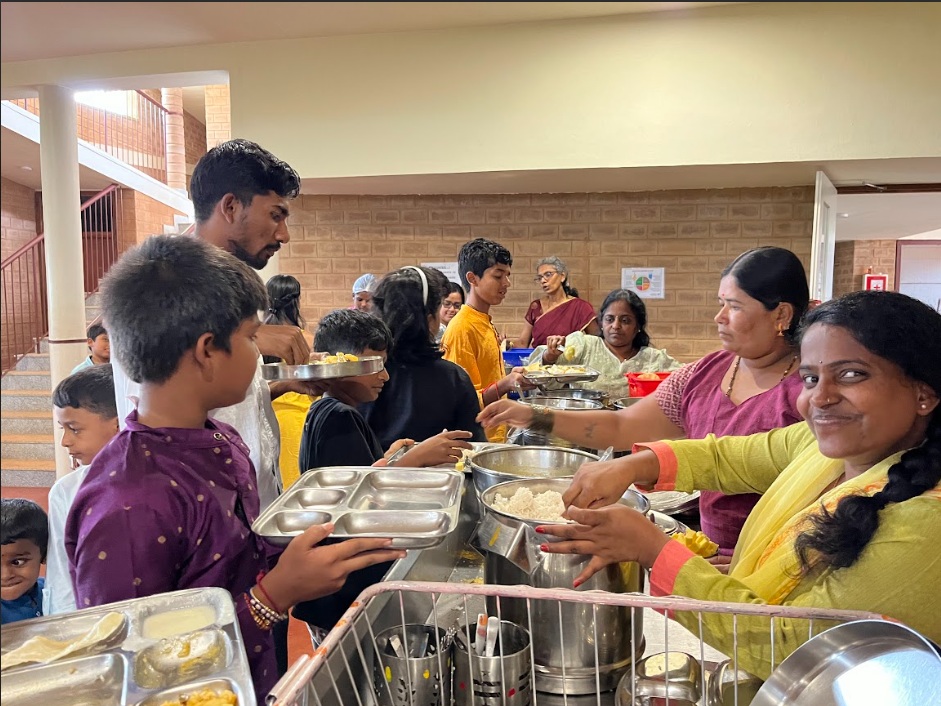
For many children from migrant and economically challenged families, this is the first time in their lives that a warm, balanced meal is a certainty and not a question. Teachers describe slow, noticeable changes in children’s energy, attention, and physical health over time, as their basic nutritional, hygienic, and emotional needs are consistently met. In that shared dining space there is no separate queue, no “cheaper” menu for those who cannot pay – Everyone eats the same food, at the same space, without labels or categories.
Within Creative School’s roughly 375 students, around 160 children from economically challenged families study entirely free of cost through the Support A Child and Parijatha Learning Centre programs. Everything that would normally shut them out of a “good” school, fees, books, clothing, boarding where needed, transport, medical care, counseling, and daily hot meals, is taken care of by the trust and its well-wishers.
Crucially, they are not placed in a cheaper, parallel track. The same teachers, the same Sacred Classroom pedagogy, the same emphasis on emotional intelligence and spiritual growth, and the same access to arts, sports, science labs, nature learning, and meditation are extended to Parijatha children as to Palash children (whose parents can afford fees). In classrooms and staff rooms, these children are not spoken of as charity beneficiaries but as equal members of the community, with the same right to sit for Cambridge or NIOS or State Board, to dream of university, and to shape their own futures.
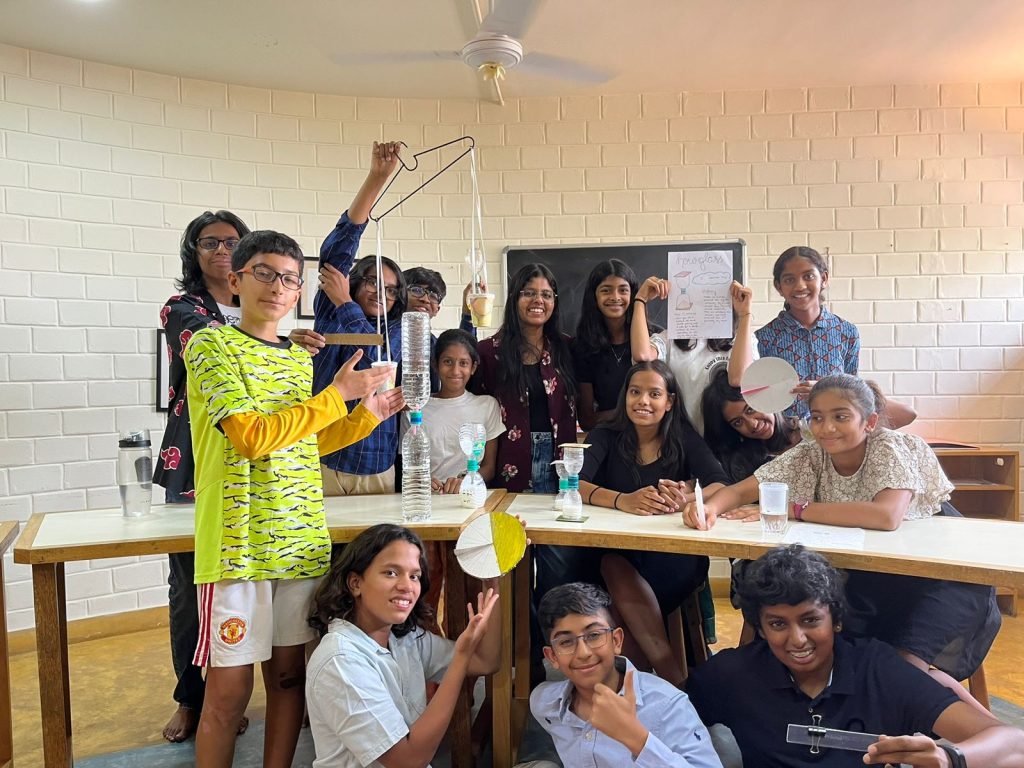
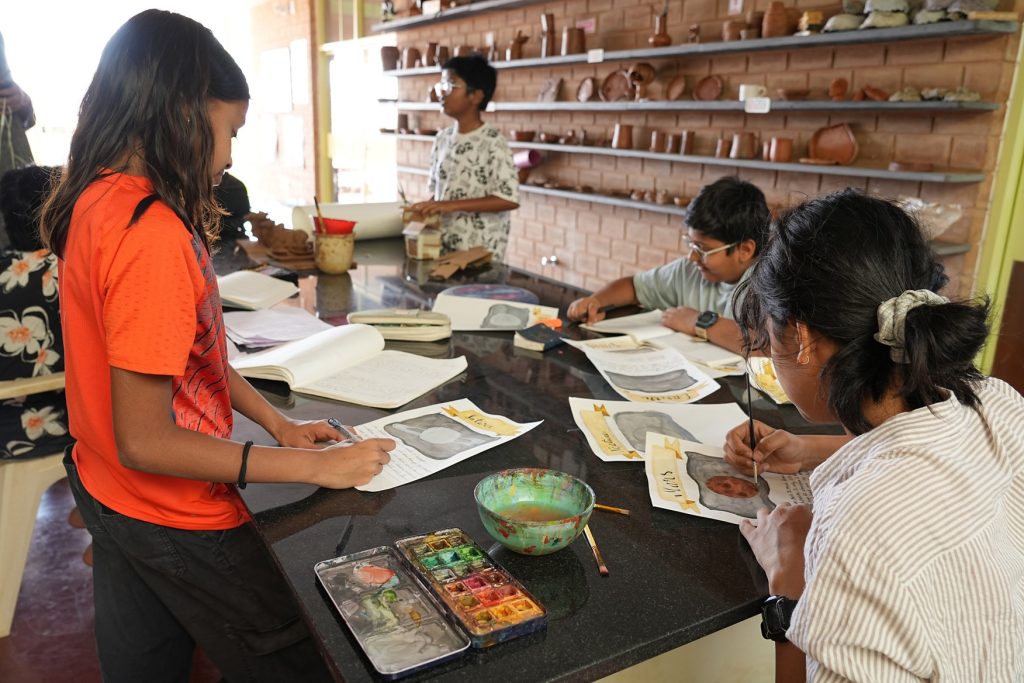
Till grade 10, Parijatha runs some separate class groupings only to honour different learning levels and backgrounds and parent requests. However, the curriculum, expectations, and quality of care are kept on par with the rest of the school. From grade 11 onward, students from all backgrounds learn together, breaking the invisible wall between “sponsored” and “self-paying” and teaching everyone that intelligence and leadership are not decided by a fee receipt.
Among the many stories that caught our attention is that of a former driver’s son, fully supported through the free program, who went on to score straight As, topping his Cambridge exams and looking forward to stepping into a future in computer science engineering. For the team here, he is not held up as a token miracle but as proof of a simple conviction: when a child is surrounded by love, rigorous learning, and dignified support, “background” ceases to be destiny.
“Our Children, Always”: A School That Cares
For Jayashree and Ashok, the relationship with their students does not end with a board exam or a farewell ceremony; it is closer to how parents watch over their own children stepping into the world. Former students who have graduated and moved on to college or work are still welcomed warmly on a working day, when the children are at school. They are welcomed with tasty food, and the younger ones can see what is possible and the older ones remember where their roots lie.
Interactions are filled with the kind of care usually reserved for family: “Wear your helmet,” “Drive carefully”. In a system where most schools forget their alumni once the fee cycle ends, this quiet, continuous concern says something profound, that Creative School was never meant to be a service provider, but a second home where children, even as adults, are still held in a net of love and respect.
Parijatha, Chiguru And Moggu: Holding The Most Vulnerable
Within the campuses of Creative School, the Parijatha Learning Centre holds one of the trust’s most tender responsibilities: educating and empowering children from socio-economically challenged and rural families who are often first-generation learners.
Located in both North Bangalore and Freedom Land in Doddaballapur, Parijatha supports children through the Support A Child program with a vision to reach at least 250 children over the coming years. Here, children receive not just academic instruction but a full ecosystem of care: high-quality teaching, sports, arts, counselling and healthcare, nutritious meals, boarding where required, transportation, and immersive field trips that expand their sense of what is possible. Each child is treated as a whole being whose physical, mental, emotional, social, and spiritual needs must be met if real learning is to take root.
Chiguru, started on Diwali 2021 after a migrant construction worker asked for a school for their children, is a bridge programme for 3 to 13-year-olds who have spent their lives on construction sites and have never seen a classroom. They enter a space of songs, games, stories and gentle routines that slowly build foundation skills while affirming their joy and dignity. Moggu, begun soon after, is a crèche for the under-threes, tiny “buds” whose days are spent in safety, play, and loving care while their parents work nearby.
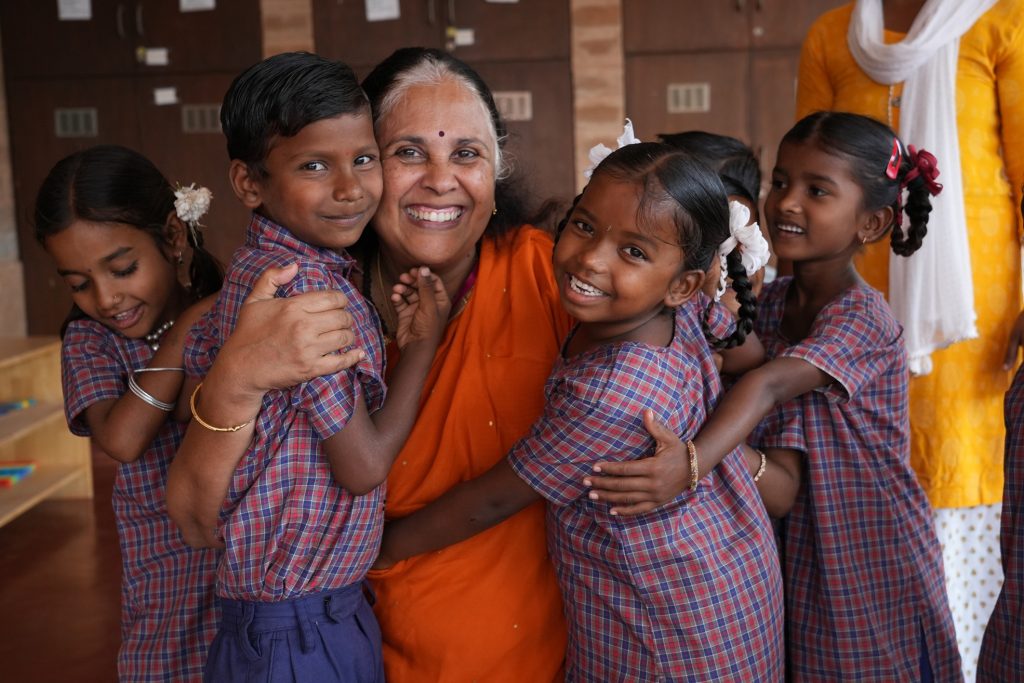
Chiguru began with three children; by the third day there were twenty-five, and the numbers have continued to grow as word spread among migrant families that there was finally a place where their children would be safe, fed, and cherished. Many teachers volunteer extra hours in Chiguru, surrounding these first-time learners with affection, structure, and songs, helping them feel that this, not the dust of the construction site, is their rightful childhood. From Chiguru, families who are ready have moved their children to the full Parijatha program. Committed parents of these children dream of seeing their children pass 10th grade. The school has even higher aspirations and hopes to enable education that will truly benefit the children and their families.
Meditation Temple, Seva And Inner Work: A Dharmic Ethos In Action
At the heart of Freedom Land stands the Oneness Meditation Temple, completed in 2023 and consecrated after a yatra to Mount Kailash. Inside, a large spatika lingam carved from crystal found in the Parvati River radiates a palpable stillness; where children and adults sit in meditation, work with breath, and encounter silence.
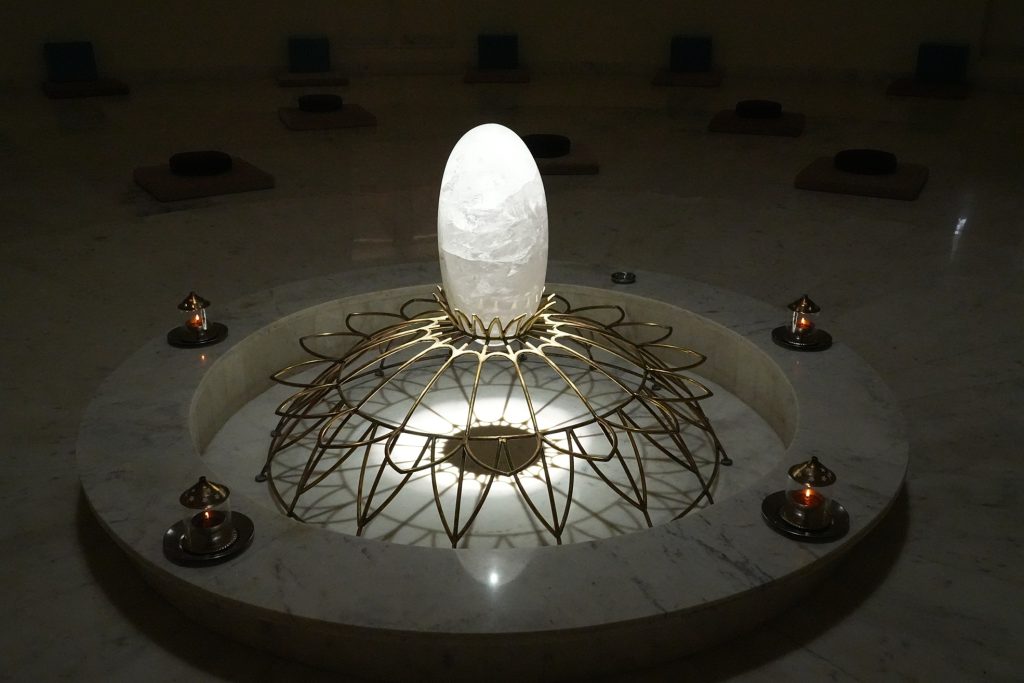
Around the main chamber are seven chakra chambers for deep healing.
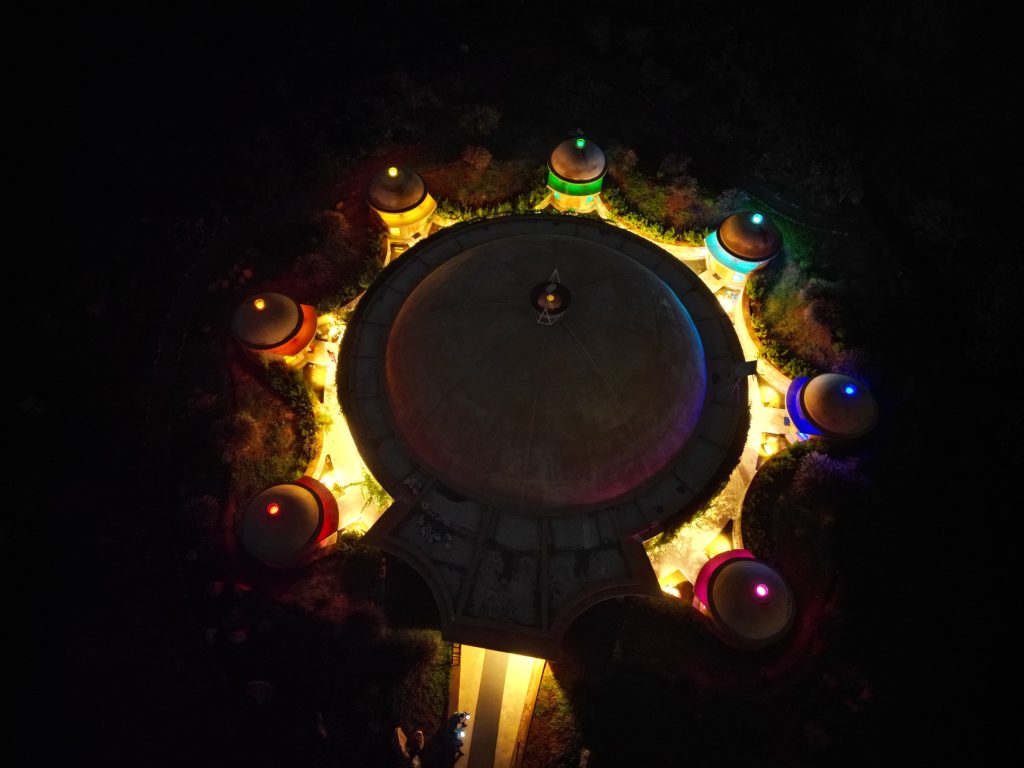
The philosophical backbone here is the Upanishadic insight of Oneness, expressed through Sri Aurobindo’s commentaries on the Isha Upanishad that all beings arise from one source energy, that each soul has a unique journey, and that outer multiplicity must ultimately reconnect with inner unity. Adults and Children learn to honour their roles and differences while returning, through meditation and reflection, to the understanding that they and their classmates are expressions of one consciousness, not just competitors in an exam race.
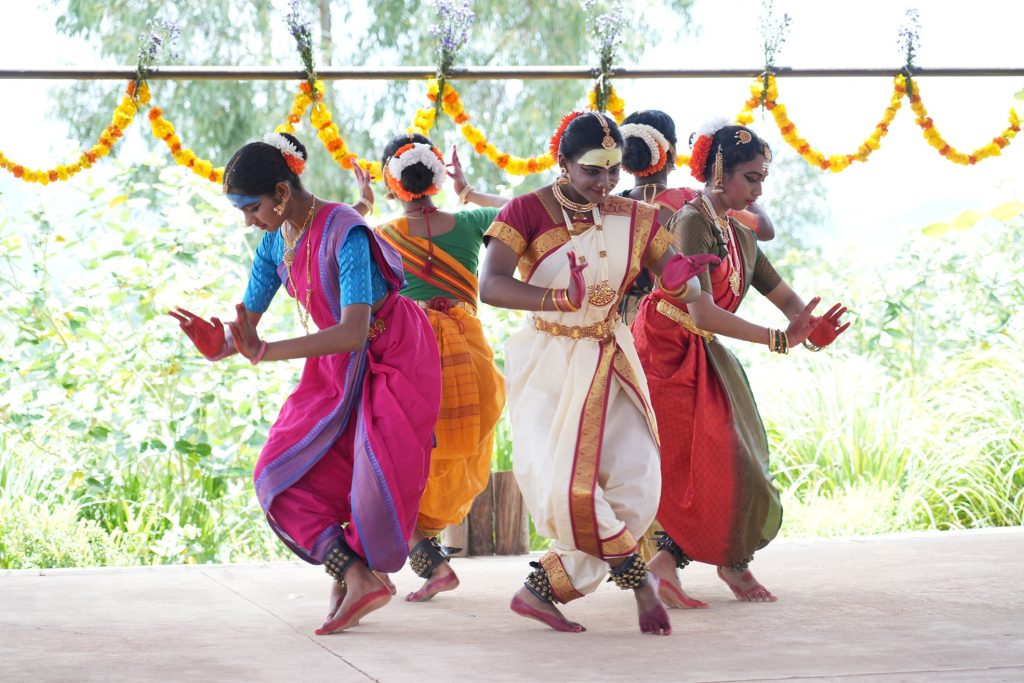
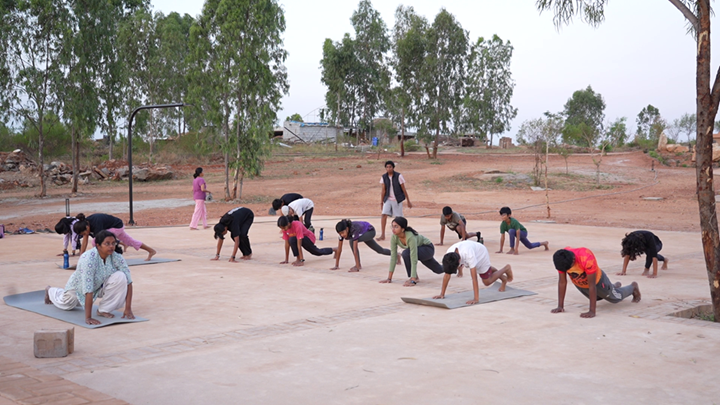
Seva is embedded in the timetable. Older students take responsibility for mentoring younger ones, assisting in classrooms, helping in the kitchen or on the farm; service is not a one-day “social work” photo-op but a daily rhythm. Prayer, silence, asana, pranayama, bhajans and reflective circles create a cultural atmosphere where being spiritual is not an ideology to be argued, but a way of living with gratitude, discipline, and care.
Healing Body, Mind And Earth Together – From One Campus To Many Classrooms
The Healing Circle’s work does not stop at the school gate. Through initiatives like Arogya Jyothi, the trust offers free holistic healthcare: homeopathic consultations, medicines, meditation-based practices, and energy healing, to people from lower-income communities. Many who arrive with chronic pain and unspoken emotional burdens find, over time, not just symptom relief but the experience of being listened to with patience and respect.
On the ecological front, the “1000 Together” tree-planting movement and the Surya Kiran solar energy project work together to reduce the campus’s carbon footprint and demonstrate sustainable architecture and renewable energy in action. Solar panels already support significant parts of the campus’s daily load, and future phases are planned to power hostels, science labs, and kitchens, gradually moving the community toward greater energy independence.
Most significantly for the larger system, the methodologies born in this small campus are now shaping classrooms far beyond Doddaballapur. Through Prajña Vidya and The Sacred Classroom programs, Creative School’s team has trained hundreds of government, private and public school teachers across Karnataka and Odisha in teacher well-being, emotional literacy, and child-centred, activity-based learning. In Odisha, the School and Mass Education Department, with UNICEF’s support, invited them to deliver Sacred Classroom trainings for government teachers; in Karnataka, Samagra Shikshana Kendra and district programs have engaged them to work with teachers from over 180-200 government-run schools, including early childhood and KPS teachers. Many of these teachers reported that it was the first time their own inner life and dignity as educators had been honoured in a training space, not just their paperwork and targets.
Rainwater harvesting, organic farming, tree planting, waste reduction, and mud-brick, well-ventilated buildings are not presented as special projects to the children; they are simply the way life is lived here. As students study, play, serve, and eat on this land, they absorb a deeper lesson: that healing oneself and healing the earth are part of the same sacred responsibility.
A Model For The Future
The Healing Circle Trust and Creative School rarely describe themselves in grand ideological terms, yet the model they are building is quietly radical: rigorous academics (Cambridge, State Board, NIOS), deep spiritual practice, ecological responsibility, and genuine social inclusion held together in one community. Over 2,000 teachers trained through Prajña Wisdom Centre and associated programs are already carrying elements of this approach, Sacred Classroom, Life & Living, The Joy of Teaching Series, into government schools, NGOs and independent private institutions.
In a country long shaped by someone else’s imagination of what education should be, this small campus in Doddaballapur is offering a different answer. Every native tree that takes root in Freedom Land, every plate of organic food served to a migrant worker’s child, every first-generation learner who walks into a Cambridge exam from a background of scarcity, and every moment of silence in the Oneness Temple is a quiet affirmation that India does not need to outsource its idea of schooling. It can grow its own, from its scriptures, its soil, and its living communities, and, in doing so, raise a generation that knows both who they are and whom they are here to serve.
For more information, visit https://www.thehealingcircle.in/ and https://www.thecreativeschool.in
Subscribe to our channels on Telegram, WhatsApp, and Instagram and get the best stories of the day delivered to you personally.