The Opposition’s dramatic move to bring a no-confidence motion against Lok Sabha Speaker Om Birla, projected as a defence of “constitutional propriety”, is already facing embarrassment after glaring drafting errors surfaced in the very notice submitted to Parliament.
Escalating its confrontation with the government, Opposition parties on Tuesday, 10 February 2026, formally submitted a no-confidence notice seeking the removal of Lok Sabha Speaker Om Birla under Article 94(c) of the Constitution.
The motion, backed by over 100 MPs, with Congress leaders claiming 118 signatories, marks one of the most serious parliamentary steps available against the presiding officer of the House.
In the notice, Opposition MPs alleged that Speaker Birla had conducted Lok Sabha proceedings in a “blatantly partisan manner” and had repeatedly denied Opposition members the opportunity to raise issues of public importance.
Grounds Cited Against Speaker
The resolution lists multiple grievances, including:
- Leader of Opposition Rahul Gandhi allegedly not being allowed to complete his speech on the Motion of Thanks to the President’s Address
- Suspension of eight Opposition MPs for the Budget Session
- Alleged inaction against BJP MP Nishikant Dubey over remarks targeting former Prime Ministers
- Objections to statements suggesting women MPs posed a threat to the Prime Minister
The notice further accused the Speaker of making remarks on the floor of the House that, according to signatories, cast “false allegations” against Congress members and were “derogatory in nature.”
The Opposition has placed its faith in constitutional propriety.
While holding the Hon’ble Speaker in personal regard, we are pained and anguished by the consistent denial of opportunities to Opposition MPs to raise issues of public importance.
After many years, a no-confidence… pic.twitter.com/DwGElhoZYM— Manickam Tagore .B🇮🇳மாணிக்கம் தாகூர்.ப (@manickamtagore) February 10, 2026
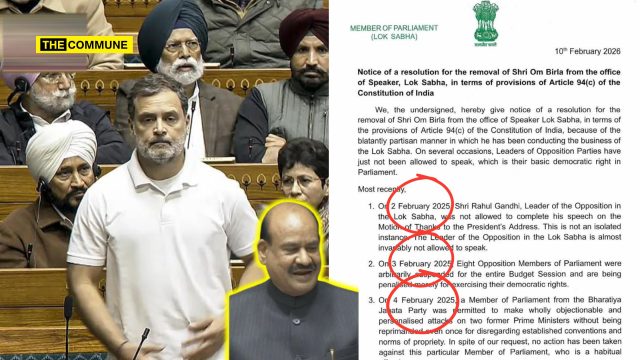
The notice was projected by Opposition parties as an “extraordinary step born out of extraordinary circumstances.” However, the text of the motion itself appears to reference key parliamentary events as having occurred in February 2025, despite the ongoing proceedings and disruptions relating to the current session in 2026.
The dating inconsistency has triggered criticism from treasury bench leaders and political observers, who argue that such clerical and procedural lapses undermine the gravity of a constitutional motion aimed at removing the presiding officer of the Lok Sabha.
Notice Cites 2025 Incidents
The resolution lists multiple grounds against the Speaker and remarks made in the House following the adoption of the motion.
However, the incidents cited are dated 2 February 2025, 3 February 2025, and 4 February 2025 raising questions on whether the notice relied on outdated templates, drafting errors, or procedural oversight.
Given that removal of a Speaker is among the most serious parliamentary remedies available, critics say documentation accuracy is fundamental to its credibility.
TMC Absence Noticed
Adding to the optics, key I.N.D.I.A bloc ally Trinamool Congress (TMC) has not signed the notice, according to parliamentary sources, signalling either tactical distance or lack of full Opposition consensus on the move.
The absence of one of the largest Opposition parties has fuelled speculation about internal coordination gaps within the bloc.
Forget the fact that TMC has not signed this motion to remove Speaker
The fact that instead of the date being 2026- the dates put are
2025!Does this show any kind of seriousness of the Opposition led by a grown man child Rahul Gandhi?
He thinks “pre order” is published book!… https://t.co/CrbypmTfbd pic.twitter.com/TPhlZ5KWSo
— Shehzad Jai Hind (Modi Ka Parivar) (@Shehzad_Ind) February 10, 2026
The government, however, has played down the development, with Parliamentary Affairs Minister Kiren Rijiju stating that the Opposition lacks the numbers required to carry the resolution in the Lok Sabha.
The no-confidence notice comes amid escalating confrontation between the Treasury and Opposition benches, following disruptions over speeches, suspensions, and the controversy surrounding Rahul Gandhi’s attempt to cite material from an unpublished defence memoir.
With procedural inconsistencies now under the spotlight, the focus has shifted from the political charge against the Speaker to the drafting and coordination behind the Opposition’s constitutional gambit.
Source: Times of India
Subscribe to our channels on Telegram, WhatsApp, and Instagram and get the best stories of the day delivered to you personally.