


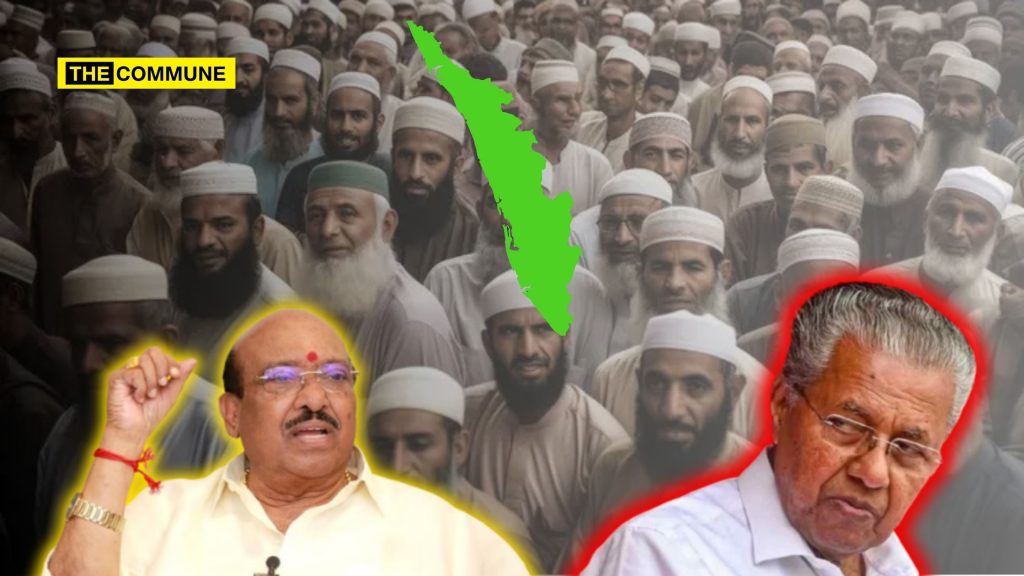
A fiery political confrontation has erupted in Kerala after Vellappally Natesan, General Secretary of the Sree Narayana Dharma Paripalana (SNDP) Yogam and prominent SNDP leader, asserted that “Muslims will become a majority in Kerala by 2040.” His comments, made on 19 July 2025 during a state-level SNDP meeting in Kottayam, sparked sharp criticism from both the Congress and its ally, the Indian Union Muslim League (IUML), who accused Natesan of fomenting communal division.
In his address at Kottayam, Natesan, notable for his influence among the Ezhava community, warned that Kerala was on the trajectory to a Muslim majority and suggested undue sway of Muslim religious leaders over state affairs: “The current situation is such that the state government should just listen to Kanthapuram and govern,” referencing Sunni cleric Kanthapuram A.P. Aboobacker Musliyar. He further claimed, “No government decision is implemented without Malappuram’s endorsement,” highlighting the demographic dominance of the Muslim-majority district.
Natesan met tough resistance from across the aisle. Opposition leader V.D. Satheesan (Congress) accused him of echoing Chief Minister Pinarayi Vijayan’s agenda, claiming, “[He] has echoed what the CPI(M) leaders in Kerala speak against Malappuram and what the Chief Minister had stated in Delhi… This hate speech is against the philosophy of social reformer Sree Narayana Guru.” Satheesan charged that the CPI(M) was trading secular credentials for political favor among majority communities.
The IUML, equally incensed, condemned the remarks as “brazen communal remarks” and urged government action. IUML leader P.K. Kunhalikutty emphasized that it’s the LDF’s duty “to act against individuals who exploit influential social organisations to cause communal divisions.” Abdul Hameed MLA, the party’s Malappuram secretary, demanded legal reprisals under statutes prohibiting incitement of enmity. Religious groups like the Samastha Kerala Jem-iyyathul Ulama also strongly rebuked the claim.
Caught in the crossfire is the ruling CPI(M), the primary beneficiary of Ezhava support. The party’s state secretariat rebuked divisive rhetoric, urging the SNDP to remain aligned with its foundational reformist values. “Social organisations are free to raise any issue concerning the people, but it should not create religious divisions and hate,” said a CPI(M) spokesperson. The party faces a delicate task, retaining Ezhava backing ahead of the 2026 Assembly polls while preserving its secular image amid rising communal tensions.
Natesan himself resisted retreat, responding defiantly to communal backlash: “Even if Kanthapuram ‘hurls a spear’ at me, I will not stop speaking out for social justice,” he told The New Indian Express.
Analysts note that SNDP represents the Ezhava community, around 25% of Kerala’s population, and its pivot towards identity-based politics signals shifting allegiances. Notably, Natesan’s son leads the BDJS, part of the BJP-led NDA, underscoring simmering interface between caste, religion, and electoral strategy in the state.
This political kerfuffle emerged days after the deaths of former CM V.S. Achuthanandan, who in 2022 alleged an extremist Muslim push for Kerala’s demographic dominance. In a state known for nonsectarian governance, Natesan’s predictions have reignited old anxieties and drawn non-BJP parties into a pitched battle of accusations and counter-accusations.
As Kerala braces for a potentially pivotal election next year, the unfolding saga, centered on SNDP leadership, CPI(M) positioning, and communal messaging, may redefine electoral coalitions. The state’s non-BJP coalition, invigorated by Congress and IUML criticism, now aims to cast the ruling Left front as tacit accomplices to divisive discourse.
(With inputs from India Today)
Subscribe to our channels on Telegram, WhatsApp, and Instagram and get the best stories of the day delivered to you personally.