


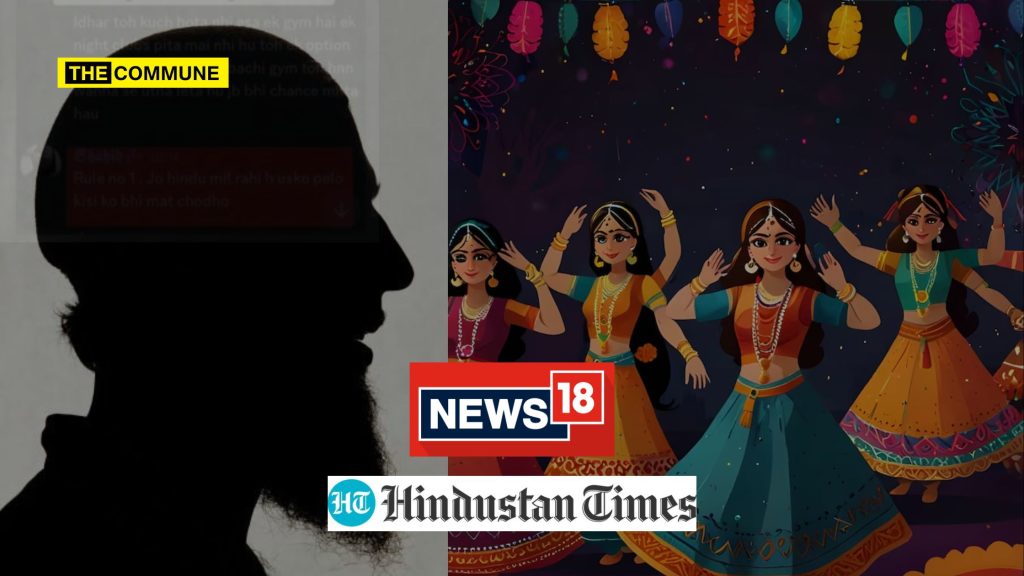
A chilling case has emerged from Viva College in Virar, near Mumbai — one that should have sparked national outrage. Instead, much of India’s mainstream media has chosen to downplay, deflect, or distort the gravity of what really happened.
Mohammed Shahid Khan, a first-year student at the college, and several of his associates were reportedly caught sharing videos of Hindu girls dancing during Navratri celebrations in a private chat group. The videos were accompanied by obscene and hate-filled messages calling for the girls to be “targeted, raped, and assaulted,” and referring to them as “prostitutes.” One of the messages used the term “musalled” — a slang expression referring to trapping non-Muslim girls through deceit or coercion.
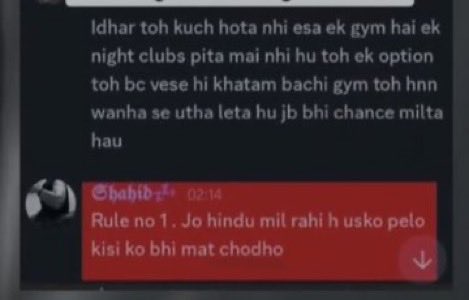
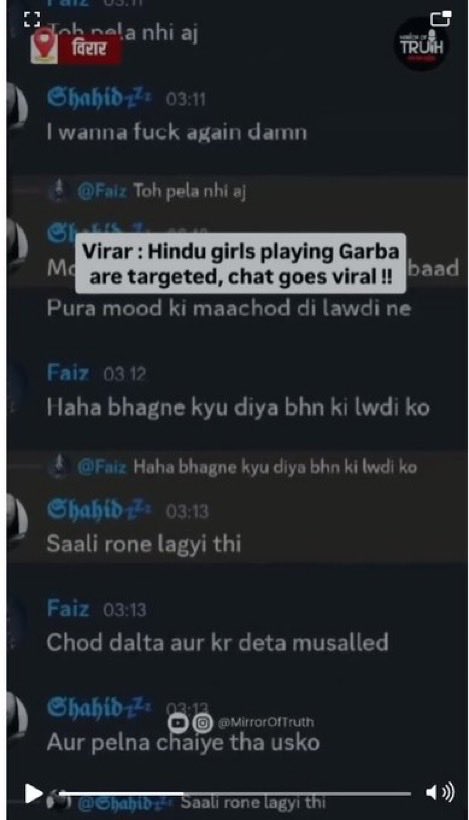
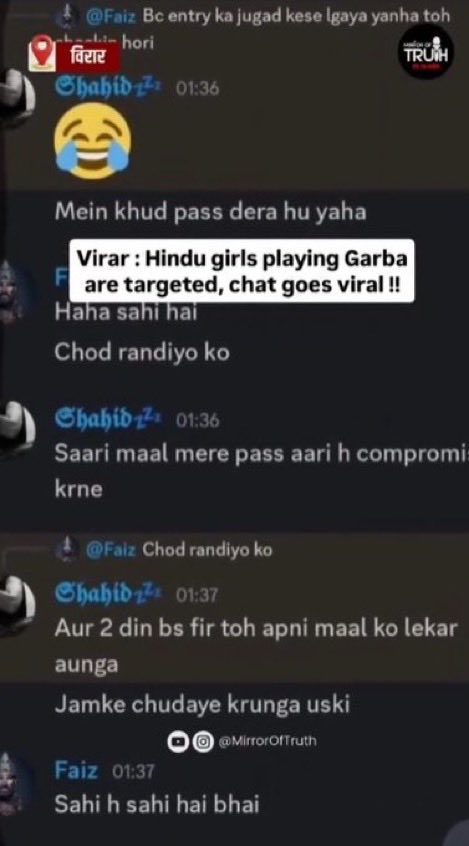


As per the First Information Report (FIR), New Viva College has been organising Garba celebrations for over twenty years, attracting not only students but also alumni and local residents. This year’s festivities took place between September 22 and 26. During one of these events, a student allegedly filmed girls participating in the dandiya and uploaded the clips on Discord, where another individual later added obscene remarks.
The issue came to light on September 26, when someone informed the college management during the evening event that a student had shared the videos online. Upon investigation, the administration traced the uploads to a mobile phone and WhatsApp number belonging to one of the students. They also found that a separate account, operated under another student’s name, had been used to post indecent comments on the videos.
The college authorities promptly filed a complaint with the Virar Police, leading to an FIR against the accused. The report noted that the students’ actions had “hurt the sentiments of society and caused distress to the girls concerned.” Police officials said an inquiry is ongoing to identify all those involved and to determine how widely the videos were circulated.
Virar, Maharashtra: ACP Sunil Jayabhave says, “An FIR has been registered in Virar West against a college student for misconduct during a Garba event. The student allegedly recorded inappropriate videos of girls dancing and circulated them via the Discord app. Police identified… pic.twitter.com/o4dVjlUvWa
— IANS (@ians_india) September 30, 2025
This is not just a case of “vulgar videos.” It is a hate crime soaked in religious bigotry, directed explicitly at Hindu women. Yet, the national media seems unable — or unwilling — to state the facts as they are.
Hindustan Times chose to title its report, “Dandiya event in Virar college takes controversial turn” — a bland, misleading framing that makes it sound like a minor disagreement at a festival.
Worse, the report went on to suggest that the communal angle was introduced not by the offenders, but by a BJP leader who “gave the incident a communal tone.”
Can anyone guess from this headline and text of this @htTweets report that the matter is that a male Muslim student of this college has been caught sharing text messages that ‘no Hindu girl at Garba should be left untouched’? pic.twitter.com/OOuFhMrPhh
— Swati Goel Sharma (@swati_gs) October 4, 2025
News18 ran with “Navaratri celebrations at Maharashtra college marred by vulgar videos of girls dancing, probe on.” Once again, the focus was on the videos being “vulgar” — not on the fact that they were shared with violent threats against Hindu women.
What is wrong with these writers?
The actual case is that Mohd Shahid and his co-religionists recorded fellow college girls dancing on Navratri, and shared the videos with messages like – no Hindu girl should be spared and they should all be raped
Now look at the headline pic.twitter.com/gy8L00JlTc
— Swati Goel Sharma (@swati_gs) October 5, 2025
Both reports erase the most important truth: this was not some moral-policing incident or mere college mischief. It was an organised attempt to demean and target Hindu women on religious grounds — a pattern that India’s “secular” media ecosystem refuses to acknowledge whenever the perpetrators don’t fit their preferred narrative.
If the roles were reversed, the same outlets would have declared it a national crisis, with primetime panels on rising communal hatred. But when Hindu girls are dehumanised and threatened, the headlines turn euphemistic, and the perpetrators are hidden behind vague terms like “students” or “youths.”
This selective blindness is not journalism — it’s narrative management. And it has dangerous consequences. When hate crimes are reported as “controversies,” when ideological filters decide whose suffering matters, the public loses trust, and justice gets buried under spin.