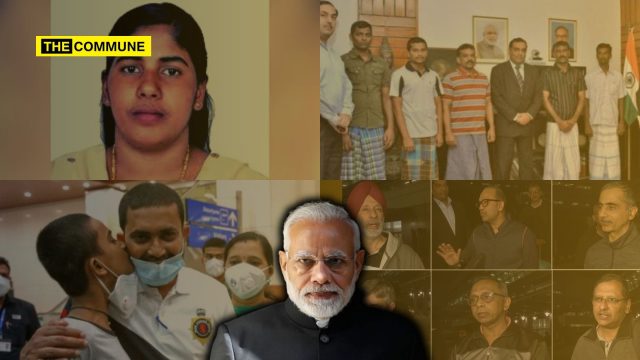
The execution of Nimisha Priya, an Indian nurse from Kerala sentenced to death in Yemen for the 2017 murder of her Yemeni employer, has been temporarily postponed. Her execution, originally scheduled for 16 July 2025, was stayed following urgent diplomatic and legal interventions by the Indian government, offering a brief reprieve as negotiations continue.
The Ministry of External Affairs (MEA) confirmed that Indian officials had maintained regular contact with Yemeni prison authorities and the prosecutor’s office, despite the country’s ongoing civil unrest. The government had appealed for additional time to allow Priya’s family to negotiate a possible pardon with the victim’s kin under Yemen’s Sharia law, which permits clemency in exchange for “blood money.” However, the victim’s family has so far rejected all reconciliation attempts.
Indian authorities also reached out to influential Yemeni leaders and formally requested the public prosecutor to defer the execution—a request that the Yemeni court accepted. Consular support was extended to Priya, legal counsel was appointed, and family visits to Yemen were facilitated. Diplomatic pressure was reportedly coordinated through friendly Gulf nations and regional intermediaries.
No Indian Left Behind
This is just one of the many cases where the Indian government under Prime Minister Modi has gone above and beyond to rescue Indians living abroad. One can recollect the famous words of former External Affairs Minister Sushma Swaraj, who said, “Even if you are stuck on the Mars, Indian Embassy there will help you.”
View this post on Instagram
Yes, these seem to pertain to the rescue missions during war-like situations or during calamities. Nevertheless, here is a look at those instances where the Indian government rescued Indians abroad, from grave punishment.
#1 Nimisha Priya Execution Postponed
Nimisha Priya, a Kerala nurse sentenced to death in Yemen for a 2017 murder, received a temporary reprieve as her July 16 execution was postponed. The Indian government intervened diplomatically and legally, urging Yemeni authorities to grant more time for her family to negotiate a pardon under Sharia law. Despite efforts, the victim’s family has rejected reconciliation. India maintained contact with Yemeni officials, appointed legal counsel, facilitated family visits, and sought support through Gulf allies. The Yemeni court accepted a formal request to defer execution, but Priya’s fate remains uncertain amid ongoing negotiations.
#2 5 Tamil Nadu Fishermen Who Were Sentenced To Death Released By Sri Lanka After Diplomatic Intervention
In a significant diplomatic breakthrough in 2014, Sri Lanka released five Tamil Nadu fishermen who had been sentenced to death on charges of drug smuggling. The men, Emerson, P. Augustus, R. Wilson, K. Prasath, and J. Langlet, were arrested in 2011, and their conviction and sentencing by a Colombo court in October 2014 had sparked widespread protests in Tamil Nadu. India consistently maintained that the men were innocent and took up their case with Sri Lankan authorities. Prime Minister Narendra Modi personally intervened, speaking with then-President Mahinda Rajapaksa, leading to an agreement to transfer the fishermen to an Indian prison. Subsequently, President Rajapaksa commuted their death sentence and ordered their release. Indian officials in Colombo took custody of the fishermen, marking a major diplomatic success for New Delhi and bringing relief to the families, who had long claimed their loved ones were falsely implicated after allegedly straying into Sri Lankan waters.
As of 2025, a total of 3697 Indian fishermen have been freed since PM Modi took charge.
#3 UAE Pardons Indian Prisoners
In a major diplomatic achievement, the United Arab Emirates pardoned 500 Indian prisoners on 28 March 2025, ahead of Ramzan. This brings the total number of Indian nationals released abroad due to the Modi government’s efforts to over 10,000. Sources credit Prime Minister Narendra Modi’s personal rapport with global leaders and sustained diplomatic engagement for securing pardons across multiple countries. In recent years, the UAE alone has pardoned over 2,700 Indians. The move highlights India’s strong bilateral ties with the Gulf nation and underscores the government’s commitment to protecting Indian citizens overseas.
In total, so far, UAE has pardoned 2783 Indian prisoners. The other instances of pardon by the UAE include:
- 2024: 944 Indian prisoners were pardoned ahead of Eid Al Fitr and UAE National Day.
- 2023: Over 700 Indian prisoners received pardons from UAE authorities.
- 2022: A total of 639 Indian prisoners were granted pardons.
#4 Qatar Frees 8 Indian Navy Veterans Who Were Sentenced To Death
Qatar released eight Indian Navy veterans on 12 February 2024. The men, detained in August 2022 and sentenced to death in October 2023 on undisclosed charges, allegedly espionage, had their sentences commuted to prison terms in December 2023 following sustained diplomatic efforts by India. The veterans, who were employed with Dahra Global, a private firm assisting Qatar’s naval modernization, were accused without formal public charges. After Prime Minister Narendra Modi’s meeting with Qatar’s Emir in December 2023, Indian efforts intensified. The Ministry of External Affairs confirmed that seven of the eight have since returned home. India had filed an appeal in Qatar’s Court of Appeal, which led to the commutation. The government welcomed the release and credited the Amir of Qatar for enabling their return.
#5 Iran Releases Indian Prisoners and Fishermen Over the Years
In 2024, 77 Indians were freed, following the release of 43 Indians in 2023, including 12 fishermen. Eight of these fishermen were detained for allegedly entering Iranian waters without permission. Minister of State for External Affairs V. Muraleedharan confirmed their release and thanked Iran’s government.
In 2016, 49 Indian fishermen, 45 of them from Tamil Nadu were released after being detained on charges of poaching while working on contract in Dubai. They had been confined on Kish Island after the Iranian Navy seized their vessels. Their release followed intervention by the CITU and diplomatic pressure on the Ministry of External Affairs.
#6 2,639 Indian Fishermen Repatriated from Pakistan Since 2014
Since 2014, Pakistan has released 2,639 Indian fishermen and 71 civilian prisoners following sustained diplomatic efforts by the Indian government. In 2025, 22 fishermen returned to Gujarat after their release from Karachi jail. These fishermen were arrested between April 2021 and December 2022 for allegedly crossing the maritime boundary. Upon return, they expressed concern for the nearly 200 Indian fishermen still in Pakistani jails, many of whom reportedly suffer from serious health issues. In 2023, Pakistan also released 80 Indian fishermen and two civilian prisoners. One freed prisoner revealed the dire condition of over 700 Indians still imprisoned, citing mental distress and poor treatment. Many of those still jailed had already been cleared for release by Pakistan’s Supreme Court but remain incarcerated. Indian authorities continue to press Pakistan for urgent repatriation of all remaining prisoners, especially those held for extended periods without resolution.
#7 Bahrain Pardons 250 Indian Prisoners During PM Modi’s Visit
In a humanitarian gesture, the Bahrain government pardoned 250 Indian nationals serving prison sentences on 25 August 2019, during Prime Minister Narendra Modi’s maiden visit to the Gulf nation. This act of goodwill marked a significant diplomatic moment as Modi became the first Indian Prime Minister to visit Bahrain. The Prime Minister expressed his deep gratitude to Bahrain’s leadership for the royal pardon. The Prime Minister’s Office acknowledged the gesture as a reflection of the strong bilateral ties between India and Bahrain, and a recognition of the Indian community’s contributions to the Gulf nation.
#8 Saudi Arabia Releases 850 Indian Prisoners at PM Modi’s Request
On 20 February 2019, Saudi Crown Prince Mohammed bin Salman ordered the release of 850 Indian prisoners from Saudi jails following a request by Prime Minister Narendra Modi. The announcement marked a significant diplomatic achievement during the Crown Prince’s visit to India. The Ministry of External Affairs confirmed the development and also noted that Saudi Arabia agreed to increase India’s Haj quota to 2 lakh pilgrims.
And another important take away from the visit of #SaudiCrownPrince which would help more Indian pilgrims to perform the Haj
His Royal Highness the #SaudiCrownPrince announced the increase in quota for Indian Haj pilgrims to 200,000 at the request of PM @narendramodi. pic.twitter.com/FrPR3hc2eD
— Randhir Jaiswal (@MEAIndia) February 20, 2019
In a special gesture, PM Modi broke protocol to personally receive the Crown Prince at Palam Airport, underscoring the growing strategic partnership between India and Saudi Arabia.
#9 Kuwait Frees and Commutes Sentences of 119 Indian Prisoners
On 2 October 2017, the Emir of Kuwait ordered the release of 22 Indian prisoners and commuted the sentences of 97 others in a significant diplomatic gesture. Among them, 15 Indians had their death sentences reduced to life imprisonment, primarily in drug-related cases. Sentences for others were reduced variously, with 53 life terms cut to 20 years, and others receiving partial reductions. The Indian Embassy in Kuwait confirmed the developments and assured support for the released prisoners’ return. External Affairs Minister Sushma Swaraj thanked the Emir for this humanitarian gesture benefitting Indian nationals.
#10 Intervention In Kulbhushan Jadhav Case, Death Sentence Stayed
The Indian government strongly intervened in Kulbhushan Jadhav’s case after he was sentenced to death by a Pakistani military court in April 2017 on charges of espionage. India maintained that Jadhav was kidnapped from Iran and denied the allegations of spying. Despite repeated requests, Pakistan denied consular access, prompting India to move the International Court of Justice (ICJ) in May 2017, arguing violation of the Vienna Convention. The ICJ, recognizing India’s claim, issued a stay on Jadhav’s execution and, in its 2019 verdict, ordered Pakistan to review the death sentence and grant consular access. This legal victory ensured that Jadhav’s execution remained halted and reaffirmed India’s diplomatic and legal efforts to protect its citizen’s rights under international law.
In the cases of Nimisha Priya and Kulbhushan Jadhav, although their death sentences have been halted by the intervention of the Indian government, neither has been safely repatriated to India yet.
Subscribe to our channels on Telegram, WhatsApp, and Instagram and get the best stories of the day delivered to you personally.