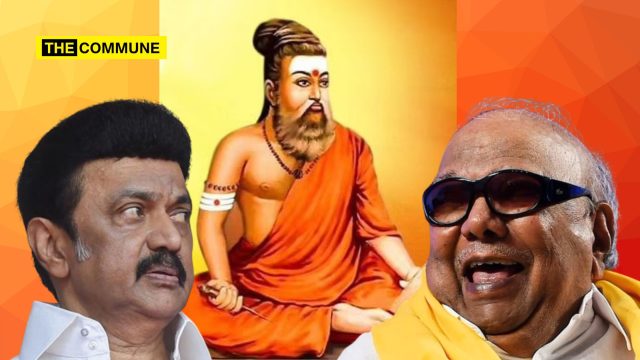
Tamil Nadu Chief Minister M.K. Stalin on Sunday, 13 July 2025, accused right-wing forces of attempting to “saffronise” Tamil poet-saint Thiruvalluvar and appropriate his legacy, asserting that such efforts were born out of cultural inadequacy. Speaking at a book launch event in Chennai, Stalin claimed that since there was “none worth celebrating in Aryan culture,” there had been attempts to steal Thiruvalluvar by attributing Hindu religious imagery to him.
“Thiruvalluvar is a rationalist, stood for self-respect, and advocated social justice,” Stalin said at the release of lyricist Vairamuthu’s new commentary on the Thirukkural, titled Valluvar Marai, Vairamuthu Urai. He warned that anyone trying to claim Thiruvalluvar would be overwhelmed by the intensity of his verses. “Manu Neethi cannot enter a place where there is justice based on Thirukkural. When Aryan civilization tried to destroy Dravidian tradition, Thirukkural protected it,” Stalin said in a veiled criticism of the Sangh Parivar and similar organisations.
#Watch | “சொந்தம் கொண்டாட ஆரியத்தில் ஆள் இல்லாத காரணத்தால்…”
‘வள்ளுவர் மறை வைரமுத்து உரை’ நூல் வெளியீட்டு விழாவில் முதலமைச்சர் மு.க.ஸ்டாலின் பேச்சு.#SunNews | #Vairamuthu | @mkstalin pic.twitter.com/zvJQvtlBKD
— Sun News (@sunnewstamil) July 13, 2025
The Chief Minister also called for the Thirukkural to be declared India’s national book. Former Union Finance Minister P. Chidambaram received the first copy of Vairamuthu’s book, while the author himself placed a copy at the memorial of former DMK leader M. Karunanidhi as a mark of tribute.
However, Stalin’s comments have reignited a long-standing debate over the religious and philosophical foundations of the Thirukkural. Critics were quick to point out that Stalin’s own father, former Chief Minister M. Karunanidhi, had previously acknowledged Hindu religious elements within the Thirukkural in his speeches and writings.
What Karunanidhi Said About Thirukkural
M Karunanidhi, known for his atheistic and rationalist beliefs, had nevertheless interpreted several kurals using Hindu deities and religious metaphors. For example, while commenting on Kural 167, he said: “Wealth is described as Lakshmī and poverty as her sister Moodevi. A jealous person will be identified by her sister and then Lakshmī will distance herself from him.” In another speech, he explained Kural 617 by stating: “The words ‘Thirumagal’ and ‘Moodevi’ are used to refer to someone who is motivated in their efforts and someone who is lazy and unmotivated, respectively.”
In yet another commentary on Kural 1103, Karunanidhi mused, “They say the world is a lotus-eyed world, but what is that? Is it as sweet as leaning on the shoulder of a loving lover and falling asleep?”
Scholars and commentators have noted that the Thirukkural contains several references that align with Hindu religious concepts and imagery. Terms and figures such as Indra, Yama, the Vamana avatar, Sridevi, the lotus-eyed Lord, fate, rebirth, penance, Vedas, mantras, sacrifice, Brahmins, and heaven appear throughout the text, leading many to argue that the Kural is not entirely secular or atheist in nature.
தகப்பன் @kalaignar89 சொன்னதை மகன் @mkstalin படிக்கவில்லையா? அல்லது அரசியலுக்காக வசதியாக மறந்துவிட்டீர்களா?
தாமரைக்கண்ணான் உலகம், தேவர்கள், எமன், மறுபிறவி, வேள்வி, சொர்க்கம் என திருக்குறளில் பல இந்து மத தத்துவங்கள் நிறைந்துள்ளன. திருக்குறளின் உண்மையான நிறமே காவி தான்.… https://t.co/Lw2ImYNHT7 pic.twitter.com/1gYeMaqlF3
— Dr.SG Suryah (@SuryahSG) July 14, 2025
This contrast between M.K. Stalin’s position and M. Karunanidhi’s documented views has prompted political opponents and observers to question the consistency of the Dravidian movement’s narrative on Thiruvalluvar. Some allege that Karunanidhi himself appropriated religious motifs from Hinduism in his interpretations, suggesting that the very act Stalin now condemns may have earlier been practiced by his own party leadership.
(With inputs from Times Of India)
Subscribe to our channels on Telegram, WhatsApp, and Instagram and get the best stories of the day delivered to you personally.