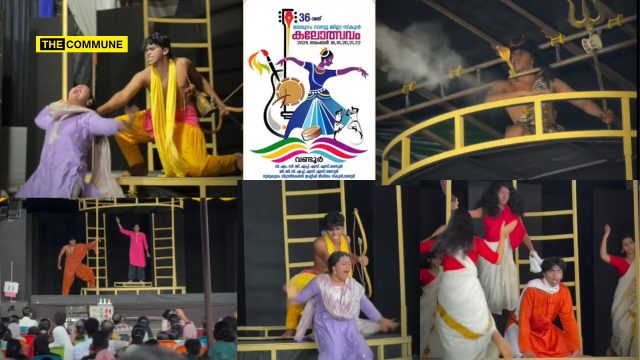
Malappuram district has become the centre of a major controversy after a school drama that allegedly portrayed Hindu epics in a derogatory manner won the first prize at the Malappuram Revenue School District Kalolsavam held at Wandoor earlier this week.
The play, titled “Veerannattyam” and performed by students of AKM Higher Secondary School, was awarded the top prize in the High School drama category. The content of the play has sparked widespread protests from Hindu organisations, which claim that it portrayed Hindu culture as inherently anti-women.
Content of the Play Sparks Outrage
According to protesters, the drama’s central theme suggested that Hindu culture oppresses women, and it contained dialogue implying that the Ramayana and Mahabharata are “anti-women” texts. Characters such as Urmila, Draupadi, Gandhari and other women from Hindu epics were reportedly portrayed as powerless, marginalised and oppressed. Critics argue that the play encouraged schoolchildren to declare Hindu culture as regressive.
Video clips circulated from the performance include lines questioning the value of Hindu epics and asserting that “there are no irreplaceable female heroes among us,” further fuelling the backlash.
Only in Kerala…
A school play INSULTING Ramayana & Mahabharata gets FIRST PRIZE.At Malappuram District Kalolsavam, a play called “Veerannattyam” was awarded the top spot for mocking Hindu history and culture.
The script claims that Ramayana and Mahabharata portray women as… pic.twitter.com/qRu7rBJThv
— MAHARATHI (@MahaRathii) November 24, 2025
Protests From Hindu Organisations
Hindu Aikyavedi and other cultural groups have launched strong protests, accusing the organisers of promoting anti-Hindu sentiments in a state-run school festival. Social media discussions have amplified concerns, with cultural leaders calling the award “a deliberate endorsement of anti-Hindu narratives in the education system.”
Local reports also highlight that the drama was directed by Rafeeq Mangalakkery, and the performance was watched by hundreds of people during the festival.
Comparisons With Earlier Controversies
The controversy intensified after several activists pointed out alleged inconsistencies in the Kerala Education Department’s handling of religiously sensitive content. They drew parallels to the case of “Kithab”, a play advocating Muslim women’s rights including the right to give the call to prayer, which was blocked from being performed at a state-level event after government intervention.
Hindu groups argue that while content referencing the Quran or Bible is quickly restricted, performances that allegedly mock Hindu texts appear to face no institutional resistance. They also cited past incidents, such as the controversy at St. Teresa’s Church, Ernakulam, where the Education Department intervened after a student’s hijab sparked disputes, to question what they see as selective enforcement.
Similar Cases Cited by Critics
Protesters have also pointed to earlier instances where works accused of anti-Hindu sentiment received state-level recognition:
The novel “Meesha”, which faced allegations of portraying Hindu customs negatively, received a literary award.
The film “Vedane”, criticised for being against Indian culture, won the State Film Award for Best Lyricist.
These examples, they say, indicate a larger pattern of rewarding content that attacks Hindu traditions while restricting other religious critiques.
Competing Play Placed Second
Adding to the frustration among cultural critics, a play based on the life of the historical figure Iravi, widely praised by reviewers for its performance quality, reportedly received only second prize in the Higher Secondary category. Protesters allege that “Veerannattyam” won first prize because of its anti-Hindu messaging rather than artistic merit.
Demand for Action
There is growing public demand from Hindu organisations for action against those responsible for making underage girls perform what they describe as vulgar or abusive lines on stage. Many insist the Education Department should clarify how such content was approved for a district-level school competition.
Subscribe to our channels on WhatsApp, Telegram, Instagram and YouTube to get the best stories of the day delivered to you personally.