


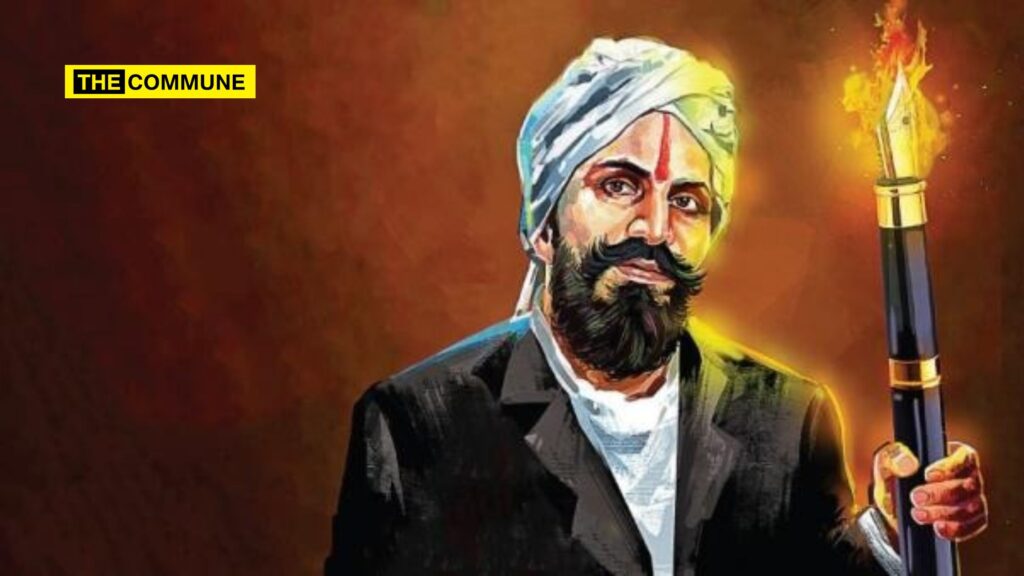
Today, September 11, marks 104 years since Mahakavi Bharathiyar departed from Mother Earth. Some of us know that only eleven people participated in his final journey. When he was alive, he was branded a Mad Sanyasi (Pitta Sanyasi). When he is no more, political actors get dressed up like him and score political brownies mouthing his very famous lines, “You think I will fall.” (நான் வீழ்வேனென்று நினைத்தாயோ?)
The Bharathi we know
We know him as a fiery poet, a fearless freedom fighter.
Kavi Yogi Suddhananda Bharathi says thus, “Chidambaram Pillai for his speech, Bharathiyar for his poetry, VVS Aiyer for his prose. These are Tamil Nadu’s three gems. The Trishul of Bharata Mata. These men, the Tamils, and the world would never forget”
But there are other lesser-known facets of him that we will explore in this article.
A multi-linguist par excellence and translator
செங்கதிர்த் தேவன் சிறந்த ஒளியினைத் தேர்கின்றோம் – அவன் எங்களறிவினைத் தூண்டி நடத்துக – Mahakavi Bharathiyar
We choose the Supreme Light of the divine Sun; we aspire that it may impel our minds. – Sri Aurobindo
This is known as the Gayatri Mantra in Sanskrit. The Tamil translation is part of his famous Panchali Sabhadam, a poetic exposition of Dhrupati Vastra Apaharana. Stanza 153.
He moved to Madras in 1904. He joined the Swadeshi Mitran magazine as a sub-editor. Bharathiyar considered Sri. Subramania Iyer, who owned Swadeshi Mitran as his guru in the publishing world. He calls Iyer, the person who honed his skills as an editor.
The lesser-known fact is that Bharathi seldom wrote for Swadeshi Mitran. Iyer feared Bharathi’s nationalist tendencies and only gave him translation work. Bharathi credits Iyer for fine-tuning his English. He goes on to say that he understood the greatness of Tamil when he worked on translations, searching for equivalent words in English.
In 1906, the partition of Bengal was rocking the national conscience. This was the point when Subramaniya Iyer realised that he could not control a nuclear explosion in a little container. Bharathi left Swadeshi Mitran and started a weekly called India. That India was printed on Red paper was just an indication of what sort of a weekly it was. It sold 4,000 copies a week in 1906.
Editorial, news, poetry, cartoons (political satire), and research articles about history and great people, everything in India had a Bharathi hand. The fiery content ensured that the British establishment immediately took notice of India.
This was also the time when Bharathi invited Bipin Chandra Pal to Madras for a meeting. During this meeting, India’s first bonfire of foreign clothes was lit by Bharathiyar on the Marina Beach.
Meeting his idol at the Surat Congress
In 1907, the Surat Congress was a very stormy affair. Surendranath Banerjee, the leader of the moderate group, was attacked with slippers. The moderates clashed with the extremists, which resulted in a few broken furniture and bones. The Congress split. Some even attribute this to the delegation from Tamil Nadu, a notable crowd that belonged to the extremist faction. VOC, Bharathi and many more.
But the more interesting episode was Bharathi meeting one of his idols, someone he longed to meet, Sri. Bal Gangadhar Tilak. The Madras delegation landed in Surat the day before the session, and the first thing Bharathi wanted to do was to meet Tilak. It was raining cats and dogs in Surat. The torrential rain notwithstanding, and despite strong advice against moving out, Bharathi ventured out to find his idol. Asking around for Tilak and unable to locate him, he came around the pandal to the path that connected the conference pandal to the accommodation of the delegates. It was heavily flooded, the earth had caved in, and many people were working to repair it. Here is how Bharathi describes the scene.
“I saw someone under an umbrella; he was working with the team, supervising the work. I came around to see the magnetic eyes; they were like a cannon spitting the feeling of swarajya. I couldn’t do anything but fall flat at his feet, in a Shashtanga Namaskaram and touch his feet with veneration.”
The move to Puducherry
In 1908, the intensity with which the India magazine operated increased. It was also the time the administration arrested Tilak, and they started closing in on everyone who belonged to his camp. Naturally, Bharathi was a target. It is noteworthy that the two individuals who tipped him off about an impending arrest and asked him to leave Chennai for Puducherry were top government officials. Sri. V Krishnaswamy Iyer, who later became a Judge of the Madras High Court and a member of the Governor’s council, and Sri. A Krishnaswamy Iyer, who retired as a Deputy Commissioner of Police. Incidentally, Sri. V. Krishnaswamy Iyer was the first to publish Bharathi’s songs as a two-part book, which was before 1910.
It was another story that the India magazine too moved to Puducherry. During the same time, some 200 secret police officers tracked people like Bharathi, Sri. Aurobindo Ghosh, Maharishi VVS Aiyer and others who found refuge in the French Puducherry.
India published a song that caught the eyes of the British, the one that made Bharathi one of their most wanted. Famously called the Krishna Stotram (கிருஷ்ண ஸ்தோத்திரம்). It is the most famous poem:
என்று தணியும் இந்த சுதந்திர தாகம், என்று மடியும் எங்கள் அடிமையின் மோகம்
When shall we quench our thirst for freedom, when will we put an end to our love of slaving out?
The establishment made it difficult for the India magazine to circulate, and soon India ceased to exist. Bharathi started Karmayogi, a Tamil magazine. He borrowed the title from the English magazine Sri. Aurobindo was publishing.
Patanjali Yoga Sutra in Tamil
One of the most extraordinary things Bharathi did here was to publish a Tamil translation of the Patanjali Yoga Sutra. He had read an English translation of the Yoga Sutras by Swami Vivekananda, which he found to be inadequate. So, he set out to translate it on his own, into Tamil. This appeared as a series in Karmayogi and was appreciated by everyone, including Sri. Aurobindo. He was an expert in Tatva Darshana, the exposition of the various schools of philosophy in Sanatana Dharma.
Bharathi was a man with a weak body. There was a time in his youth when he wanted to exercise, go to the gym, and build himself up with muscles. He wanted to have a wrestler’s body. During his time in Puducherry, one of his close friends was Maharishi VVS Aiyer. Aiyer was a Lincoln’s Inn-educated barrister, a well-read and physically strong person who exercised and swam regularly. Bharathi loved watching him do that. That was the best he could. He loved flexing a muscle or two as Aiyer busied himself in his regimen, as if he were the one who indulged in the exercise.
Bharathiyar on the missionaries
Surendra Nath Arya, a fiery speaker in his native Telugu and Bharathi’s close friend from his Madras days, landed in Puducherry after spending 6 years in the British prisons. During incarceration, he contracted leprosy. He was attended by and converted by the Danish missionaries to Christianity. They were going to send him to the USA to study theology and become a preacher. Learning about this, Bharathi chided Arya.
He lamented, “I knew this was waiting to happen. With the current state of affairs, the Hindu Samaj will only degrade. We are nothing but a lump of shameless creatures without any life.”
“What will happen to the Hindu Samaj if every disgruntled son converts? If sensible people like you convert, what will happen to the Hindu Samaj? Can a wife commit suicide because of a petty quarrel with her husband? Can a husband obtain Sanyasa because his wife said something he doesn’t like? What will happen to the Grihasta Ashrama if such a trend continues? Now, you will have to listen to what the Danish Padre says. They will make you their handmaiden, convert your love for Bharata to their advantage. And push you into missionary activities to convert our own people. I am so sorry, I am no one to lecture you.” It is a different story that Arya proceeded to the USA despite breaking down as Bharathi spoke.
It is another story that Arya came back to India with a Swedish wife, did missionary activity, but then returned to Hinduism. He was one of the handful of people who attended Bharathi’s funeral. It is another shameful story that he later became EV Ramasamy’s lieutenant in his so-called Self-Respect Movement.
Great man, with a fickle mind. This was the same Arya who addressed a group of people in Marina beach, with patriotic fervour, he boomed, “A catfish has lovely whiskers, so do you. What is the difference?”
Defining social justice
It was during this time that Bharathi performed the Upanayana ceremony for a boy named Kanakalingam from a Scheduled Caste. At the end of the ceremony, he proclaimed that Kanakalingam was a Brahmin henceforth. He asked him to proudly announce himself as a Brahmin to anyone who asked and tell the world that Bharathi had conducted his Brahmopadesa.
A step more than the welfare of the people
Like Saint Thayumanavar and Yati Vallalar, he cared about all living things on earth, including trees and plants. While in Pondichery, he wrote a poem called Vinayakar Naanmani Maalai, on God Manakula Vinayagar.
பேசாப் பொருளைப் பேசநான் துணிந்தேன்;
கேட்கா வரத்தைக் கேட்கநான் துணிந்தேன்;
மண்மீ துள்ள மக்கள், பறவைகள்,
விலங்குகள், பூச்சிகள்,புற்பூண்டு,மரங்கள்;
யாவுமென் வினையால் இடும்பை தீர்ந்தே,
இன்பமுற் றன்புடன் இணங்கி வாழ்ந்திடவே
செய்தல் வேண்டும், தேவ தேவா!
Let me speak the unspoken;
Daringly ask a boon no one has.
All things on earth – people, birds,
Animals, insects, grass, trees;
Should be free from any suffering,
Be happy and live harmoniously in love
Do ensure this, the God of Gods!
We are living and breathing freedom because of the sacrifices of great people like Mahakavi Bharathiyar. He cared less about his well-being or his family and gave his everything for Bharata. More than a century and a quarter, he proclaimed that Bharata is the best in the world, பாருக்குள்ளே நல்ல நாடு எங்கள் பாரத நாடு
Now, it is up to us to make his dreams come true.
பாரத சமுதாயம் வாழ்கவே,
Long live Bharata!
Raja Baradwaj is a marketing communications professional who works with a leading technology multinational company. He is an avid reader, history buff, cricket player, writer, and Sanskrit and Dharma Sastra student.
Subscribe to our Telegram, WhatsApp, and Instagram channels and get the best stories of the day delivered personally.