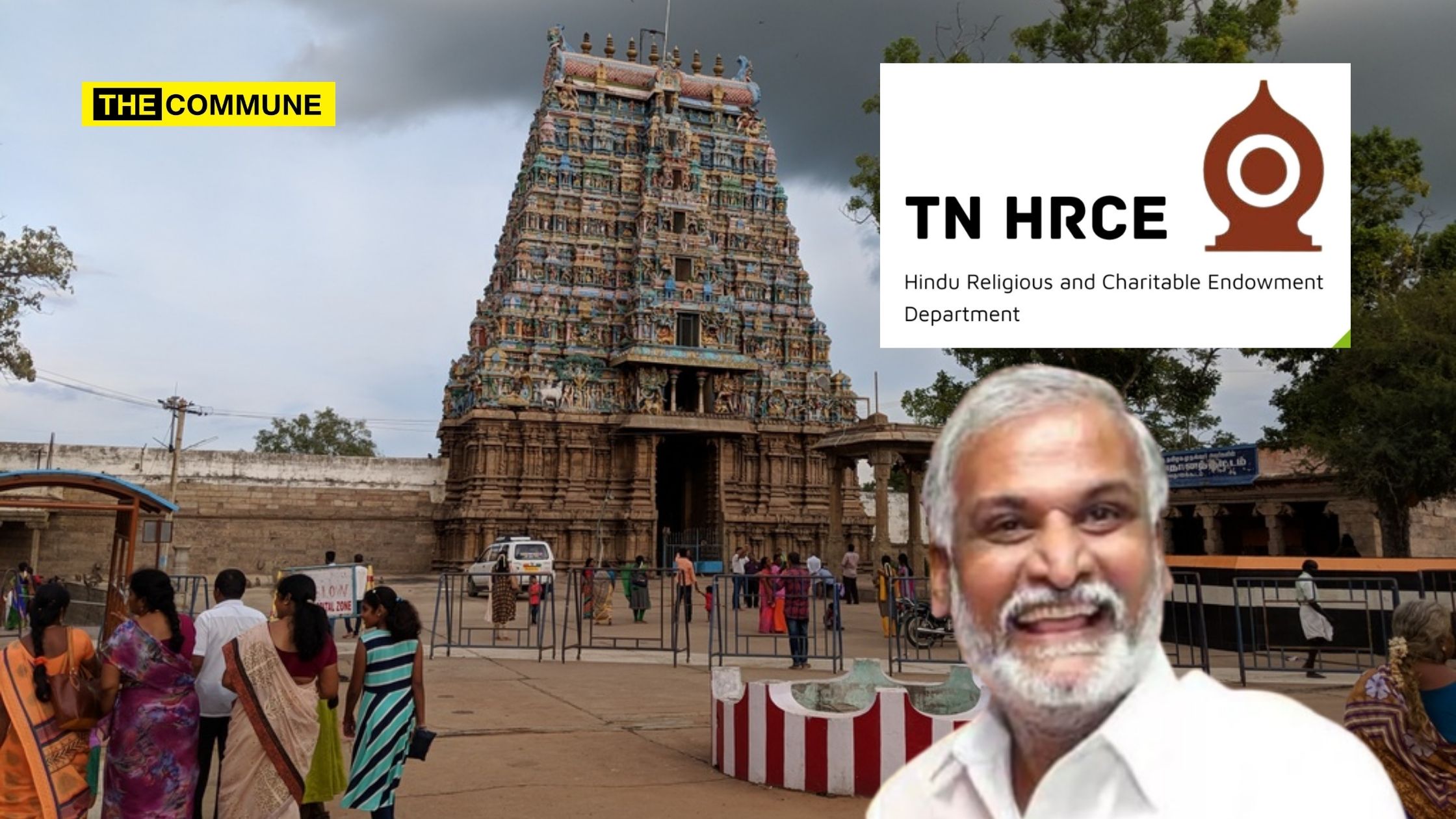
In a significant ruling on temple administration and the use of religious endowment funds, the Madurai Bench of the Madras High Court on 23 January 2026, quashed the TN government’s ₹40-crore “Iconic Project” proposed at Sri Kallazhagar Temple, holding that the project was sanctioned and executed in violation of statutory safeguards.
A Division Bench comprising Justice Dr. Anita Sumanth and Justice C. Kumarappan set aside the government order and related proceedings that permitted large-scale civil works at the ancient temple using temple funds. The court held that the utilisation of surplus temple funds without mandatory sanction under Section 36 of the Tamil Nadu Hindu Religious and Charitable Endowments (HR&CE) Act was illegal.
Quashing the project in its entirety, the Bench made sharp observations on the manner in which the temple had been administered for decades. “To have a major temple managed by a Fit Person/Executive Officer for decades is a travesty of law,” the court said, underscoring that development proposals must originate from the duly constituted Board of Trustees and not from the Minister or the State.
The court also ruled that Executive Officers cannot continue indefinitely in temples, reiterating that their role is temporary in nature. In the case of Sri Kallazhagar Temple, the presence of an Executive Officer for over five decades was found to be contrary to law.
In its findings, the Bench emphasised that temple funds cannot be diverted for what it described as “crass commercial development” and that heritage, agama norms and the sanctity of ancient shrines must prevail over modern concrete structures. It directed that no new concrete constructions be undertaken near ancient shrines or water bodies within the temple complex.
The court further held that statutory approvals from the Archaeological Survey of India and local planning authorities are mandatory for any works at the temple, given its antiquity and heritage status.
A series of time-bound directions have been issued to the Tamil Nadu government and the Tamil Nadu Hindu Religious and Charitable Endowments Department to bring temple administration in line with the law. Observers have noted that the ruling raises questions about whether these directions will be complied with, citing past instances where court orders, such as those relating to the publication of audit reports and the Tirupparankundram matter were allegedly not implemented.
The petitions were filed by Venkatesh Sowrirajan of Thirukkannapuram and A.V.B. Prabhu of Azhagarkoil. The petitioners were represented by advocates M.R. Venkatesan, Arun Chockalingam and Vadiraj Anirudh. The court also recorded its appreciation of the submissions made by Rangarajan Narasimhan of OurTemples, describing his presentation as helpful.
Legal observers say the judgment could have wider implications for temple governance in Tamil Nadu, reinforcing the primacy of trusteeship and limiting the State’s role to regulatory oversight.
Subscribe to our channels on Telegram, WhatsApp, and Instagram and get the best stories of the day delivered to you personally.