A damning revelation from the inner circle of India’s first Prime Minister, Jawaharlal Nehru, confirms long-held suspicions that the nation’s founding leader dangerously blurred the lines between personal hedonism and national duty, potentially compromising India’s strategic integrity at its most fragile hour.
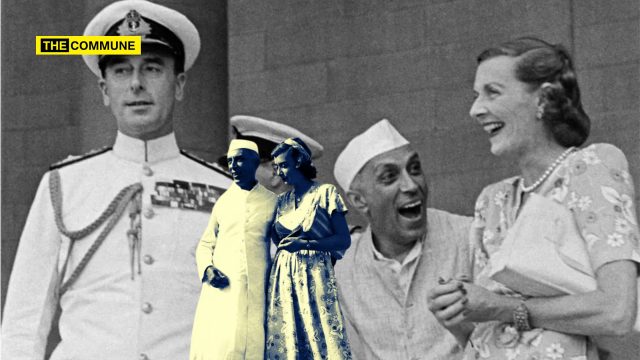
The evidence stems not from political opponents, but from the family of the very woman at the center of the scandal: Edwina Mountbatten, wife of Lord Louis Mountbatten, the last Viceroy of India. In a candid interview, their daughter, Pamela Mountbatten Hicks, laid bare the intense, clandestine relationship between Nehru and Edwina, describing a “happy threesome” based on a willful ignorance of the true nature of the bond.
Reflecting on her parents’ marriage and her mother’s emotional state, Pamela observed: “After a long marriage, and they had had their sort of wedding, so they’d been over 25 years together, a woman can feel perhaps frustrated and perhaps neglected if somebody is working terribly hard. And so, if a new affection comes into her life, and new admiration, she blossoms and she’s happy.”
Interjecting, the interviewer Karan Thapar suggested the mutual nature of the bond: “So both of them in a sense fulfill the need. Both Johanna and Edwina needed each other.”
Pamela agreed: “I think they did. And my father understood that need. And of course, it made my mother who could be quite difficult at times, as many very extraordinary women can be. And yet when at this time when she was so happy with everybody, it you know, it was lovely to be with her. There were [when there were] no prickles.”
She also addressed references made in her writings to what some have described as an unusual emotional arrangement within the Mountbatten household.
At the same time, she maintained that her father, Lord Mountbatten, believed the relationship did not cross physical boundaries, “No, I don’t think [I think that there was no doubts that] my father was convinced that it was just a friendship they would like to talk together and be together. And he was convinced that was all it was. And I certainly was convinced that was all it was.”
Much of the intimacy of the relationship, she acknowledged, was sustained through written correspondence “every night at 2’o clock” as mentioned in her book, rather than constant physical meetings. When asked about the scale of letter-writing between Nehru and Edwina, Pamela confirmed: “But the letters they would as I think I mentioned, they would have an endearment to begin with. And sadly, always that they were missing each other so much. They wouldn’t see each other for six months at a time. And then probably they only saw each other twice a year.”
Other accounts, including letters attributed to Nehru, have been cited by critics as evidence of emotional intensity. In one March 1957 letter to Edwina Mountbatten, Nehru wrote, “Suddenly I realised… that there was a deeper attachment between us… some uncontrollable force drew us to one another… we could look into each other’s eyes without fear or embarrassment.”
India’s first Prime Minister, Jawaharlal Nehru, did not merely compromise India’s national security — he compromised India’s integrity for personal hedonism.
•Pamela Mountbatten, daughter of Lord Mountbatten, recalls how Edwina Mountbatten “found in Panditji the companionship… pic.twitter.com/QOJ0IxoM8a
— Pradeep Bhandari(प्रदीप भंडारी)🇮🇳 (@pradip103) February 4, 2026
Nehruvians and Congress supporters describe it as a profound but dignified emotional companionship between two influential figures navigating turbulent times, but truth be told, such intimacy, involving the Prime Minister of a newly independent nation and the wife of the last British Viceroy, raises troubling questions about judgment, priorities, and the optics of power in the shadow of Partition and early state formation.
Subscribe to our channels on Telegram, WhatsApp, and Instagram and get the best stories of the day delivered to you personally.