The two-month Mandala–Makaravilakku pilgrimage season at Sabarimala opened on a turbulent note, with widespread complaints of breakdowns in basic amenities, unsafe infrastructure and severe crowd mismanagement.
Ground reports from the Sannidhanam paint a grim picture of the situation, with pilgrims, including the elderly and children, forced to wait for 10 to 15 hours for a fleeting darshan of the deity. The crisis has prompted severe criticism from political opponents and forced the newly appointed Travancore Devaswom Board (TDB) president to admit to catastrophic failures in preparedness.
Every year Sabarimala arrangements get worse, but this year was a new low:
⏩ No drinking water for devotees
⏩ No cleanliness – filth everywhere
⏩ Live electric cables lying on the floor
⏩ KSEB work right in the middle of pilgrim movement
⏩ 15+ hour queuesFor Communists,… pic.twitter.com/J7UHAiSoGa
— Anoop Antony Joseph (@AnoopKaippalli) November 18, 2025
“Alarming” Situation and Collapsing Pilgrims
The Leader of the Opposition, V.D. Satheesan, stated that the TDB and the state government had completely failed to arrange basic facilities for the pilgrims. He described a chaotic scene where most pilgrims had to stand in queue for over 12 hours, with many returning disappointed and others unable to climb the sacred 18 steps after the gruelling wait. He further reported that with no crowd control system in place, devotees who had finished their darshan were stranded at the nadapandal, unable to move out.
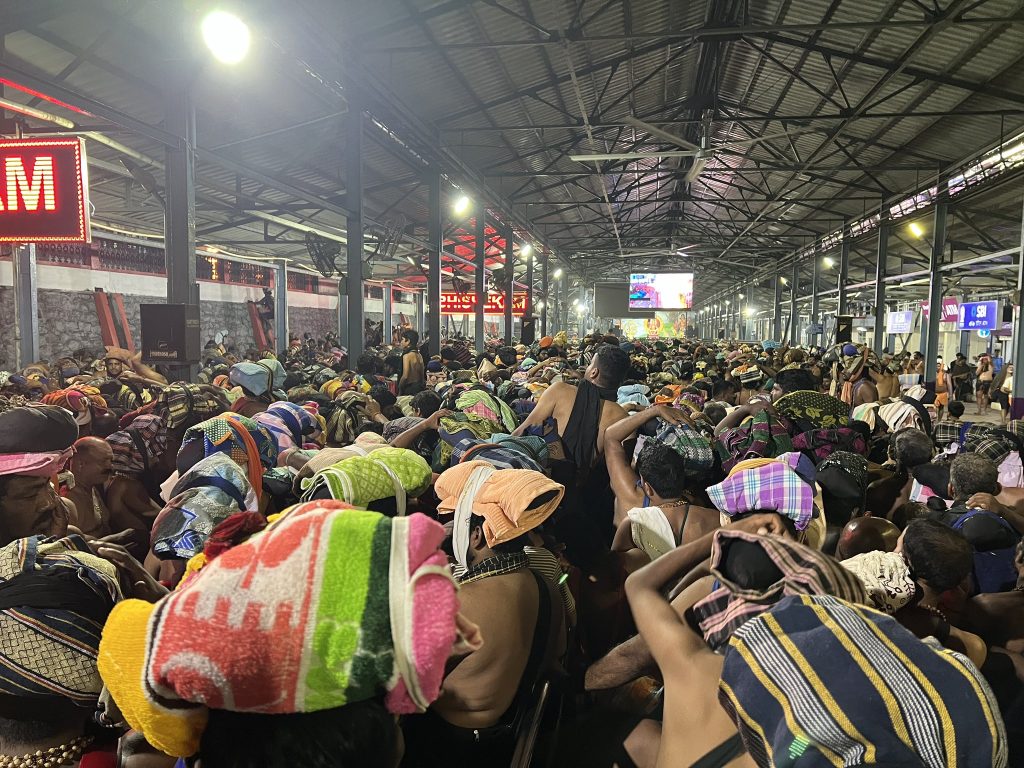
The newly appointed TDB President, K. Jayakumar, admitted that the arrangements had not been sufficient and characterised the situation as “alarming.” He confessed, “I have never seen such a massive and dangerous crowd on the temple grounds till now. It appears some people cut the lines to jump in front. Even I am scared seeing the large crowd here.”
A 58-year-old woman from Koyilandy in Kozhikode district collapsed and died on Tuesday, 18 November 2025, while standing in the queue for darshan at the Lord Ayyappa shrine in Sabarimala, according to district administration sources.
Travancore Devaswom Board (TDB) president K. Jayakumar said the Board would arrange for her body to be taken to her native place in an ambulance at its expense. Officials confirmed her identity and said the incident occurred while she was waiting in the pilgrim line.
The human cost of this mismanagement was starkly visible, with reports of pilgrims, including children and elderly women, fainting after hours of standing in congested corridors without water or shade.
Breakdown of Basic Amenities and Infrastructure
Multiple sources confirmed a critical shortage of drinking water points for the lakhs of devotees. In response, Jayakumar stated that 200 additional personnel had been assigned to personally provide water to those stranded in the serpentine queues. He explained that devotees were avoiding the designated queue complexes for fear of losing their place, making it harder to distribute essentials.
Cleanliness has also been a major casualty. Visuals from the pilgrimage sites showed filth accumulating everywhere, with bio-toilets being poorly maintained. Jayakumar announced that around 200 cleaning personnel were being brought from Tamil Nadu to address the sanitation crisis. Furthermore, pilgrims reported live electric cables lying on the floor and KSEB maintenance work being conducted right in the middle of the pilgrim movement, creating significant safety hazards.
Systemic Failures in Crowd Management
The crisis is rooted in a massive failure of crowd management systems. Authorities had set a daily darshan threshold of 90,000 pilgrims under the virtual queue system, but daily arrivals have consistently exceeded one lakh since the season began. The flow of pilgrims at the 18 sacred steps, which should be at least 90 per minute for smooth regulation, has fallen to nearly half, causing queues to stretch from the Sannidhanam to the covered walkway.
The transit hub at Nilakkal has also seen a breakdown, with a lack of barricades and insufficient KSRTC shuttle services causing jostling and confusion. Jayakumar said he had issued directions to restrict the flow of devotees at Nilakkal itself, setting up seven additional spot booking counters there to reduce the crowd pressure at Pamba and Sannidhanam.
Despite over 18,000 police personnel being allocated for the season, only around 3,500 have been deployed on the ground. The absence of central forces like the NDRF and RAF, traditionally deployed for crowd control, has further strained the limited police presence.
Political Blame Game Erupts
The opposition has launched a scathing attack on the ruling Left government. VD Satheesan dismissed the government’s excuse of the model code of conduct which came into effect a week ago for the failure, stating that all necessary preparations should have been completed months in advance. He alleged that the “devious minds” who organised the Global Ayyappa Sangamam for political aims were responsible for the current mess.
Echoing this sentiment, AICC general secretary KC Venugopal stated that the scary situation was a direct result of the government’s inefficiency and its preoccupation with covering up the recent Sabarimala gold pilferage case. “The scary situation created in Sabarimala is a direct result of the inefficiency of the government, which, along with the Devaswom Board, was busy covering up the gold pilferage and saving the skin of vested interests in Sabarimala,” Venugopal said.
With the footfall expected to rise sharply on weekends and peak festival days, the situation calls for urgent and comprehensive intervention to prevent a repeat of the 2023 crisis and to ensure the safety and dignity of the millions undertaking the sacred pilgrimage.
Subscribe to our channels on WhatsApp, Telegram, Instagram and YouTube to get the best stories of the day delivered to you personally.