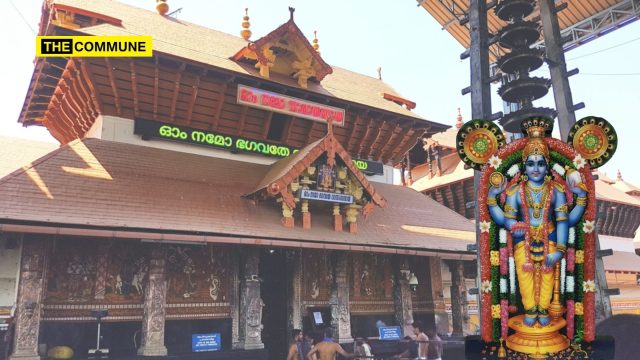
Just as the news of the missing gold in Sabarimala Ayyappa temple makes the rounds, we hear of another revered temple in Kerala where valuables belonging to the temple are found to be missing.
Successive audits of the Guruvayur Devaswom have uncovered widespread irregularities in the handling of the Sri Krishna temple’s assets including gold, silver, ivory, and other valuable offerings, revealing systemic administrative negligence and a lack of accountability. The findings, contained in the 2019–20 and 2020–21 reports of the Kerala State Audit Department, have raised concerns over the management practices at one of Kerala’s most revered and wealthiest temples.
At the centre of the irregularities is the Punnathur Kotta Elephant Sanctuary, managed by the Guruvayur Devaswom, where significant quantities of ivory were reportedly mishandled. The 2019–20 audit revealed that tusk trimming and ivory processing during that year involved 522.86 kilograms of ivory, none of which was handed over to the Forest Department as mandated by law. Between April and November 2019, various consignments including 505 kilograms (26 September 2019), 14.18 kilograms (19 September 2019), 2.35 kilograms (carried over from 2018–19), 730 grams (22 April 2019), 320 grams (14 July 2019), and 280 grams (29 July 2019) were either unaccounted for or remained in possession without documentation.
Mandatory records such as mahazars (seizure memos) and handover receipts were missing. A letter from the Assistant Conservator of Forests had directed the Devaswom to submit details of all tusks and ivory chips within ten days, but according to the audit, neither the information nor the physical items were ever provided. The audit described this as a serious instance of non-compliance, suggesting that large volumes of ivory may have remained outside the legal oversight of the Forest Department.
Responding to the audit observations, Guruvayur Devaswom Chairman V.K. Vijayan said that the irregularities occurred prior to the current board’s tenure. He stated that the matter had already been taken up in court and that replies had been filed. Vijayan added that since 2022, six elephants belonging to the Devaswom have died, and in all those cases, the postmortems were conducted in the presence of Forest Department officials. He maintained that the ivory from those elephants was never handed to the Devaswom and that the current board only received postmortem reports.
Inside the temple, the audit of the “double-lock register” which records gold and silver items used in daily pujas revealed a series of discrepancies. Several items showed unexplained weight reductions: a silver pot was found lighter by 1.19 kilograms within ten months, and other ritual articles had similarly lost several hundred grams. In some instances, items were even replaced with different materials, a gold crown had been substituted with a silver ornament, and a 2.65-kilogram silver vessel was replaced with one weighing only 750 grams. The audit noted that no inquiry or disciplinary action followed these findings.
The report also highlighted the disappearance of 17 sacks of manjadikuru (red lucky seeds) offered by devotees and stored in the temple’s western tower. The sacks, which had been auctioned at ₹100 per kilogram, were never collected by the successful bidder. CCTV footage later showed health department workers loading the sacks onto a Devaswom tractor and transporting them away. Officials claimed the move was for “space management” and that the items were shifted to a nearby godown, but subsequent records do not clarify where they were taken or if they were ever re-auctioned.
Further, the audit revealed that donations and valuable offerings were not being properly recorded. The registers tracking copper, bronze, and panchaloha items have not been updated since 2016. One major omission involved a four-eared bronze vessel weighing around two tonnes, donated in 2022 by a devotee from Palakkad and valued at approximately ₹15 lakh. The offering was neither issued a receipt nor recorded in the donation register.
Auditors also found that costly offerings such as Kashmiri saffron, purchased by the temple at ₹1.47 lakh per kilogram, were not entered in the main registers. Instead, they were added to a separate personal log maintained by a deputy administrator, effectively bypassing the formal receipt system and excluding such donations from audit scrutiny.
Crucially, the reports observed that the Devaswom has failed to conduct annual physical verification of its assets for over four decades, despite mandatory provisions under the Guruvayur Devaswom Act, 1978 and Rules, 1980. Under these laws, the managing committee must perform a yearly inspection of all valuables and submit a verification report to the Devaswom Commissioner by June 30. A 2009 order had also made the Chief Finance and Accounts Officer personally responsible for the verification.
However, the 2020–21 audit confirmed that no verification was conducted, no certificates were issued, and no details of gold and silver holdings were provided, even after formal requisitions were sent by the Kerala State Audit Department in March and July 2023.
Reacting to the findings, Chairman Vijayan said that under the current board, internal controls had been strengthened and that all offerings including gold and silver were now being properly recorded in compliance with audit requirements.
The revelations come even as the Kerala High Court has constituted a Special Investigation Team (SIT) to probe the separate case of gold loss at the Sabarimala temple, deepening concerns over temple administration and accountability across the state’s Devaswom institutions.
(Source: Times of India)
Subscribe to our channels on Telegram, Instagram and YouTube to get the best stories of the day delivered to you personally.