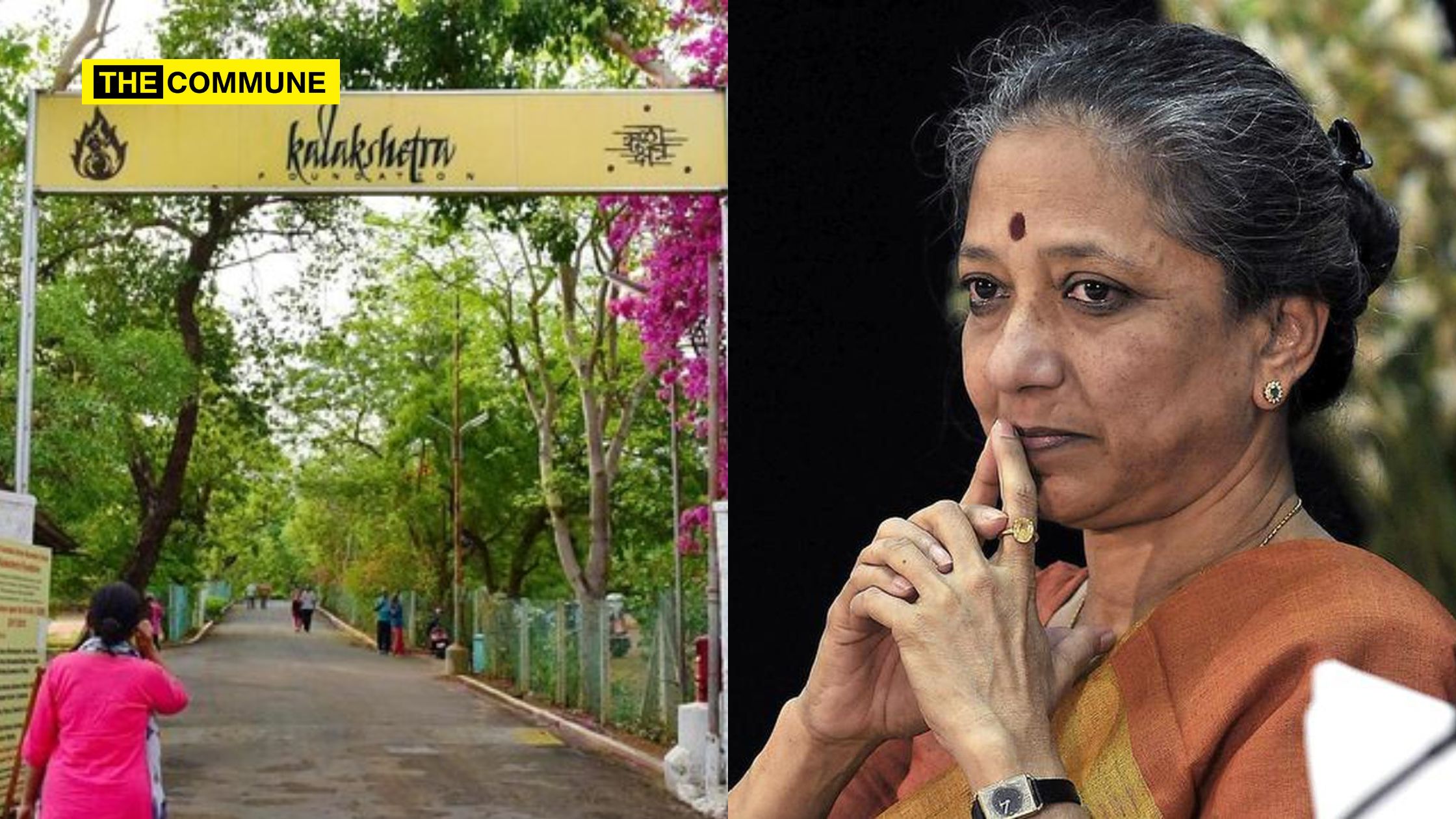
The Madras High Court has quashed criminal proceedings against former Kalakshetra Foundation director Leela Samson in a case arising from alleged derogatory social media posts, after noting that the parties had reached an amicable settlement.
The petition, filed under Section 528 of the Bharatiya Nagarik Suraksha Sanhita, 2023, sought to quash proceedings in C.C. No. 3262 of 2023 pending before the Metropolitan Magistrate Court in Saidapet.
Justice M. Nirmal Kumar, in an order dated 17 March 2026, observed that the dispute between the petitioner and the complainant had been resolved through mediation and that the complainant had expressed no objection to quashing the case.
Background of the Case
The case stemmed from a complaint filed by a dance intern associated with Rukmani Devi College of Fine Arts (Kalakshetra), who alleged that a Facebook post made by Samson in December 2022 contained defamatory and derogatory remarks that harmed her reputation and personal dignity.
The post made by Samson alleged that a male staff member indulged in acts of sexual harassment inside the campus. The alleged male staff member mentioned therein is one Mr. Haripadman who happened to be one of the complainant’s mentors and he had trained her for years together.
In the comments section of the now-deleted Facebook post made on 23 December 2022 by Leela Samson, the complainant says that various comments were made about the alleged misdemeanours committed by Mr. Haripadman and that what was particularly disconcerting was that her name was linked in an uncharitable manner with Mr. Haripadman in one of those comments on the Facebook post.
The comments said, “His victims are many. (Name hidden) had an abortion and wanted him to marry her. And so on. He had a mistress who is an intern – (name hidden) known to bully the younger students. Everyone knows. Junior students apparently ask the question – what do have to do to get a role in the concert section!”
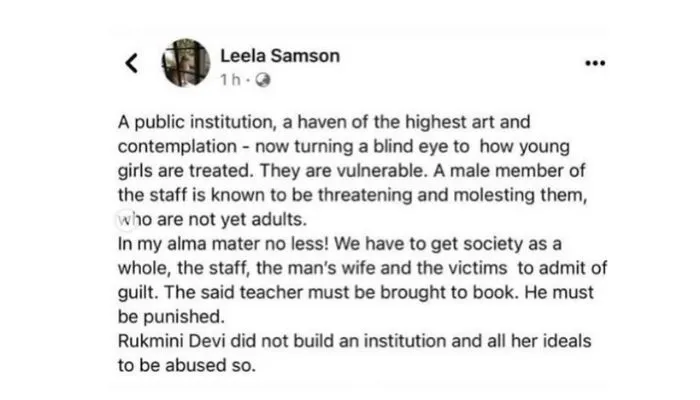
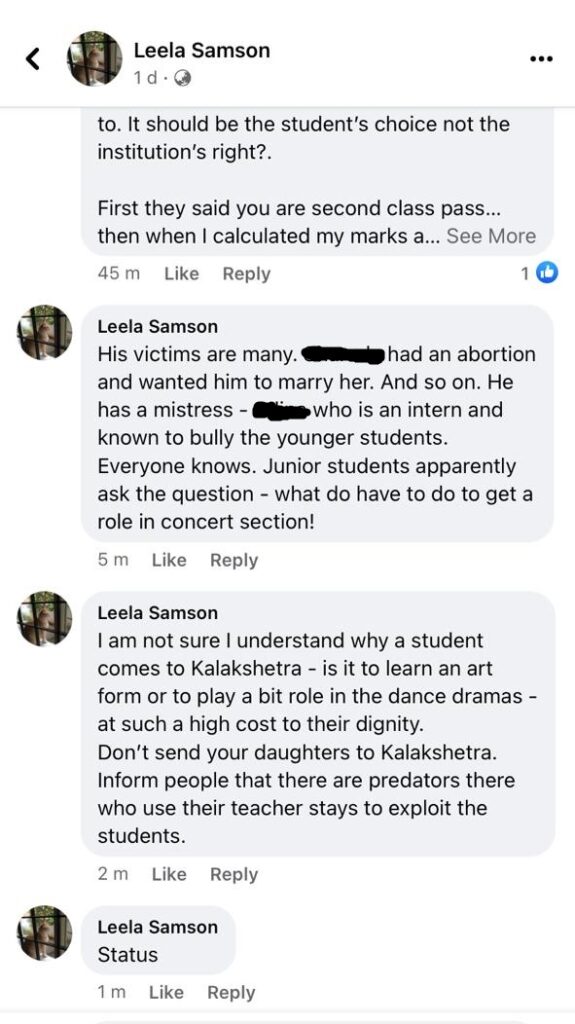
The comment on the Facebook post mentions the complainant’s name (removed for anonymity), although misspelled makes an explicit reference to her and the FIR says that it has given rise to an immense upheaval of her personal and academic life. The contents of the comment, at first glance, besides being false and baseless, are patently derogatory, disparaging, and vituperative, which projects the complainant in an extremely disparaging manner, the FIR said.
The context, tone and tenor of Leela Samson’s post gives away that she had used the word “mistress” with a sexual connotation.
The reference to the complainant as a “mistress”, the FIR said, was an attack against her dignity and an affront to her modesty and as such attracts the provision of Section 509 of the Indian Penal Code, 1860.
The police subsequently closed the complaint against Samson. When the complainant asked for the reason, she was informed that Samson claimed “mistress” meant “ejamaani” (in Tamil ejamaani means a feudal landlady) in the context of the intern giving tuitions to Haripadman’s son. As Samson had already removed her post, the police found her explanation “satisfactory” and decided to close the case.
Following the complaint, police registered an FIR under Section 509 of the Indian Penal Code, which pertains to acts intended to insult the modesty of a woman. A charge sheet was subsequently filed, and the matter proceeded to trial.
Settlement Through Mediation
Parallel to the criminal proceedings, the complainant had also initiated a civil suit. The dispute was referred to mediation, during which multiple sessions were held between August 2024 and April 2025. Both parties eventually arrived at a settlement.
As part of the agreement, the complainant consented to withdraw the criminal complaint and expressed no objection to the quashing of proceedings. The petitioner, in turn, expressed regret over the incident and undertook not to make any further comments against the complainant.
In a brief statement on her Facebook page, Samson wrote this.
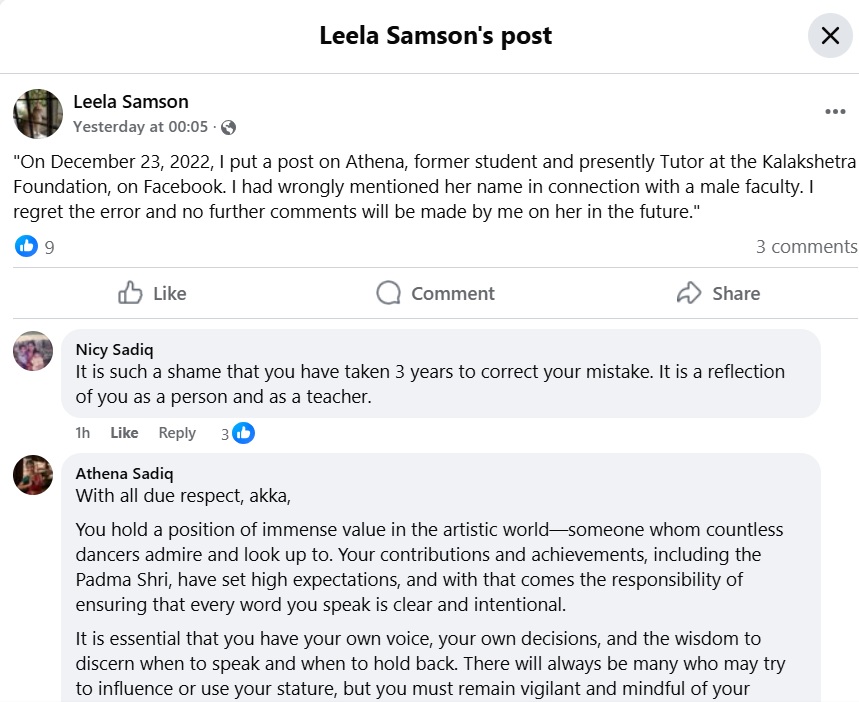
Samson’s admission came after nearly two years of controversy stemming from her initial post, which alleged misconduct by a male teacher, Hari Padman and inadvertently drew a student, into a scandal that disrupted her life and career. The student later alleged that the mention of her name, and its subsequent circulation in media reports and social media, had caused immense distress, mental agony, and damage to her reputation.
According to the affidavit reproduced in the court record (pages 7–9), the complainant confirmed that the settlement had been voluntarily reached and that all terms had been complied with.
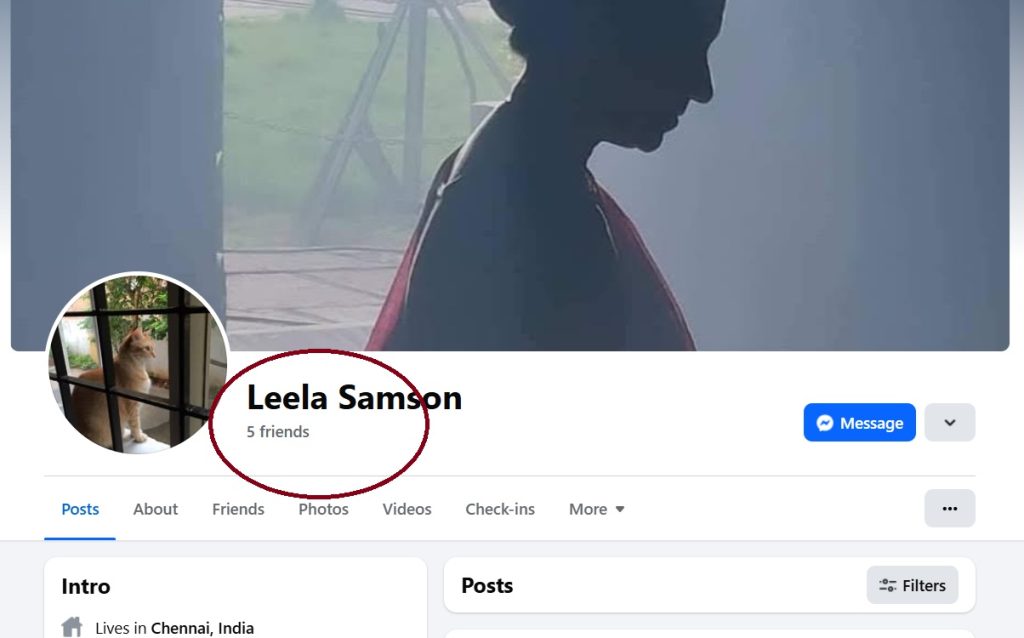
Before making the Facebook post, however, Leela took careful measures to control its visibility. She removed nearly all her friends from her account, reducing their number from approximately 2,000 down to just 5, ensuring that the message would reach a limited and carefully curated viewership. Furthermore, as requested by the complainant, Leela made the post visible to the public while retaining this small number of friends. This tactic meant that the majority of her friends, and even many of her previous social media connections, remained oblivious to its content. In this way, the defendant was able to fulfill the terms of the agreement without broadly disclosing the details or drawing significant attention from her social circle.
Court’s Observations
The court noted that the offence under Section 509 IPC is compoundable in nature and that both parties had willingly resolved their differences. It also recorded the complainant’s statement in court that she did not wish to pursue the case further.
Taking these factors into account, the court exercised its inherent powers to quash the proceedings.
The High Court allowed the petition and quashed the criminal case pending before the XVIII Metropolitan Magistrate Court, Saidapet, effectively bringing the matter to a close.
Subscribe to our channels on WhatsApp, Telegram, Instagram and YouTube to get the best stories of the day delivered to you personally.