At a recent NDA rally, AMMK chief TTV Dhinakaran thundered: “Then it was the Pandya king who drove out the dark rulers, today it is Modi who will do the same.” The king he was referring to was Kadungon, the 6th-century Pandya monarch who ended nearly 300 years of oppressive foreign rule over Tamil Nadu. Here is the story of that remarkable king.
Tamil Nadu’s Forgotten Dark Age
Most people know Tamil history through its golden eras – the Sangam age of great poetry, the Chola empire of magnificent temples, the Pandya dynasty of maritime glory. But tucked between the Sangam age and the medieval period lies a chapter that Tamil history textbooks rarely dwell upon: the Kalabhra interregnum.
Around the 3rd century CE, a mysterious dynasty called the Kalabhras swept through Tamil Nadu and overthrew all three crowned kings – the Cheras, the Cholas, and the Pandyas. Who exactly the Kalabhras were, remains debated among historians. Some believe they were a clan from the northern Deccan; others argue they were a local group that rose to power exploiting a political vacuum. What is clear, however, is what they did once they seized power.
The Kalabhras dismantled the existing social and religious order. Hindu temples were neglected or destroyed. The royal patronage that had sustained Tamil poets, scholars, and artists during the Sangam age dried up entirely. The magnificent courts that had once resonated with the verses of Thiruvalluvar, Ilango Adigal, and the Sangam poets fell silent. This dark period lasted not a decade, not a century, but nearly 300 years.
The Man Who Rose Against the Darkness
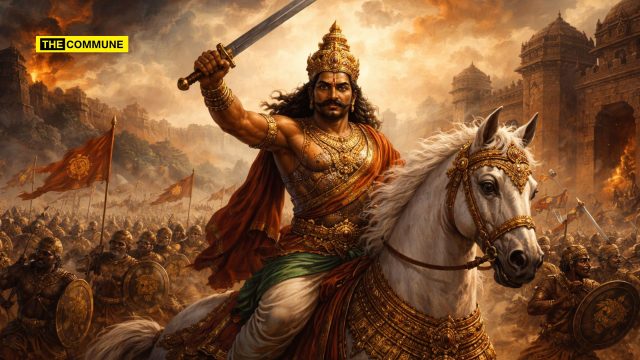
Around 560 CE, in the lineage of the ancient Pandyas, a king was born who would change the course of Tamil history. His name was Kadungon – a name that translates roughly as “the fierce one” or “the relentless one”. The name would prove fitting.
Kadungon understood something that many before him had not: that the Kalabhras could not be defeated by one kingdom alone. He forged a strategic alliance with Simhavishnu, the powerful Pallava king who ruled from Kanchipuram in the north. This was a masterstroke of political diplomacy. The Pallavas were expanding their influence southward anyway, and joining forces with the Pandyas gave them a powerful southern ally. For Kadungon, it meant a two-pronged military campaign that the Kalabhras could not withstand.
From the north came the Pallava armies. From the south came Kadungon and his Pandya warriors. Caught between two powerful kingdoms, the Kalabhra grip over Tamil Nadu collapsed.
The Liberation of Madurai
The single most important historical record of this victory is the Velvikudi Copper Plates – inscriptions commissioned by a later Pandya king, Parantaka Nedunchadaiyan, that look back and credit Kadungon as the founder of the revived Pandya dynasty. According to these inscriptions, the lands that had been seized and gifted away by the Kalabhras were reclaimed. The Pandyas were back – not as vassals, not as subordinates, but as the undisputed rulers of the Tamil south.
Kadungon carried the grand title of Pandyadhiraja, meaning Emperor of the Pandyas. Madurai, the ancient city of temples and Tamil learning, was freed from foreign rule and restored as the glittering capital of a reborn kingdom.
More Than a Military Victory
What made Kadungon’s triumph truly historic was that it was not merely a change of ruler – it was a civilisational restoration:
- Shaivite temples were reopened and reconstructed, with worship rituals revived after generations of suppression
- Tamil poets and scholars once again found royal patronage and protection at the Madurai court
- The ancient Pandya lineage, which traced itself back to the earliest Sangam-era kings, was formally re-established with all its ceremonial glory
- Trade routes, which had weakened during the Kalabhra period, were revitalised as Madurai reasserted its commercial dominance
Kadungon was also a deeply religious king who personally championed Shaivism, helping lay the groundwork for the great Bhakti movement that would later produce saints like Thirugnana Sambandar and Sundarar – figures who would go on to transform the religious landscape of the entire subcontinent.
The Dynasty He Built
Kadungon did not just liberate Tamil Nadu – he founded an empire. His son Maravarman Avanisulamani consolidated the gains, and the kings who followed – Sendan, Arikesari Maravarman, and others, expanded Pandya power across South India.
The Pandya dynasty that Kadungon revived would go on to outlast the Pallavas, compete with the Cholas, and at its medieval peak under Maravarman Sundara Pandyan and Jatavarman Sundara Pandyan, become one of the wealthiest and most powerful dynasties in all of Asia – exporting pearls, cotton, and spices across the Indian Ocean world.
- Before Kadungon: 300 years of darkness.
- After Kadungon: over 1,000 years of Pandya glory. That single fact captures the magnitude of what he achieved.
The Political Parallel TTV Drew
When TTV Dhinakaran invoked Kadungon at the NDA rally, comparing him to Prime Minister Modi ahead of the 2026 Tamil Nadu assembly elections, he was reaching for one of Tamil history’s most resonant symbols – a king who ended 300 years of foreign domination and restored native rule to Madurai.
Subscribe to our channels on Telegram, WhatsApp, and Instagram and get the best stories of the day delivered to you personally.