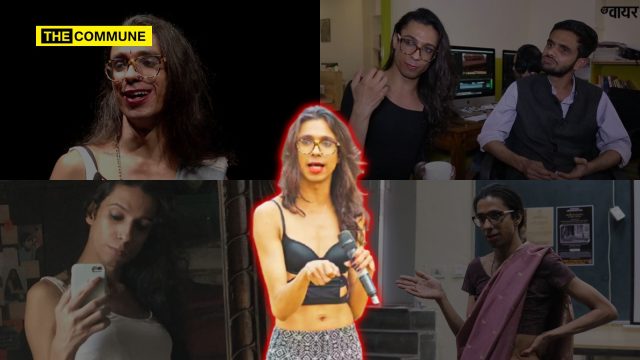
Jindal Global Law School—India’s most expensive, self-proclaimed “world-class” private law university has quietly hired Vikramaditya Sahai (a.k.a. Vqueeram) as Clinical Assistant Professor of Law, despite a well-documented record of making sweeping, inflammatory, and openly derisive comments about Hindus, Indians, men, and the very idea of national belonging.
Sahai’s appointment in February 2025 has triggered outrage not because of their gender identity, as supporters disingenuously argue, but because the said words, conduct, and ideology that raise serious questions about the standards of institutions that shape India’s next generation of lawyers, judges, and policymakers.
It seems Vikramaditya Sahai was hired at JGLS in February, 2025.
It is shocking such people are rehabilitated without any apology. Not only that, they are also given the opportunity to influence young minds! pic.twitter.com/63aOHC9A83
— Sensei Kraken Zero (@YearOfTheKraken) December 9, 2025
This is not about who Sahai is. This is about what Sahai has said, what Sahai has done, and why premier academic institutions keep rewarding it.
A Pattern Of Derision: Sahai’s Public Statements
Sahai’s public record is not murky, it is crystal clear, documented on videos, posts, and interviews stretching back years. In a 2017 public event, Sahai said, “There is nothing nice about being Hindu. There is nothing nice about being Indian. There is nothing nice about being a man. As long as you are Hindu, you exercise power over Dalits, Muslims, Christians. As long as you are Indian, you occupy territories. Your existence is implicated in the murder of Junaid.”
Vikramaditya Sahai suggested in 2017 that there is nothing nice about being a Hindu or an Indian. She also said that India occupies territories.
Now, the Jindal Global Law School (JGLS) has hired this person as the Clinical Assistant Professor of Law and CJLS.
As per my… pic.twitter.com/ArlrnQCE1U
— Sensei Kraken Zero (@YearOfTheKraken) December 9, 2025
These are not stray remarks. They are ideological claims framed as universal truths, flattening all nuance and branding entire communities as inherently oppressive.
Yet today, the same individual is teaching at a law school and teaching it at one of India’s highest-fee, most aspirational institutions.
From Activism To Academia Without Accountability
Sahai’s CV is impressive, but heavily ideological:
- Faculty at Ambedkar University Delhi, Gender Studies
- Consultant at TISS Mumbai, Centre for Women’s Studies
- Senior Research Associate at CLPR Bengaluru, an organisation known for its activist-driven jurisprudence
- External member of the NCERT Gender Manual drafting team
- Law & Justice Scholar at Jindal Global University (2024–25)
Every academic posting is positioned in and shaped by an explicitly ideological ecosystem. But here’s the problem: ideological activism is not the issue; ideological extremism is.
Sahai did not just advocate gender inclusion. Sahai publicly argued that:
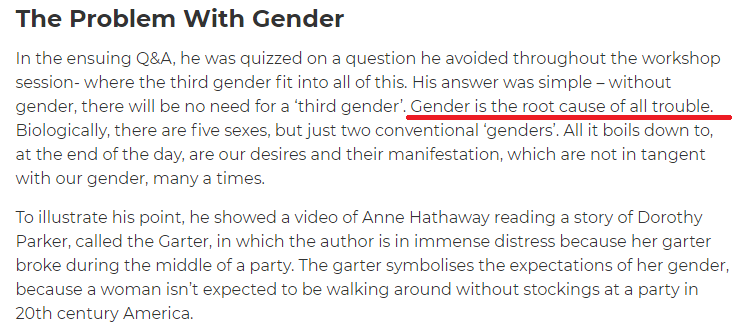
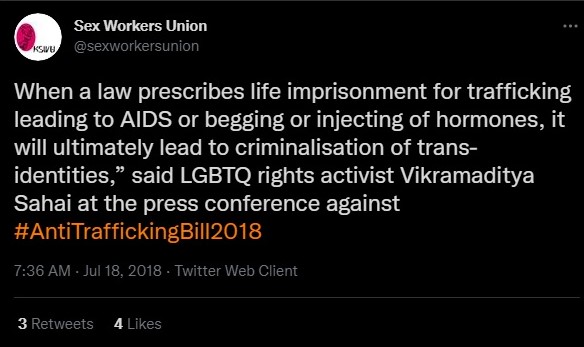
Opposed life imprisonment for trafficking, calling it harmful because it “criminalises trans identities.”
Referred to Rohith Vemula’s suicide note as “beautiful.”
There’s something seriously wrong. Here, “They” talks about Rohit Vemula’s “beautiful suicide note” pic.twitter.com/Y7ShTsUZ9R
— Sensei Kraken Zero (@YearOfTheKraken) November 3, 2021
These are extreme, absolutist formulations, not grounded in scholarship, but in activism turned into dogma.
And institutions absorbed this without question.
The NCERT Controversy: When Personal Conduct Meets Public Responsibility
When Sahai surfaced in the NCERT Gender Training Manual controversy, journalists and parents raised concerns on two fronts:
#1 Sahai’s ideological statements – open disdain for major religious communities, the nation-state, gender roles, and legal structures.
#2 Sahai’s public posting of semi-nude photographs on Instagram – on a profile that was completely open to the public, even while contributing to documents for school-level teacher training.
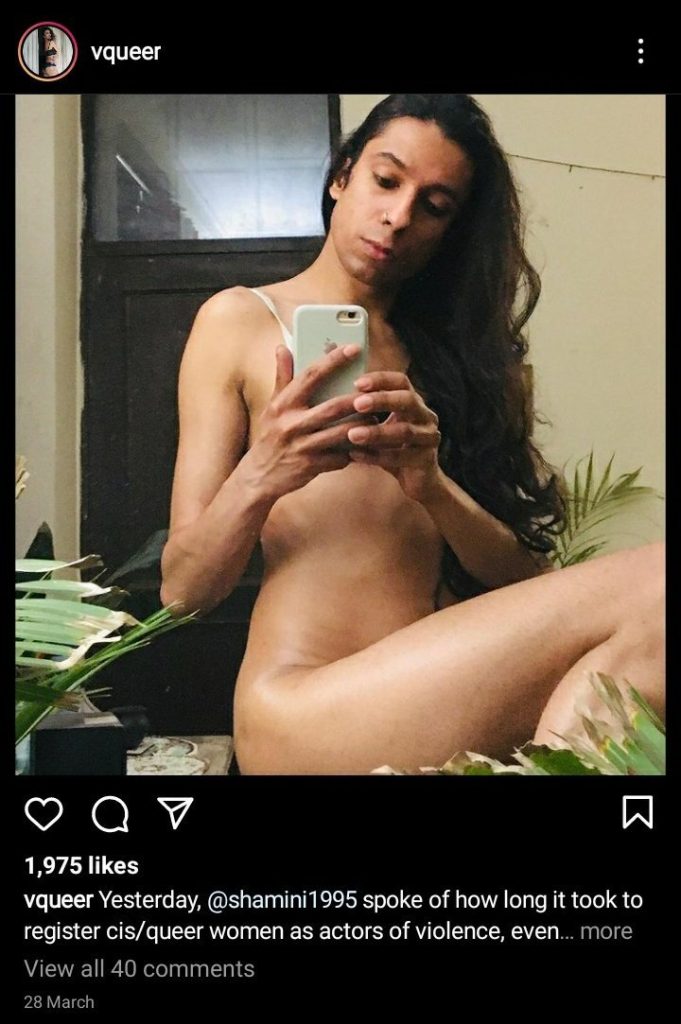
Instead of accountability, critics were attacked as “transphobic,” even though the criticism targeted content, conduct, and public suitability, not identity.
The NCERT eventually withdrew the manual. Sahai faced no consequences.
The Jindal Appointment: A Case Study in Institutional Capture
In early 2025, Sahai was brought into JGLS, a law school where tuition exceeds ₹8–10 lakh per year and which markets itself as India’s gateway to global legal careers.
So the question asks itself: How does a person who has said “there is nothing nice about being Hindu or Indian” get hired to teach Indian constitutional law, social justice, or gender law?
The answer is uncomfortable: India’s elite academic institutions have blurred the line between scholarship and activism so thoroughly that ideological extremism is not a red flag, it is a credential.
This is not an isolated case. It reflects a pattern across universities, where statements that deride an entire faith community, the dismissal of “Indianness” as inherently violent, open political activism, publicly posted semi-nude images, radical views on crime and justice, blanket characterisations of entire genders, associations with far-left activists such as Umar Khalid and repeated contempt for national identity.
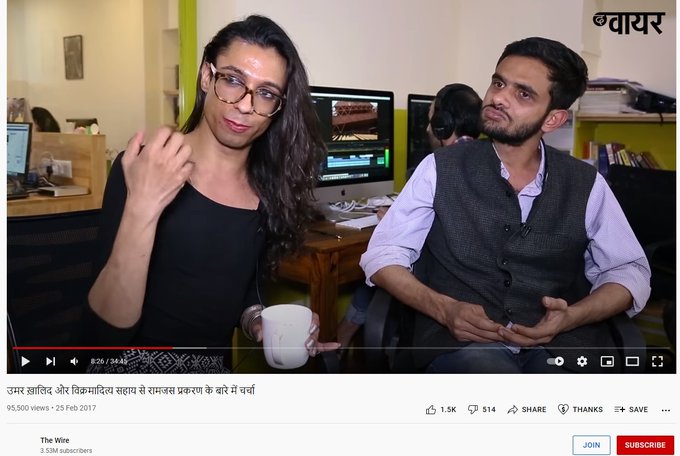
…are not seen as disqualifications for teaching law or influencing educational policy. Instead, they become stepping stones.
Why Does This Matter?
Because educational institutions do not merely hire faculty; they legitimise them. They certify that these individuals are fit to shape young minds.
And here lies the core concern: If Sahai’s statements had targeted any other religious community in the same way, would elite universities still hire them? The answer writes itself.
If Sahai had described any other nationality as fundamentally oppressive, would they be appointed to teach law? Again: the answer writes itself.
Subscribe to our channels on WhatsApp, Telegram, Instagram and YouTube to get the best stories of the day delivered to you personally.