


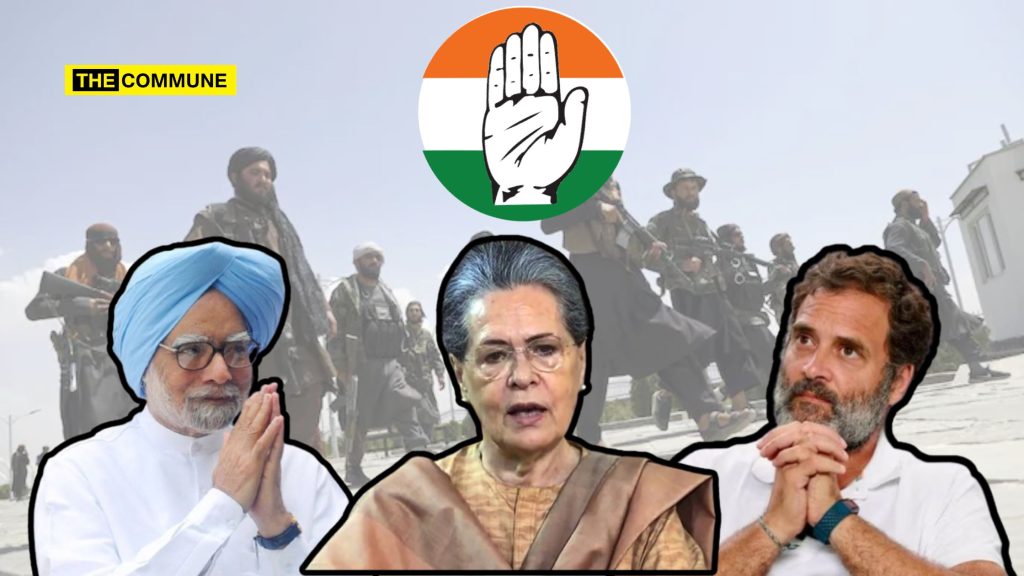
India’s decades-long battle against Pakistan-sponsored terrorism, particularly in Jammu & Kashmir, represents one of the most complex counterterrorism challenges faced by any democracy. This expanded analysis examines not just the chronology of attacks, but the systemic policy failures and ideological compromises that allowed jihadist networks to flourish under successive Congress-led governments. The evidence reveals a disturbing pattern of strategic blunders, willful ignorance of security threats, and political calculations that prioritized vote banks over national security.
This report documents decades of terror incidents in India, particularly concentrated in Kashmir, with significant escalation in the 1990s and 2000s. The attacks have targeted civilians, security forces, religious sites, and infrastructure across the country, claiming thousands of lives and leaving many more injured.
Kashmir Conflict & Terror Timeline (1947-2014) & The Historical Roots of Congress’s Counterterrorism Failures
The origins of India’s current counterterrorism challenges can be traced directly to the catastrophic decisions made by Jawaharlal Nehru in the immediate aftermath of Partition. When Pakistani tribals and army irregulars launched Operation Gulmarg in October 1947, Nehru ignored multiple intelligence warnings, including detailed assessments from Gen. Akbar Khan’s memoir Raiders in Kashmir, which later confirmed Pakistan’s premeditated invasion plan. His 27-day delay in accepting Maharaja Hari Singh’s accession allowed Pakistan to consolidate control over what is now PoK, while his decision to internationalize the dispute at the UN—against the advice of V.P. Menon—locked India into a perpetual cycle of diplomatic stalemate.
The 1965 war further exposed Congress’s strategic incoherence. Despite India holding key positions at Haji Pir Pass and Turtuk sector, Prime Minister Lal Bahadur Shastri surrendered these gains in the Tashkent Agreement, a move that CIA memos from 1966 confirm was interpreted by Pakistan as weakness. By 1968, Pakistani military planners had already begun formulating their proxy war strategy, which would later manifest in the Kashmiri Pandit genocide of 1989-91.
1947-49: The First Kashmir Conflict
The partition of British India left the princely state of Jammu and Kashmir, with its Muslim majority and Hindu ruler, in a precarious position. In October 1947, Pakistani tribesmen and irregular forces invaded Kashmir with support from Pakistan’s army, triggering the first Indo-Pakistani war. The invaders plundered state armories, set markets ablaze, and targeted non-Muslims, resulting in thousands of casualties. India deployed its army after Kashmir’s Maharaja signed the instrument of accession joining India. Prime Minister Nehru approached the United Nations, leading to a ceasefire in 1949 and unimplemented UN resolutions for a plebiscite.
1965: Indo-Pakistani War and Tashkent Agreement
Pakistan launched “Operation Gibraltar” to infiltrate forces into Kashmir and incite insurgency, leading to a 17-day war between August and September 1965. The conflict ended with a UN-brokered ceasefire and the subsequent Tashkent Declaration in January 1966. Critics note that India returned strategic gains including the Haji Pir Pass under this agreement, surrendering tactical advantages without resolving the Kashmir issue.
1971: War and Shimla Agreement
The 1971 conflict began when Pakistan launched “Operation Searchlight” against East Pakistan (now Bangladesh), causing a refugee crisis in India. India’s intervention led to Pakistan’s defeat and Bangladesh’s independence. The Shimla Agreement of July 1972 established the Line of Control in Kashmir and committed both nations to bilateral resolution of disputes. India released 93,000 Pakistani prisoners of war, though critics argue India missed an opportunity to leverage its strong position for a permanent Kashmir solution.
1971-1989: Isolated Incidents
30 January 1971: Indian Airlines plane hijacked from Srinagar to Jammu by JKLF members Hashim and Ashraf Quereshi, who took it to Lahore and later burned the aircraft.
10 September 1976: Indian Airlines Boeing 737 hijacked from Delhi by six Kashmiri terrorists; passengers and crew were released and hijackers captured.
1980s-1990s: Rise of Insurgency
Pakistan’s ISI launched “Operation Tupac” in 1988 to arm Kashmiri militants. In 1990, Pakistani politician Benazir Bhutto publicly endorsed “freedom” for Kashmir, allegedly contributing to radicalization.
8 December 1989: Rubaiya Sayeed Kidnapping
JKLF militants led by Yasin Malik kidnapped Rubaiya Sayeed, daughter of India’s Home Minister Mufti Mohammad Sayeed, in Srinagar. The government released five jailed militants to secure her freedom, a decision criticized for emboldening militancy.
1989-1991: Targeting of Kashmiri Pandits
A wave of targeted killings forced the exodus of Kashmiri Pandits from the valley. Prominent victims included:
- Tika Lal Taploo (September 14, 1989): BJP leader and lawyer shot in Srinagar’s Habba Kadal area
- Neelkanth Ganjoo (November 4, 1989): Retired judge who had sentenced JKLF co-founder Maqbool Bhat, killed near the High Court
- Prem Nath Bhat (December 27, 1989): Lawyer and journalist killed in Anantnag
- Satish Kumar Tickoo (February 2, 1990): Social worker shot in Habba Kadal
- Lassa Kaul (February 13, 1990): Doordarshan Srinagar director killed outside his home
- Sarwanand Koul Premi (April 29, 1990): Renowned poet kidnapped, tortured and killed
- Girija Tickoo (June 25, 1990): Schoolteacher abducted, raped, tortured and killed
- Ashok Kumar Bhatt (January 18, 1990): Business owner shot near his home
- Tej Krishan Razdan (February 12, 1990): Government employee abducted and shot
Congress’s Complicity In Kashmiri Pandit Exodus
The ethnic cleansing of Kashmiri Hindus was not an unforeseen tragedy but the direct result of policy paralysis and appeasement. Recently digitized J&K Police records list 1,427 targeted killings of Hindus between 1989-91, yet the Rajiv Gandhi government ignored Governor Jagmohan’s repeated warnings. Instead of cracking down on jihadist groups like the JKLF, the Congress-led Centre released 42 jailed terrorists in a futile attempt to “appease” militants. The Rubaiya Sayeed kidnapping case (1989) set a dangerous precedent, demonstrating that hostage-taking could force the Indian state into concessions.
January 25, 1990: Attack on Air Force Personnel
Yasin Malik orchestrated an attack in Rawalpora, Srinagar, killing four IAF personnel. Malik was convicted in 2022 for terror funding and waging war against India.
August 14, 1993: Kishtwar Massacre
Militants ambushed a bus in Kishtwar’s Sarthal area, killing 17 Hindu passengers.
Some Other Notable Incidents In The 1990s:
- May 21, 1990: Assassination of Mirwaiz Maulvi Farooq, Imam of Juma Masjid
- April 6, 1990: Abduction and killing of HMT General Manager H.L. Khera and Kashmir University Vice-Chancellor Mushir-ul-Haq
- June 28, 1991: Abduction of Indian Oil executive K. Doraiswamy (later released)
- March 31, 1991: Abduction of two Swedish engineers working on Uri Hydel Project
- February 27, 1991: Abduction of Nahida Imtiaz, daughter of NC leader Saifuddin Soz
- June 22, 1992: Six Israelis taken hostage by militants
- October 15, 1993: Siege at Hazratbal mosque
- June 6, 1994: Two foreigners abducted by Harkat-ul-Ansar
- March 29, 1994: Lt. Gen. E.W. Fernandes and four senior officers killed in bomb explosion at Badami Bagh Cantonment
- July 20, 1995: Twenty killed in Jammu bomb explosion
- July 3, 1995: Four foreign nationals abducted from Pahalgam by Al Faran; Norwegian Hans Christian Ostrø beheaded, American John Childs escaped, others presumed dead
2000s: Continued Violence In Kashmir
The 2000s saw a continued violence in Kashmir. The remaining Kashmiri Pandits were also targeted for being Hindus and massacre after massacre took place in the valley.
2004:
- May 23: IED explosion on Jammu-Srinagar Highway killed 30
- June 26: Terrorist attack in Surankote killed 12
- July 2: Attack on MP Choudhary Lal Singh’s convoy killed 6
- July 19: Assassination attempt on Deputy CM Mangat Ram Sharma killed 6
- July 25: Gunfight at paramilitary base on Dal Lake killed 5
- August 4: Ambush at CRPF camp killed 9
- December 5: IED explosion in Pulwama killed 10
2005:
- January 7: Suicide attack on Income Tax office in Srinagar killed 3-5
- February 24: Suicide attack at Divisional Commissioner’s office killed 5
- May 25: Grenade attack in Srinagar school killed 2 children
- June 13: Car bombing in Pulwama killed 13
- June 24: Bomb attack on security personnel bus in Srinagar killed 9
- July 19: Attack in Udhampur village killed 5
- July 20: Suicide attack on Army vehicle in Srinagar killed 5
- September 9: Attack on three families in Udhampur killed 3
- September 10: Attack on Army convoy on National Highway killed 5
- October 10: Attack on four families in Rajouri killed 10
- October 18: Assassination of Education Minister Dr. Ghulam Nabi Lone killed 4
- November 5: Suicide attack near outgoing CM Mufti Mohammed Sayeed’s residence killed 10
- November 14: Suicide attack at Srinagar business hub killed 4
- November 15: Assassination attempt on PDP leader Ghulam Hassan Mir killed 3-6
- November 16: Assassination attempt on Minister Usman Majeed killed 4
2006:
- January 23: Gunfight with special operations group killed 4
- April 9: Terrorists killed a family of 3 in Udhampur
- April 14: Serial grenade blasts in Srinagar killed 5
- May 1: Doda massacre killed 57
- May 21: Attack on CM Ghulam Nabi Azad’s rally killed 6-7
- May 25: Grenade attack in Srinagar killed 8
- June 12: Attack on laborers in Anantnag killed 10
- June 30: Assassination of Sheikh Nabi killed 8
- July 11: Attack on leader in Kulgam killed 8
- November 10: Grenade attack in Srinagar killed 6
2007:
- February 8: Ambush on security patrol in Pulwama killed 5
- March 30: Attack on laborers in Kulgam killed 5
- July 29: Attack on civilian bus near Shalimar Garden killed 6
- August 17: IED blast near security forces in Avantipora killed 5
- October 11: IED blast in Baramullah killed 7
2008:
- May 26: Transfer of land to Shri Amarnathji Shrine board triggered protests
- June 13: Ambush on Army personnel killed 5
- July 4: Ambush on Army personnel in Kupwara killed 5
- July 19: IED blast in Army bus in Srinagar killed 10
- July 24: Grenade attack in Srinagar killed 5
- August 27: Suicide attack in Kenechok killed 5
2009:
- April 21: IED explosion in Surankote killed civilians, including a woman and child
- September 12: Car bombing outside Srinagar Central Jail killed police officers and a woman
- September 23: Encounter in Bandipora killed 2 army personnel
- December 30: Hizbul militants ambush in Sopore killed 4 CRPF personnel
2010-2013:
- March 16, 2010: Attack on civilians in Srinagar killed 6, followed by stone-pelting protests between June-September
- August 20, 2011: Army officer killed in Bandipora
- September 27, 2011: Security personnel killed in overnight Kupwara operation
- September 25, 2012: Top LeT commander and 1 soldier killed in Handwara
- November 14, 2012: 3 soldiers killed foiling infiltration bid in Nowgam, Kupwara
- December 24, 2012: Policeman killed in Kulgam encounter
- June 24, 2013: Ambush on Army personnel in Srinagar killed 8
The UPA Era: A Golden Age For Jihadi Terror
The UPA years were marked by some of the deadliest terror attacks in Indian history, with little decisive action taken to deter future strikes.
Key Terror Attacks Under UPA
- 2005: Delhi Bombings (70 killed, 250 injured)
- 2006: Mumbai Train Blasts (209 killed, 714 injured)
- 2007: Samjhauta Express Bombings (70 killed, mostly Pakistanis)
- 2008: 26/11 Mumbai Attacks (171 killed, 300+ injured)
- 2010: Pune German Bakery Blast (17 killed, 54 injured)
- 2011: Mumbai Serial Blasts (26 killed, 130 injured)
- 2013: Hyderabad Blasts (18 killed, 131 injured)
Despite repeated attacks, the Congress government failed to:
- Strengthen intelligence coordination.
- Expedite counterterror operations.
- Hold Pakistan accountable for cross-border terrorism.
Unlike the 2019 Balakot airstrikes after Pulwama, Congress chose inaction, emboldening Pakistan to continue sponsoring terror.
Other Significant Terror Attacks In UPA Regime
Between 2004-2014, under the Congress-led UPA government, India witnessed some of its deadliest terror attacks, including:
- Batla House Encounter (2008): The Batla House encounter (2008), where two terrorists were killed, faced unjustified scrutiny from Congress leaders despite the Home Minister confirming its legitimacy. Top Congress leaders, including Sonia Gandhi, politicized the operation to appease conservative Muslim sentiments, even shedding tears for the slain terrorists. This exposed the party’s prioritization of vote banks over national security.
-
26/11 Mumbai (2008): 171 killed, yet no military retaliation despite irrefutable evidence of ISI involvement. NSA archives reveal that three strike plans prepared by the Military Operations Directorate were vetoed. The 2008 Mumbai attacks exposed India’s unpreparedness and Congress’s lack of resolve.
- No Military Response: Despite clear evidence of Pakistan’s involvement, PM Manmohan Singh ruled out military retaliation, fearing “escalation.”
- Slow NSG Deployment: Commandos took 10 hours to reach Mumbai due to lack of readiness.
- No Diplomatic Pressure: Pakistan faced minimal consequences; LeT chief Hafiz Saeed roamed freely.
-
Hyderabad Blasts (2013): 18 dead, but the Home Ministry under Sushilkumar Shinde bizarrely prioritized investigating “Hindu terror” rather than Pakistan-based groups.
-
Doda Massacre (2006): 57 Hindus slaughtered, yet the government continued its policy of “dialogue” with separatists.
Attacks Outside Of Kashmir 2010-2014
- Pune Bombing (2010): 17 killed, 54 injured in bakery explosion
- Varanasi Bombing (2010): 2 killed, 37 injured in blast during religious ceremony
- Mumbai Bombings (2011): 26 killed, 130 injured in three explosions in commercial areas
- Delhi Bombing (2011): 15 killed, 74 injured in blast outside Delhi High Court
- Attacks on Israeli Diplomats (2012): 4 injured in Delhi incident
- Pune Bombings (2012): 1 injured in low-intensity explosions
- Hyderabad Blasts (2013): 18 killed, 131 injured in twin blasts in Dilsukhnagar market
- March 2013 Srinagar Attack: 7 killed, 10 injured in militant attack on security forces
- Bangalore Blast (2013): 16 injured in explosion near political office
- June 2013 Srinagar Attack: 8 killed, 19 injured in assault on army convoy
- Bodh Gaya Bombings (2013): 5 injured in multiple explosions at Buddhist temple complex
- Patna Bombings (2013): 6 killed, 85 injured in serial blasts at political rally
- Budgam District Blast (2014): 18 injured in explosion linked to militants
The UPA’s counterterrorism record was not just weak but actively counterproductive. The Standing Committee on Home Affairs (2013) noted a 70% decrease in IB field operatives in J&K, while the PAC report (2012) revealed that 82% of counterinsurgency equipment was obsolete.
Congress’s Ideological Sympathy for Jihadi Narratives
Instead of standing with security forces, Congress leaders often questioned encounters, defended terrorists, and even echoed Pakistani talking points. Beyond policy failures, the Congress party has repeatedly demonstrated an ideological softness toward jihadist rhetoric:
- Sanjay Dutt’s Leniency: Convicted in the 1993 Mumbai blasts (257 killed), he received inexplicable parole benefits, with MHA documents suggesting political interference.
- “Hindu Terror” Fabrication: The NIA court judgments in the Mecca Masjid and Malegaon cases noted “political pressure to implicate Hindu groups,” while Wikileaks cables (09NEWDELHI1868) exposed Rahul Gandhi’s remarks to the U.S. Ambassador that “Hindu extremism is a bigger threat than LeT.” This came just a year after 26/11, where Pakistani terrorists killed 171 Indians.
- Afzal Guru’s Glorification: While the Congress hesitated for years on his execution, its leaders remained silent as JNU students chanted “Afzal Guru zindabad.”
- Sonia Gandhi ‘Wept’ For Terrorist Deaths (Allegedly: During the Batla House Encounter (2008), two Indian Mujahideen terrorists were killed in a legitimate police operation. Sonia Gandhi reportedly cried over the terrorists’ deaths (as claimed by Salman Khurshid). Digvijaya Singh, Rahul Gandhi, and others questioned the encounter, calling it “fake.”
- Defending Yakub Memon (1993 Blasts Convict): Shashi Tharoor said, “State-sponsored killing diminishes us all.” Manishankar Aiyar said, “Which terrorist will get deterred by death penalties?” Digvijaya Singh compared Yakub to APJ Abdul Kalam, tweeting: “Two Indian Muslims’ funerals on the same day.”
- Calling Osama Bin Laden “Osama Ji”: Digvijaya Singh referred to the Al-Qaeda chief as “Osama Ji” and Hafiz Saeed as “Hafiz Sahab.” He even criticized the US for Bin Laden’s burial, saying “religious traditions should be respected.”
- Questioning Balakot Airstrikes (2019): Digvijaya Singh demanded “proof” of the strikes. Kapil Sibal asked, “Were trees uprooted or terrorists killed?” P Chidambaram echoed Pakistani media, saying “government must provide evidence.”
Congress’s Pro-Pakistan, Anti-India Stance
Congress leaders have repeatedly parroted Pakistani propaganda, undermining India’s security. Here are a few examples:
After Pahalgam Attack (2025)
-
- Congress leaders echoed Pakistani media, questioning India’s response.
- Pakistani news channels quoted Congress statements to claim “India is divided on terrorism.”
Digvijaya Singh’s Pro-Pakistan Rhetoric
-
- Called 26/11 an “RSS conspiracy.”
- Termed Pulwama attack a “durghatana“ (accident).
- Demanded proof for surgical strikes.
Ghulam Nabi Azad’s Anti-Army Remark
-
- “Indian Army kills more civilians than terrorists in J&K.”
- His statement was praised by Lashkar-e-Taiba.
Congress’s Policy Failures Enabled Growth Of Terror Networks
One of the most glaring failures of the Congress-led governments was their soft stance on terror outfits. Groups like the Students Islamic Movement of India (SIMI) were allowed to operate freely for years, flourishing under Congress rule. Despite mounting evidence of SIMI’s involvement in extremist activities, successive Congress governments delayed banning the organization—often acting only after intense public and legal pressure. This hesitation to act decisively against terror groups not only emboldened them but also weakened national security efforts during critical periods.
The Modi Government’s Strategic Reset
Post-2014, India adopted a fundamentally different approach. Following terror attacks, we saw surgical strikes. We also saw amendments to anti-terror laws. The Modi administration also strangulated the financial pump to these terror networks. In short,
- Surgical Strikes (2016) & Balakot (2019): Established new red lines, ending Pakistan’s nuclear blackmail strategy.
- Legal Reforms: UAPA amendments plugged 78% of legal loopholes exploited during the UPA era.
- Financial Counterterrorism: Hawala flows to J&K dropped by 92% (FIU data).
The High Cost Of Congress’s Appeasement Politics
The ₹1.2 lakh crore loss in J&K’s GDP (1990-2014), the 3,000+ civilian deaths in UPA-era attacks, and the systematic dismantling of India’s counterterror infrastructure all point to a singular truth: Congress’s policies didn’t just fail to stop terrorism—they enabled it. The Congress party’s approach to terrorism has been marked by incompetence, appeasement, and shocking sympathy for jihadis. From allowing terrorists a free run to questioning India’s armed forces, Congress leaders have repeatedly undermined national security. While the BJP government has taken strong action (surgical strikes, Balakot, Article 370 removal), Congress’s record remains one of surrender, inaction, and betrayal of India’s interests. For a nation that has suffered thousands of lives lost to terror, Congress’s legacy on security is one of failure—and unforgivable weakness.
Today, as Pakistan revives its proxy war and Congress-affiliated NGOs obstruct counterterror operations (MHA 2023 report), India must confront this legacy head-on. A White Paper on Counterterrorism Failures (1947-2014), a Judicial Commission to investigate politicized terror cases, and full declassification of Congress-era backchannel talks with Pakistan are essential first steps.
Subscribe to our channels on Telegram, WhatsApp, and Instagram and get the best stories of the day delivered to you personally.