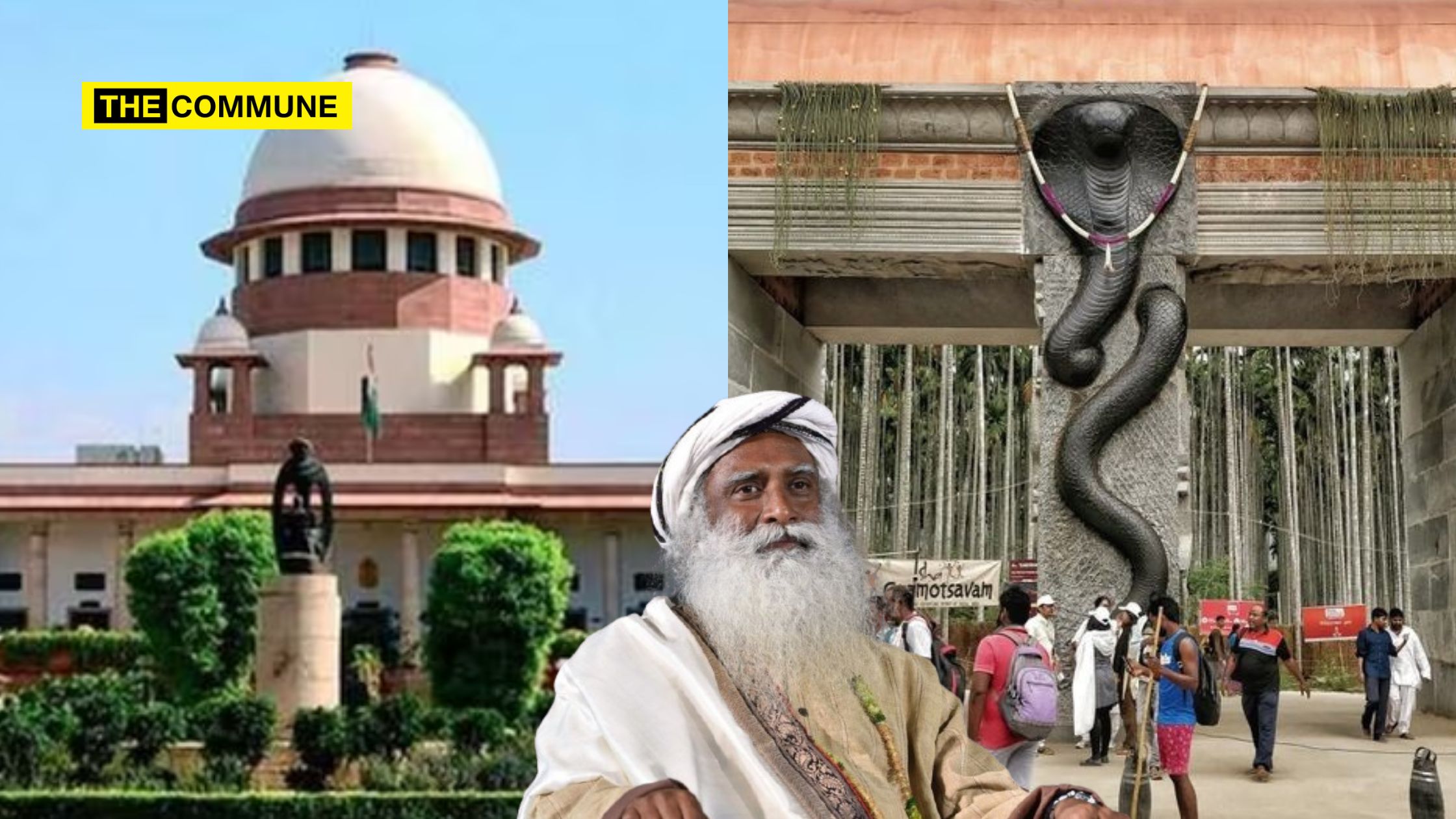
The Supreme Court on Thursday, 26 February 2026, called for an amicable resolution of the dispute between residents of Ikkarai Boluvampatti village in Coimbatore district and the spiritual organisation Isha Foundation over the latter’s proposed crematorium project near the village.
A Bench comprising Chief Justice of India (CJI) Surya Kant and Justices Joymalya Bagchi and Vipul Pancholi requested retired Supreme Court judge Justice R.V. Raveendran to mediate the matter. “We request Justice Raveendran to provide his services as a mediator in the case. Let both parties consult him by tomorrow and let the fee schedule be prepared by the mediator,” the Bench ordered.
During the hearing, CJI Kant observed that the Isha Foundation was engaged in charitable work. “Burial has become an expensive affair. Isha Foundation is not a religious service. They are doing some pious work. It’s a good work also. Did you sell this land to them? You can only claim that you sold for lawful activity, but you cannot dictate it to them (what they should or should not do). Let them find a suitable place for you and compensate you so that you have better living conditions,” he said.
The matter has been posted for further hearing on 17 April 2026.
The dispute reached the Supreme Court after the Madras High Court, on 21 January 2026, cleared the way for the Isha Foundation’s crematorium project at Ikkarai Boluvampatti in Perur taluk, Coimbatore district. A Division Bench of Chief Justice Manindra Mohan Shrivastava and Justice G. Arul Murugan had dismissed petitions challenging the project’s legality under the Tamil Nadu Village Panchayats (Provision of Burial and Burning Grounds) Rules, 1999.
The High Court had held that once a burial or burning ground is duly licensed under Rule 5 of the 1999 Rules, the 90-metre distance restriction prescribed under Rule 7 would not apply. It noted that this legal position already stood conclusively settled by a Full Bench decision in Jagadheeswari v. B. Babu Naidu.
The petitions before the High Court were filed by local residents and individuals from neighbouring villages who sought to quash the village panchayat president’s order issued in April 2023 and the consent order granted by the Tamil Nadu Pollution Control Board in February 2024 for the proposed “Isha Foundation Kalabhairavar Dhagana Mandapam.”
Petitioners had argued that Rule 7 of the 1999 Rules prohibits burial or burning of corpses within 90 metres of dwelling houses or drinking water sources, and therefore the crematorium could not be permitted at the proposed site. They also raised environmental concerns, pointing out that the village falls under the Hill Area Conservation Authority and within the Boluvampatti forest division, a known elephant habitat.
Rejecting these contentions, the High Court observed that the Full Bench in Jagadheeswari had already clarified the interplay between Rules 5 and 7. It held that Rule 7’s distance restriction does not apply to burial or burning grounds that are duly licensed by the village panchayat under Rule 5.
The court further noted that arguments regarding the site’s suitability and other administrative considerations fell within the domain of local authorities and policy decisions. It added that establishing an additional crematorium, particularly a gasifier-based facility, was intended to serve community needs and could not be presumed to be against public interest.
With the Supreme Court now stepping in and appointing a mediator, the focus shifts to whether the parties can reach a negotiated settlement before the next hearing in April.
Source: LawBeat
Subscribe to our channels on Telegram, WhatsApp, and Instagram and get the best stories of the day delivered to you personally.