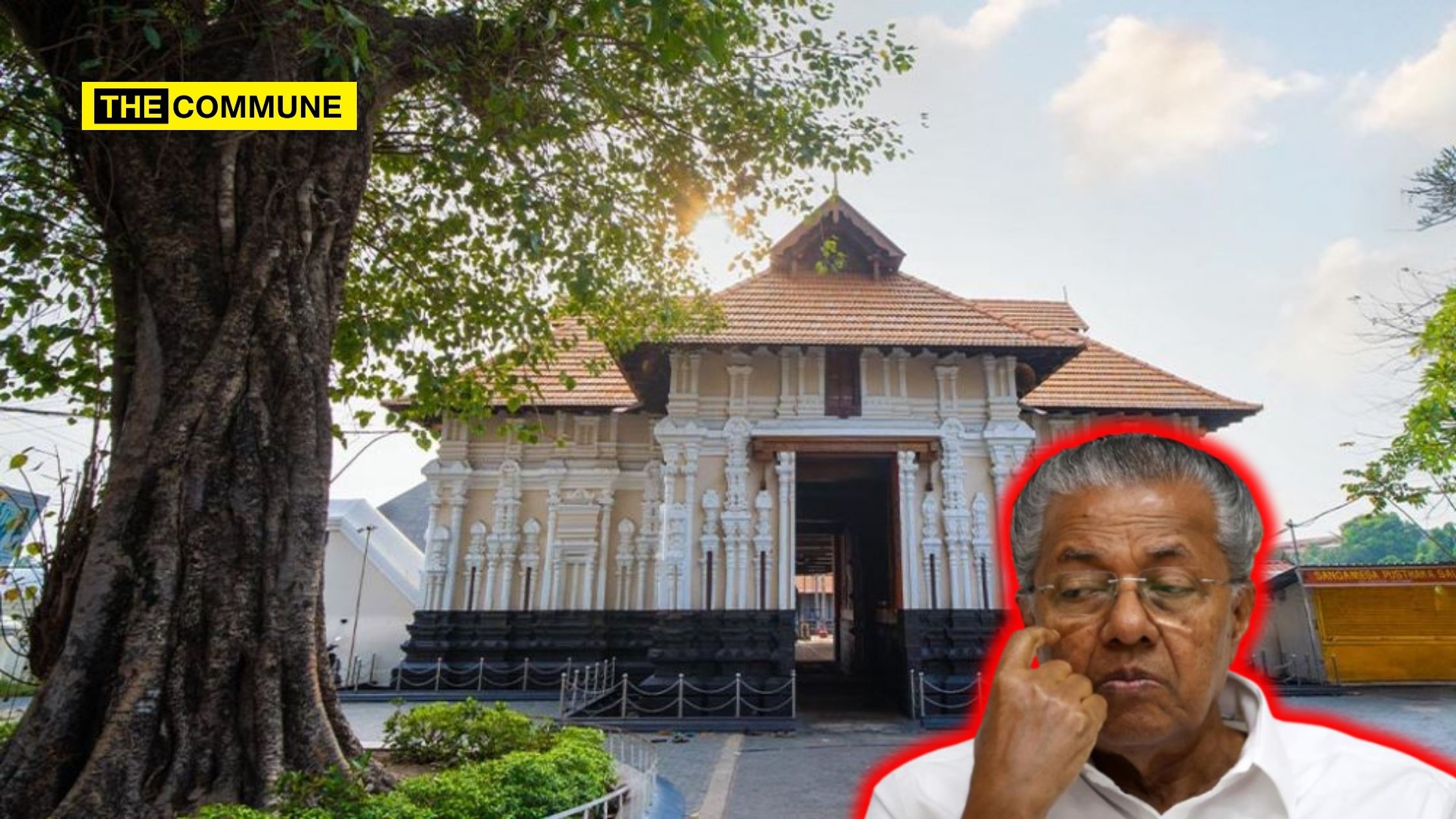
The Koodalmanikyam Temple in Irinjalakuda, Thrissur, Kerala has become the latest battleground where the state government, aided by sections of the media, is pushing a false narrative of caste discrimination to divert attention from its shocking mismanagement of the shrine. In March 2025, outlets like Asianet News, The News Minute, SouthFirst, and Onmanorama started peddling claims of caste bias.
Before going into the mismanagement, it must be noted that media houses like @TheSouthfirst, @thenewsminute, @AsianetNewsML and @Onmanorama which trumpeted the caste discrimination agenda of devaswom has not spoken a word on the question raised by HC.
— People For Dharma (@People4Dharma) May 25, 2025
However, a closer look at the facts reveals what looks like a calculated strategy: caste allegations are being used as a diversion to hide a far more serious issue—gross mismanagement of temple resources and illegal government interference in religious institutions.
The Manufactured Caste Controversy
The controversy centers on the appointment of BA Balu, a non-hereditary candidate, as a kazhakakar—a role that involves performing minor ritual duties such as tying garlands and carrying lamps during temple processions. The media quickly framed the tantris’ (priests’) objections to his appointment as an act of caste discrimination. However, key facts dismantle this narrative:
No Caste-Based Objection: The tantris explicitly opposed the appointment on grounds of hereditary rights, not caste. The temple has 12 families traditionally serving as kazhakams, and their livelihoods depend on these roles.
The Appointee Himself Denied Discrimination: BA Balu, the Ezhava community member at the center of the row, stated he never faced caste-based exclusion from temple authorities.
Illegal Govt Takeover: The Kerala High Court had ruled that the state’s takeover of Koodalmanikyam Temple was illegal, yet the government continues to control it—raising questions about its motives.
This orchestrated caste narrative serves a dual purpose:
- Diverting attention from the Devaswom Board’s massive administrative failures.
- Justifying continued government control over the temple by portraying it as a “progressive” move against casteism.
High Court Questions Government’s Motive
The Kerala High Court has questioned the very need for appointing non-hereditary individuals to such posts, especially when hereditary custodians are still actively serving. The government, through the Devaswom Board, has so far failed to provide a satisfactory answer. The judiciary’s involvement exposes how shaky the government’s justification truly is. Yet, rather than addressing the court’s concerns, the narrative in the public sphere continues to focus on caste—thanks to a complicit media machinery.
The Devaswom has not been able to answer the HC on why was there a need to appoint non-hereditary persons in addition to hereditary people for a small post like kazhakam which merely involves tying of garlands and carrying of lamps during processions
— People For Dharma (@People4Dharma) May 25, 2025
The Real Scandal: Alarming Mismanagement
While the government and media cry “caste discrimination,” they ignore far more serious issues. Under the Kerala government’s control, the Koodalmanikyam Temple has suffered massive administrative failures. According to statements made by the Devaswom Minister in the Kerala Assembly, over 5,568 acres of temple land are under encroachment. An RTI response received in 2024 further revealed that no audits have been conducted in the temple since 2019, despite the ongoing public ritual of reading out income-expenditure reports before the deity—effectively deceiving devotees.
Moreover according to an RTI reply received last week from the devaswom board, no audit has been carried out in the temple since 2019. Despite this the devaswom has been cheating the devotees by carrying out the practice of reading income and expenditure report before the deity.
— People For Dharma (@People4Dharma) May 25, 2025
The government’s administration of the temple has been marred by incompetence. The land records of the temple were lost in a mysterious
fire shortly after the government took over. This negligence further undermines the government’s credibility in managing the temple.
In addition, the temple has not received annual rent for its Kanam lands since 2003, and land annuities as meager as ₹1,779 in Aluva have not been paid since 2019. This shows that the government’s control over temples is not only ineffective but deeply negligent. Yet, the same administration wants the public to believe that they are intervening to bring justice and social reform.
Did you know that the Kerala government under @pinarayivijayan is so broke that it has not been able to pay even an annual rent of Rs 1779 since 2019?
First of all, it's a mystery as to how such a low amount was fixed as an annuity for tens of acres of land in Aluva. But a… https://t.co/dsEKrlUi9D
— S.Jayashankar (@jaypanicker) June 11, 2025
The annual rent of ₹25,000 for the Kanam lands of the Koodalmanikyam Temple has not been paid since 2003. Hindus are asked to believe that better management of the temple is possible only under state administration, yet the same administration has failed to pay the annual rents… https://t.co/Vuy73H8NdY
— krithika sivaswamy (@krithikasivasw) June 11, 2025
The mismanagement doesn’t end with land and audits—it also extends to blatant financial irregularities. In a shocking example from 2015, Koodalmanikyam Devaswom officials appointed by the then UDF (Congress-led) government paid an additional ₹50,000 to actress Isha Talwar simply because she arrived late by a day to perform at the Irinjalakkuda Ulsavam due to disruptions in Konkan Railway traffic. It is almost unheard of for an artist to be paid extra for arriving late, yet this is precisely how temple funds—donated in good faith by devotees—have been misused under successive Congress and Communist governments in Kerala. Such incidents highlight the casual and cavalier approach these governments have taken towards the sanctity of temple finances.
Have you ever heard of a case where an artist is paid extra for arriving late to a program?
The Koodalmanikyam(Thrissur dist) Devaswom officials appointed by @inckerala govt in 2015, paid an extra 50000 rupees to actress Isha Talwar since she arrived late by a day for her… pic.twitter.com/6Xi5Zqpnum
— S.Jayashankar (@jaypanicker) June 11, 2025
Why The Caste Card? A Smokescreen For Failure
The Kerala government’s sudden “caste justice” rhetoric is a calculated distraction from its abysmal temple administration. There seems to be no genuine interest in social justice: If the government truly cared about backward communities, why are SC/ST employees only appointed as toilet cleaners in temples? Why no accountants or senior roles? Media outlets ignore cases like Parassinikkadavu and Varkala temples, where non-hereditary appointments were made without controversy.
It is interesting to note that your channel which is alleging caste discrimination here has never uttered a word against appointment of Ezhavas alone in Parasinikkadavu or Varkala even in non hereditary posts. Is it because of the diktats of LDF?
— People For Dharma (@People4Dharma) March 10, 2025
By framing hereditary traditions as “casteist,” the government justifies greater control over Hindu temples, while Christian and Muslim institutions remain autonomous.
Hiding Incompetence Behind Identity Politics
The sudden and aggressive framing of the controversy in caste terms begins to make sense when viewed in this context. Faced with mounting evidence of corruption, negligence, and violations of temple law, the Kerala government has chosen to launch a distraction campaign. By stoking communal emotions and casting the tantris as oppressors, the government attempts to mask its abject failures.
The hypocrisy is staggering: while Scheduled Caste individuals are appointed to clean toilets in temples, none are found in higher administrative or financial roles within the Devaswom Board. This exposes the government’s selective outrage and tokenism, undermining its claims of fighting caste discrimination.
A Systematic Erosion Of Hindu Institutions
The Koodalmanikyam controversy is not an isolated incident but part of a larger pattern. From denying hereditary rights to temple workers, to ignoring court rulings declaring government takeover illegal, to manipulating land records, the state appears to be systematically weakening Hindu institutions while cloaking its actions in the language of social justice. The Supreme Court’s verdict in the Shivacharyar case, which upheld the sanctity of hereditary temple custodianship, has been conveniently ignored by the same actors who now cry foul over caste.
The Devotees See Through The Drama
The Kerala government’s ploy is becoming increasingly transparent. The tactic of raising caste discrimination as a cover for bureaucratic corruption and mismanagement is not just unethical—it is dangerous. It erodes public trust, divides communities, and undermines the very traditions that have preserved these temples for centuries. The days of theatrics are numbered. Devotees are beginning to see through the deception, and the call for accountability is growing louder.
Subscribe to our channels on Telegram, WhatsApp, and Instagram and get the best stories of the day delivered to you personally.