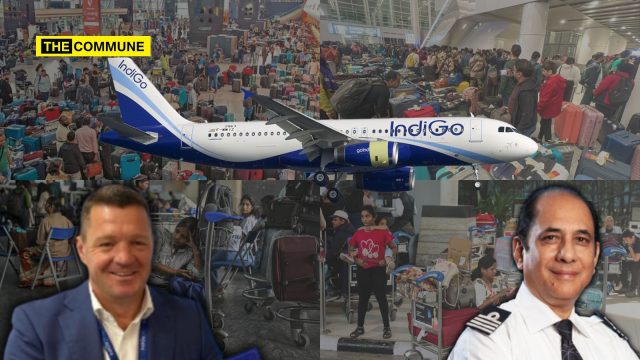
In a scathing anonymous open letter circulating widely on social media, an IndiGo employee has accused the airline’s management of fostering a culture of fear, intimidation, and neglect that has culminated in the carrier’s ongoing operational crisis. The letter, shared on X (formerly Twitter) by aviation commentator @AeroAwcs on 6 December 2025.
The crisis erupted earlier this week when new flight duty time limitation (FDTL) rules enforced by the Directorate General of Civil Aviation (DGCA) restricted pilots’ night landings and extended rest periods to combat fatigue. IndiGo, India’s largest airline with a 60% market share, was caught off-guard, leading to over 1,000 cancellations since December 3, including all departures from major hubs like Delhi and Mumbai on some days.
The DGCA has since granted a temporary exemption until February 10, 2026, allowing IndiGo to resume operations, but not before issuing a show-cause notice to CEO Pieter Elbers and COO Wolfgang Prock-Schauer.
Titled “Open Letter to My Fellow Citizens, and to the Management of IndiGo,” the missive paints a grim picture of internal decay at the low-cost carrier, which began as a proud startup in 2006 but allegedly devolved into a “too big to fail” behemoth under arrogant leadership. “We started off small in 2006. We were proud—genuinely proud—of what we were building,” the author writes, contrasting those early days with a later attitude of hubris: “Remember this phrase, yes we heard this in 2009 when Lehman Brothers and likes failed. And we, the employees, kept warning—sometimes quietly, sometimes desperately. But no one listened.”
The letter accuses management of strangling competition through overcapacity tactics—such as flooding routes during Akasa Air’s 2022 launch—and prioritizing profits over safety. Pilots raising fatigue concerns were reportedly summoned to headquarters, “intimidated, shouted at, and humiliated,” with no accountability. Ground staff, earning as little as ₹16,000-18,000 per month, were forced to handle the workload of three people, running between aircraft without extra compensation even as night duties doubled and leaves were curtailed.”
This downfall was years in the making,” the employee asserts, linking the current chaos to systemic issues like unqualified promotions based on access to employee stock options (ESOPs) rather than talent. “The real rot started when titles became more important than talent. Suddenly, people who couldn’t even draft a proper email were becoming VPs—because being a VP meant access to ESOPs and power.” The author extends the critique beyond the cockpit, noting how the airline’s monopoly-like practices affected millions of passengers and the broader economy.
The letter’s release comes days after Elbers acknowledged “operational failures” in an internal memo to staff, vowing to restore punctuality as the “immediate goal” and outlining plans to hire over 900 pilots by early 2026 to comply with the DGCA norms.
However, the open letter dismisses such measures as too little, too late, urging the public and regulators to recognize that “the recent mass disruptions were not just an operational failure—they were a failure of leadership.”
Reactions online have been swift and supportive. Aviation professionals and passengers have echoed the sentiments, with one X user calling for heads to roll and tagging regulators like the DGCA and Ministry of Civil Aviation.
Former pilots pointed out that India has around 4,700 unemployed aviators who could fill gaps immediately, questioning why IndiGo—despite having a reported 20% pilot surplus—failed to prepare.
Critics, including ex-aviation experts, have demanded a government probe, alleging the DGCA’s initial exemptions compromised safety for the sake of IndiGo’s dominance.
IndiGo has not publicly responded to the open letter as of Sunday evening, but the airline stated it is ramping up operations and issuing refunds to affected passengers.
Operations are expected to stabilize by December 10, though the fallout—from stranded travelers to rival airlines absorbing overflow—has exposed vulnerabilities in India’s aviation sector.
As the dust settles, the letter serves as a stark reminder: What began as an underdog success story risks becoming a cautionary tale of unchecked growth. “We all looked away and now we blame this on monopoly,” the author laments. With the DGCA forming a committee to investigate, the coming weeks could determine whether IndiGo’s “too big to fail” era ends in reform—or regret.
Subscribe to our channels on WhatsApp, Telegram, Instagram and YouTube to get the best stories of the day delivered to you personally.