


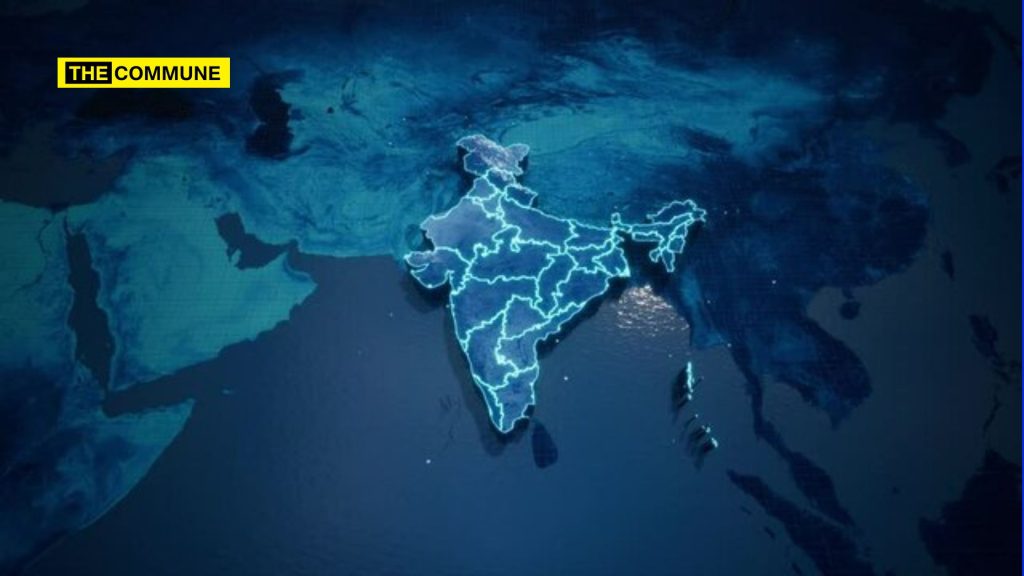
In an era marked by geopolitical instability, nations increasingly resort to aggressive tactics, ranging from economic sanctions to outright military conflict, to assert dominance. This environment has eroded trust in concepts such as global peace and mutual cooperation, replacing traditional international relations with a zero-sum power dynamic.
Negotiations are often reduced to ultimatums, with weaker states subjected to exploitation and engineered dependencies as instruments of coercion. Powerful actors pursue disproportionate responses without restraint, driven by bloc formations centered on trade, commerce, and technological leverage.
National progress is frequently motivated by fear of vulnerability rather than shared aspirations for peace, prosperity, and human solidarity. Even advancements in science and technology, once dedicated to human betterment, have been repurposed as tools of suppression. Historically, diplomatic alliances resemble survival pacts in a predatory ecosystem, prioritizing short-term instincts over enduring partnerships grounded in common values.
Amid this landscape, India emerges as an outlier: a nation pursuing self-development without infringing on others’ sovereignty. Its growth model emphasizes domestic abundance and global prosperity, unencumbered by sectarian, religious, or economic biases. India’s actions reflect a deep civilizational ethos, exemplified by Operation Sindoor.
Despite enduring Pakistan-sponsored terrorism since independence, with the Pahalgam attack as a recent manifestation, India’s retaliation targeted only terrorism’s infrastructure and perpetrators, avoiding civilian casualties or escalation. This measured approach echoes the Mahabharata episode where Sage Vyasa intervened to prevent Arjuna from unleashing the Brahmastra against Ashwatthama, averting needless destruction.
In contrast, responses by other powers such as Israel’s against Hamas or Russia’s in Ukraine have drawn criticism for excess. While ancient civilizations like these retain historical legacies, their handling of adversarial interests often lacks restraint, bordering on the unrestrained. India, however, garners international acclaim for its firm yet proportionate stance against Pakistan, without leveraging geostrategic or economic influence to solicit approval.
India’s diplomatic engagements are fundamentally rooted in cultural foundations, evolving gradually unlike those of other nations, which prioritize security, finance, and trade. Prime Minister Narendra Modi’s personal outreach to global leaders fostering broad, informal connections stems from his formative experience as a swayamsevak in the Rashtriya Swayamsevak Sangh, the world’s largest sociocultural organization.
This contrasts with counterparts whose interactions are formal and tethered to immediate national interests. Such proactive engagement proved instrumental in countering provocations during India’s responses to the Uri and Pulwama attacks, by preemptively shaping global narratives on Pakistan-backed terrorism.
India consistently supports allies without endorsing violence. It has refrained from backing Russia’s invasion of Ukraine, advocating instead for regional peace, yet maintained ties with Moscow despite Western pressures – a testament to prioritizing enduring trust over transient alliances. During Sri Lanka’s economic crisis, precipitated by overreliance on China, India extended timely aid without retribution or demands for concessions, honoring ancient civilizational bonds. This mirrors Lord Rama’s post-victory conduct in the Ramayana: after defeating Ravana, he restored the kingdom to Vibhishana without annexation or expectations.
Prime Minister Modi’s diplomatic strategy is principled rather than opportunistic, aligning with the conventional imperatives of global politics. India views its historical resilience amid invasions as a mandate to advance humanity’s collective mission. While international relations often remain shortsighted and exploitative, India extends aid even to adversaries like Türkiye, despite its criticisms and support for India’s detractors.
The “Brand Bharat” embodies trust, mutual respect, and broader human goals. No other nation matches India’s reputation for reliability. Balancing power with self-respect underpins Indian diplomacy, promoting peace, development, and welfare. Its paramount aspiration envisions a global architecture grounded in universal Dharma; wherein sovereign interests converge in symbiotic harmony rather than antagonistic collision – a paradigm aptly designated as “Hindu Diplomacy.”
Subscribe to our channels on WhatsApp, Telegram, Instagram and YouTube to get the best stories of the day delivered to you personally.