


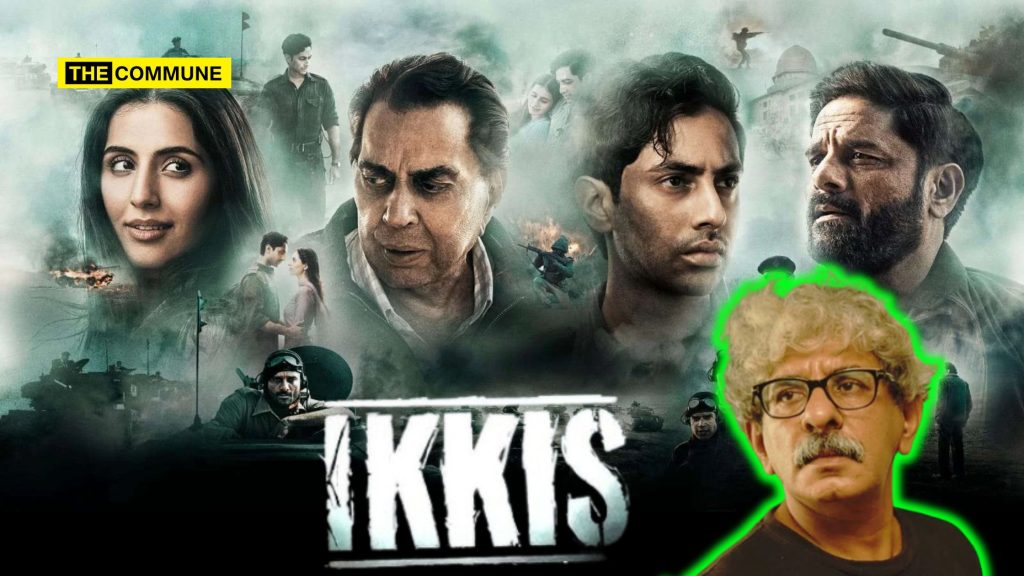
Sriram Raghavan’s Ikkis is the kind of self-righteous pacifist nonsense that treats a brutal war of aggression as a mutual tragedy, viewing Indian heroism and Pakistani invasion through the exact same misty-eyed lens of “shared humanity.”
This isn’t a tribute to Param Vir Chakra winner Second Lieutenant Arun Khetarpal; it’s a preachy anti-war lecture that equates the sacrifices of our soldiers with the “regrets” of the enemy who started the fight.
In 2026, with audiences demanding pride over pseudo-peace, this outdated drivel deserves to flop – and early signs show it’s heading that way. The film, based on Khetarpal’s extraordinary valor in the 1971 Battle of Basantar where he destroyed multiple Pakistani tanks at age 21, had all the makings of an inspiring biopic.
Instead, Raghavan turns into a boring virtue-signaling lecture on war’s futility, shuttling between battlefield flashes and a 2001 frame where Arun’s father (Dharmendra) visits Pakistan and bonds with the “noble” retired Brigadier (Jaideep Ahlawat) who killed his son.
Tea is shared, grief is mutual, families are flashed back to – we’re meant to see both sides as equally burdened by “the horror of war.”
Pakistani troops get prideful speeches about their battalion’s legacy, just like our Poona Horse. No distinction between defender and aggressor; just endless “war is hell for everyone.”
The film Ikkis feels like Aman Ki Asha on steroids, pushing a brand of manufactured “bhaichara” that borders on self-parody.
In one scene, Dharmendra visits his ancestral home in Pakistan and remarks that his family lived there before Partition, only for the current owner to say “it’s still yours, take it!”
Another exchange goes like this,
Brigadier M. L. Khetarpal (Dharmendra)
– Uss Din Woh Peeche Kyun Nahi Hataa? (Why didn’t he go back that day?)
Brigadier Khwaja Mohammed Naseer (Jaideep Ahlawat)
– Woh Dhushman Ko Haranaa Chahtha Tha Sir (He wanted to defeat the enemy sir!)
Brigadier M. L. Khetarpal – Kaun Dhushman? (Enemy who?)
This is not merely insensitive storytelling; it amounts to rubbing salt into the wounds of those who laid down their lives defending the nation.
This false equivalence is insulting. While Arun (a sincere but underwhelming Agastya Nanda) gets some tank sequences, the heroism feels rushed to make room for cross-border empathy.
Aman Ki Asha apologists praise it as “humane” and “anti-rhetorical patriotism,” but that’s code for avoiding righteous anger against a nation that invaded us.
Even the film knows it went too far – that viral mid-credits disclaimer frantically clarifies the “humane” brigadier is an “exception” and Pakistan remains untrustworthy. If you need a nationalist disclaimer to patch your “balanced” narrative, why make it this soft in the first place? It is possible that the makers saw the response to Aditya Dhar’s Dhurandhar and added the disclaimer.
Performances save it from total disaster: Dharmendra brings quiet gravitas in his final role, Jaideep Ahlawat is layered as the conflicted Pakistani, and Agastya shows promise despite lacking intensity.
Raghavan’s craft is okay but his pacifist treatment kills the film.
No surprise that the usual suspects in the leftist echo chamber are swooning over this pacifist tripe. Livemint’s review gushes about it being a “war film on a peace mission,” applauding Raghavan’s “passionate case for pacifism” and his refusal to stir any anti-Pakistan sentiment, even positioning it against Dhurandhar as a supposed moral counterpoint. The Wire hails it as a brave swim “against the tide of jingoistic war films,” getting misty-eyed over its studied restraint. The Quint celebrates it as a salute to “bravehearts on both sides,” relieved that the film avoids “stereotyped Pakistani villains.” If these outlets are celebrating the film, that in itself tells you exactly what kind of politics the film is pandering to—and why large sections of the audience are walking away.
Ikkis Vs Dhurandhar: Pacifism Flops While Unapologetic Patriotism Rules The Box Office
Two war-themed films from the same production house (Maddock/Jio), yet worlds apart – and the awakened Indian audience has spoken loudly. The declining footfalls to this film indicate that Indian audiences are rejecting Pakistan apologia and instead favour bold cinema that speaks plainly and without hesitation.
Aditya Dhar’s Dhurandhar (2025) is a ferocious spy thriller that shows Pakistan how it deserves to be shown: as an uncouth, kafir-hating, jihadi exporting terror hub.
No hand-wringing, no “shared trauma” – just raw justice against the rogue state sponsoring threats like 26/11.
Ranveer Singh’s infiltrator tears through Karachi’s underbelly, highlighting ISI-crime-terror nexuses without apology. It’s chest-thumping, visceral, and unapologetically India-first – the kind of film post-Uri and post-Pulwama audiences crave. Result? A monstrous ₹1200+ crore worldwide, the highest-grossing Indian film of 2025, still pulling double-digits in its fifth week (₹11+ crore on Day 30 alone).
Contrast with Ikkis: Same Indo-Pak conflict backdrop, but Raghavan’s pacifist lens equates both sides, humanizing the enemy excessively. Audiences rejected it – decent ₹7 crore Day 1 start, but sharp drops and limited growth amid Dhurandhar’s dominance. Srirama! Wrong timing da!
This proves Indian viewers have evolved. We’ve ditched outdated “balance” for truth and pride. Dhurandhar thrives reflecting reality – Pakistan as aggressor and terror exporter. Ikkis’s equivocation feels tone-deaf, like pre-2019 Bollywood pleading peace with the unrepentant.Upcoming 2026 slate (Border 2, etc.) will follow Dhurandhar’s template: Honor heroes without equating them to the enemy. The verdict is clear – pacifist BS flops. Jai Hind!
Subscribe to our channels on Telegram, WhatsApp, and Instagram and get the best stories of the day delivered to you personally.