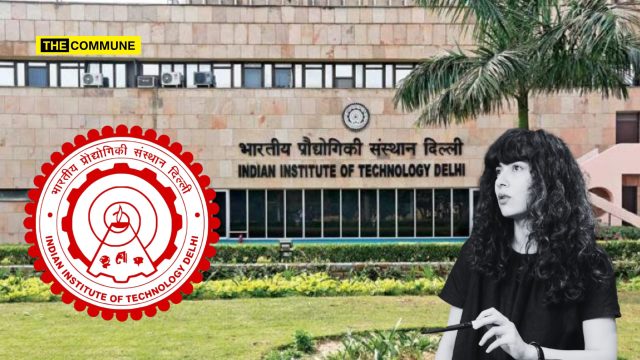
The prestigious Indian Institute of Technology, Delhi (IIT-D) finds itself embroiled in a significant controversy following the conclusion of a three-day international conference organised by its Department of Humanities and Social Sciences (HSS). The event, titled “Critical Philosophy of Caste and Race (CPCR3),” has drawn fierce criticism from sections of the academic community and the public for its allegedly one-sided, woke agenda, prompting the institute’s administration to initiate a formal fact-finding investigation.
The conference, held from January 16 to 18, 2026, in the Senate Room of IIT Delhi’s Main Building, has been accused of promoting radical activism, disseminating imported Western critical theories, and fostering political propaganda against national ethos, all under the banner of academic discourse. The institute, in a rare public statement, confirmed that “serious concerns have been raised over the choice of speakers and content” and that a committee with independent members has been constituted to investigate.
A Conference Agenda Under Fire
The detailed programme schedule reveals presentations and speakers that have become the core of the dispute. Notable sessions included:
- “What’s common between Dalits and Palestinians?” by Aarushi Punia, an Independent Researcher.
- “25 Years of Racial and Caste Equity Impact of Durban on Dalit Americans” by Thenmozhi Soundararajan of the US-based advocacy group, Equality Labs.
- Keynote addresses and papers drawing direct parallels between caste and racial discrimination, framed within the legacy of the 2001 UN World Conference Against Racism in Durban.
- A book launch for “Tamil Buddhism and Brahmanism in Modern India: Deep Resistance against Caste,” and a film screening of “Gail and Bharat,” alongside sessions on “Necropolitics” and “Decoding Caste and Gender.”
Interesting conference agenda.
IIT Delhi Humanities and Social Sciences Department.
Critical Philosophy of Caste and Race (CPCR3) Conference
Towards a Critical Philosophy of Caste and Race – Divya Dwivedi, IIT Delhi
Aarushi Punia, Independent Researcher: “What’s common…
— Halley (@halleyji) January 25, 2026
Wow. IIT Delhi’s humanities department is going full woke.
Invites radical activists to perpetrate single-sided view on caste.
Sessions on comparisons of Dalits and Palestinians.
Shri @dpradhanbjp and @EduMinOfIndia, are you aware of this? https://t.co/SwRw9Hp1A9 pic.twitter.com/tv7t1N9pCN
— Harshil (હર્ષિલ) (@MehHarshil) January 25, 2026
The conference presented a monolithic, activist perspective on caste, deliberately comparing India’s social structure to global racial conflicts while sidestepping alternative scholarly viewpoints. The conceptual note of the conference, which speaks of “the long durée of graded inequality” and “inferiorizing subjectivation,” is seen by detractors as employing jargon-laden, foreign critical theory frameworks to analyse Indian society.
The Architect and a Pattern of Activism?
At the centre of the storm is Dr. Divya Dwivedi, a faculty member in the HSS department and a primary organiser of CPCR3. Dwivedi’s active online presence is noteworthy – this includes a dedicated YouTube channel and a special journal promoting “critical philosophy of caste and race,” as evidence of a sustained campaign beyond pure academia. Dwivedi also advocates for an “India’s future without Hinduism”.
This was what happened – During the G20 Summit in New Delhi in September 2023, Divya Dwivedi courted controversy with remarks made to French broadcaster France 24, sharply criticising Hinduism, Prime Minister Narendra Modi, and India’s social structure. Dwivedi said she envisioned an “India of the future without Hinduism,” arguing that caste-based oppression continued to dominate the country. She dismissed positive accounts of development, including a rickshaw puller’s experience with Digital India, as “mediatised anecdotes.” Claiming that a small upper-caste minority still controlled most positions of power, she also described the RSS as a “fascist” organisation representing upper-caste supremacy, drawing strong reactions for portraying India negatively on a global platform.
Additionally, in a 2019 NDTV debate, Dwivedi claimed Hinduism was “invented” in the early 20th century to mask caste realities and called the Hindu majority a “false majority.” She alleged that Gandhi helped construct a new Hindu identity that marginalised minorities and lower castes. Dwivedi further argued that upper-caste leaders created Hinduism as a political umbrella and that this legacy should be “discarded.”
India’s Future Without Hinduism and Imported Critical Caste Theories
Our tax money is used by IIT Delhi to import critical caste and race theories from the USA.
IIT Delhi and its faculty member Divya Dwivedi have been organising these radical woke events since 2024.
Divya… pic.twitter.com/Wo56Qwqy0e
— Harshil (હર્ષિલ) (@MehHarshil) January 25, 2026
Significantly, this was the third iteration of the CPCR conference, indicating an established annual programme since 2024. This has led to pointed questions being raised: Why did the IIT Delhi administration only act after the 2026 conference concluded and public objections mounted? Why were similar events in 2024 and 2025 not vetted for compliance with institutional and national guidelines?
Institute’s Response and Unanswered Questions
Following the backlash, IIT Delhi issued a statement acknowledging that concerns had been raised over the conference.
IIT Delhi’s official statement reiterated its commitment to “national goals, academic integrity, and established institutional guidelines.” It confirmed that explanations have been sought from the concerned faculty and that appropriate action will follow the fact-finding committee’s report.
“Critical Philosophy of Caste and Race” conference (Jan 16-18):
Serious concerns have been raised over the choice of speakers and content of the conference.
The Institute has sought an explanation from the concerned faculty, and a fact-finding committee with independent…
— IIT Delhi (@iitdelhi) January 25, 2026
However, the institute’s statement has failed to quell the growing number of questions being raised. Critics are asking why the conference was allowed to proceed without interruption if its content was potentially in violation of institutional protocols, arguing that a post-facto investigation appears inadequate.
Concerns have also been raised about faculty oversight, including how many explanations, if any, were previously sought from Dwivedi regarding the ideological content of her courses, public platforms such as her YouTube channel, and earlier editions of the conference, and whether any formal mechanism exists to assess the political dimensions of academic output.
Another major contention relates to the use of taxpayer funds to host what critics describe as imported “Critical Caste and Race” theories from the United States, with questions over whether publicly funded institutions like the IITs should prioritise techno-national objectives over ideologically charged social theory.
Finally, there is unease over whether the Humanities and Social Sciences department is undergoing a broader ideological shift towards wokeism, and what safeguards exist to ensure that academic discourse remains aligned with the institute’s stated commitment to national goals.
1. The conference was finished on 18th January. Why you didn’t ask Divya Dwivedi before our objections?
2. Divya Dwivedi wanted India’s future without Hinduism. How many explanations were sought by you?
3. The same conference was organised in 2024 too.
4. She has a Youtube… https://t.co/W0UwcgVDx9
— Harshil (હર્ષિલ) (@MehHarshil) January 26, 2026
Broader Implications
This incident can only be seen as a clear case of an elite public institution providing a platform for anti-national and anti-Hindu propaganda under the guise of academia. The IIT Delhi administration’s next steps are being closely watched, as its handling of this probe could set a precedent for how other central educational institutions navigate the increasingly fraught intersection of scholarship, activism, and national policy. The findings of the fact-finding committee are awaited amidst a charged atmosphere that pits calls for academic liberty against demands for institutional accountability.
Subscribe to our channels on Telegram, WhatsApp, and Instagram and get the best stories of the day delivered to you personally.