


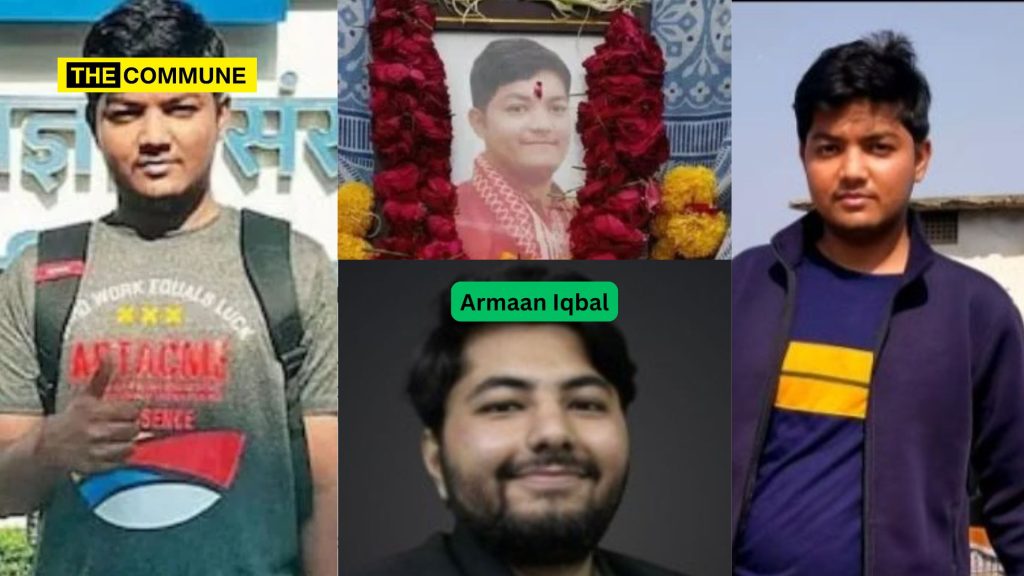
The tragic suicide case of IIT Bombay freshman Darshan Solanki is finally moving to trial after two years. The sole accused, Armaan Iqbal Khatri, initially charged with abetment of suicide, had sought relief from the Bombay High Court to quash the FIR filed against him. However, on 4 July 2025, the court allowed the withdrawal of his petition following strong opposition from both the Maharashtra government and the legal team representing Darshan’s family.
A division bench comprising Justices Ajay Gadkari and Rajesh Patil permitted the withdrawal, clearing the way for the trial to commence in the Sessions Court. The case had faced repeated delays primarily due to Khatri’s legal attempts to halt proceedings. Represented by Advocate Vijay Hiremath, Khatri argued that the charges were baseless, but this was countered firmly by Special Public Prosecutor Prakash Salsingikar and lawyers Sandesh More and Hitendra Gandhi, who represented Darshan’s relatives.
What Happened?
Darshan Solanki, a first-year chemical engineering student and a member of the Scheduled Caste community, jumped to his death from the seventh floor of his hostel building on February 12, 2023. His death sparked a firestorm of national outrage, particularly among caste-centric activist groups and sections of the international media, which quickly attributed the suicide to caste-based discrimination.
Organizations like the Ambedkar-Periyar-Phule Study Circle (APPSC), backed by prominent figures such as Bhalachandra Mungekar, led campus protests and alleged that Darshan was ostracized and mentally harassed after his caste identity became known. Groups accused the IIT Bombay administration and Mumbai Police of ignoring caste-based harassment and demanded action under the SC/ST (Prevention of Atrocities) Act.
These protests garnered global attention and rapidly turned the incident into a high-profile symbol of institutional caste discrimination. Darshan’s parents were reportedly encouraged by activist groups to pursue the caste angle in public forums.
Asking rank has been a tactic used by savarnas to mark SC/ST students and harass them. Despite the testimony by his senior, the committee hid it from the report and lied that he denied instances of discrimination. #justicefordarshansolanki https://t.co/wGaRo908xx
— APPSC IIT Bombay (@AppscIITb) March 12, 2023
Caste-based institutional murder!
Darshan Solanki, SC student at IIT Bombay fell victim to casteism and died by jumping from the college hostel.
The culprits shouldn't be spared at any cost. We demand a fair inquiry into this. pic.twitter.com/VHZFc2zLSm
— Mission Ambedkar (@MissionAmbedkar) February 13, 2023
The Turning Point
However, the narrative underwent a dramatic shift after the Special Investigation Team (SIT), formed to probe Darshan’s death, recovered a suicide note from his belongings. In it, Darshan named his classmate, Armaan Iqbal Khatri, a Muslim student, accusing him of harassment. Further investigation revealed that the tensions reportedly began after Darshan, in a private conversation, made a remark perceived as communal, prompting Armaan to allegedly threaten him with a cutter blade. Darshan had apologized to Armaan afterward.
The emergence of Khatri’s identity led to a conspicuous and abrupt silence from the very activist groups that had initially mobilized in full force. APPSC and others who once condemned IIT Bombay as a site of “institutional murder” virtually disappeared from the conversation. Bhalachandra Mungekar reportedly stopped responding to calls from Darshan’s family. The momentum of protests dissipated, and demands for justice fell silent.
Critics argue that the silence was not accidental. They claim that for many caste-based and Leftist groups, once it was revealed that the accused was a Muslim and not an “upper-caste Hindu,” the case no longer served their ideological or political objectives. Some have gone as far as to allege that these organizations prioritize communal identity politics over justice for marginalized Hindus.
The SIT echoed this conclusion, stating that while peer pressure and bullying might have been present, no caste-related abuse was confirmed in the official investigation. Darshan’s father, Ramesh Solanki, expressed dissatisfaction with these findings, asserting that his son’s emotional distress and caste-related trauma had been downplayed.
Over 2 years ago 18 yo SC student Darshan Solanki committed suicide at #IITBombay
Immediately global media / activism machinery jumped in to make it about caste. Bhalachandra Mungekar of Ambedkar Periyar Phule Study Circle (APPSC), a casteist Eradicate Sanatan organisation… pic.twitter.com/fL0u8vHMVU
— Eminent Intellectual (@total_woke_) July 5, 2025
As Armaan Iqbal Khatri’s involvement came into focus, many of the earlier campaigners who had been vocal about caste injustice began distancing themselves from the case. Notably, groups like APPSC gradually stopped discussing the issue, leading critics to question their motivations.
Delay in Justice
Despite being arrested, Khatri was soon granted bail and resumed classes at IIT Bombay. While the case languished in procedural delays, his legal team even filed to have the FIR quashed—effectively halting any progress toward trial. Meanwhile, families and supporters of Darshan Solanki were left waiting.
Activists who had earlier demanded institutional overhaul and accountability now avoided discussing the case altogether. Critics say the hypocrisy is evident: a movement that once threatened to “burn down IIT” in the name of caste justice showed no appetite to confront the accused once his identity complicated their narrative.
Trial to Begin
With the High Court now rejecting Armaan Khatri’s effort to have the case dismissed, the matter is finally moving toward a trial. Darshan’s family has expressed hope that justice will be served, even as they continue to criticize the institutional and social failure that allowed the case to be buried for so long.
For many, Darshan Solanki’s name has faded from headlines. But this moment marks a chance to restore the conversation—not through selective outrage, but through an honest reckoning with the social and psychological pressures students face, regardless of who the accused may be.
(With inputs from OpIndia)
Subscribe to our channels on Telegram, WhatsApp, and Instagram and get the best stories of the day delivered to you personally.