


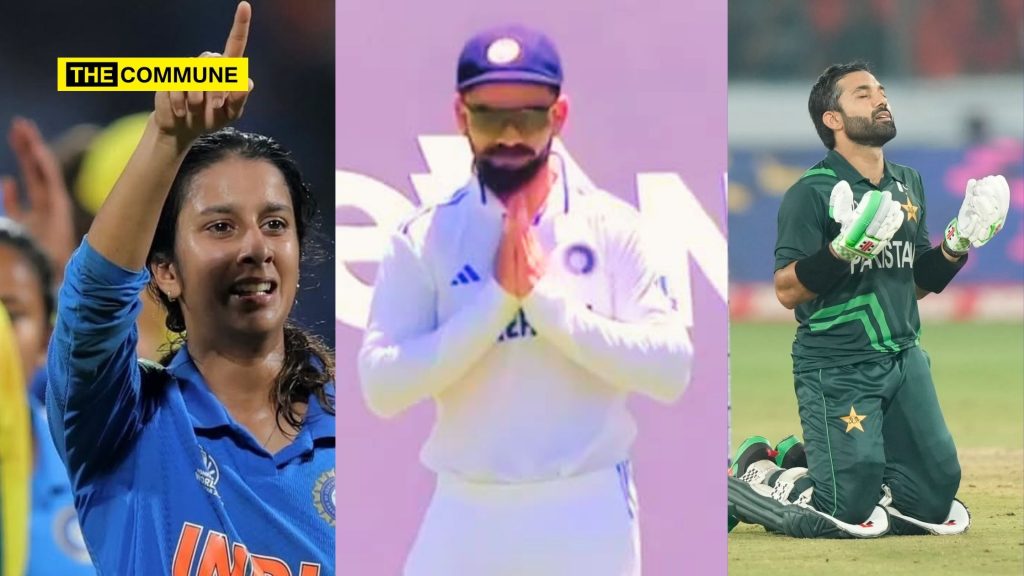
In world cricket, expressions of faith have always had a curious double standard. When Western players kneel, pray, or point heavenward, it is described as “spiritual,” “humble,” or “deeply moving.” When Indian athletes express pride in their Hindu faith by saying “Jai Shri Ram” or “Har Har Mahadev”, the same global commentators suddenly find it “polarizing” or “majoritarian.”
The recent example of Jemimah Rodrigues has brought this contradiction into sharp focus.
In India’s stunning semi-final win over Australia, Rodrigues played the innings of her life – a magnificent 127* that powered the women’s team into the World Cup final. As cameras rolled and the world waited for her reaction, she began her speech not with a tribute to the tricolour, not to her team, but to Jesus. “Firstly, I want to thank Jesus, because I couldn’t do this on my own. I know He carried me through today,” she said.
Jemimah Rodrigues the gem of a person u are 🤍 pic.twitter.com/vXWdPpc3lI
— Plow Wan (@usermodeabc) October 30, 2025
But imagine, for a moment, if a Hindu player had said, “I want to thank Lord Ram, He gave me strength,” or quoted a verse from the Bhagavad Gita instead of the Bible. Would the reaction have been as serene? Would the same media outlets have called it “graceful faith,” or would they have exploded with editorials about “religion entering the playing field”?
This hypocrisy has persisted for decades, nurtured by the colonial hangover that still defines what is “acceptable” belief in public life.
The irony deepens when we look beyond the field. Rodrigues’s father, Ivan Rodrigues, a preacher associated with Bro Manuel Ministries, allegedly used Mumbai’s Khar Gymkhana where Jemimah herself held honorary membership, to host a series of evangelical gatherings aimed at “bringing people to Christ.” After members complained of repeated use of the club for religious events, Jemimah’s membership was revoked. The same liberal ecosystem that celebrates her “faith journey” had little to say about these alleged attempts at proselytization inside a secular institution.
Her old video, now resurfaced, shows a teenage Jemimah testifying about “how Jesus made her score 25 runs” before collapsing in what appears to be a charismatic-style religious trance — again, an overtly religious moment treated as harmless.
As Jemimah Rodrigues takes India to finals, here’s her old video from an evangelical event where her father used her for proselytising purposes.
In the video, as the host approaches Jemimah, she acts as if she is possessed and collapses on the ground. pic.twitter.com/IJ739Vplas
— Brutal Truth (@sarkarstix) October 30, 2025
Let us be clear: no one questions Jemimah’s right to believe. What needs questioning is the hypocrisy of those who champion “freedom of religion” for evangelicals abroad, often through platforms like the USCIRF or the Western press, but shame Hindus at home for expressing their devotion openly.
If Jemimah can thank Jesus, Hindu players should never hesitate to thank their Bhagwan. If an Indian Christian can quote Scripture on camera, an Indian Hindu should feel no guilt in chanting “Jai Shri Ram” or “Har Har Mahadev” when they triumph.
Take, for instance, players from Pakistan or other Muslim-majority teams. It is routine for them to bow in sajda after reaching a milestone or to gather for namaz on the field — powerful public affirmations of their faith. No Western journalist calls it “divisive” or “inappropriate.”
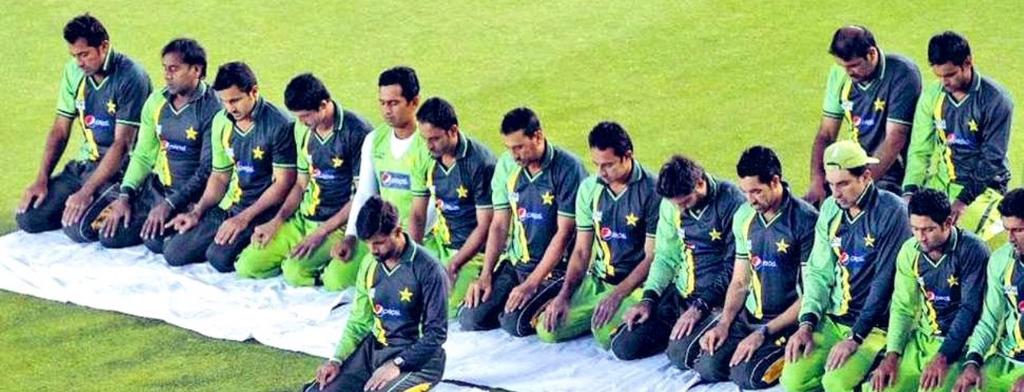

Yet, if an Indian cricketer were to fold hands before the stumps or raise a “Jai Shri Ram” after a victory, the same global commentators who applaud namaz would be quick to label it “majoritarian” or “Hindu nationalist.” This selective outrage exposes not a concern for secularism, but a deep discomfort with unapologetic Hindu expression.
For too long, Hindus have been conditioned to suppress visible faith, to whisper their prayers while others preach theirs. That era must end. Equality in expression means equal respect for every form of faith, not selective celebration based on Western comfort.
So yes, thank you Jemimah Rodrigues. Not for the runs alone, but for reminding a billion Hindus that belief, too, deserves its voice. That faith does not have to be hidden. And that if Jesus can be thanked at the crease, then so can Ram.
Subscribe to our channels on WhatsApp, Telegram, Instagram and YouTube to get the best stories of the day delivered to you personally.