


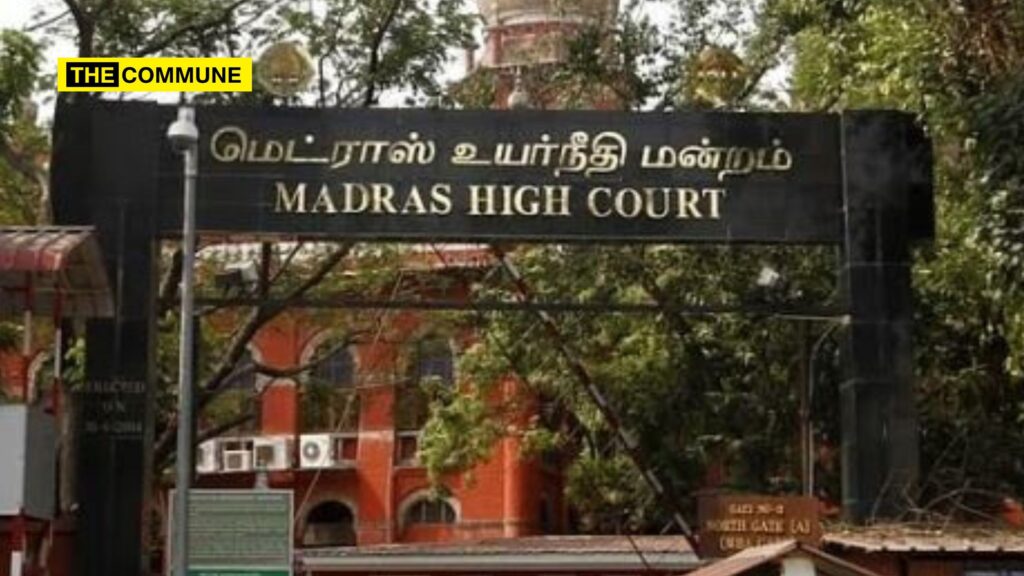
On 8 August 2025, the Madras High Court raised concerns about whether IAS officers are effectively running a parallel government in Tamil Nadu, expressing disappointment over the state government’s sudden reversal on its promise to allot houses to selected Tamil scholars under the ‘Kanavu Illam Scheme,’ as previously assured to the court.
Justice N. Anand Venkatesh observed that such decisions appeared to be driven by bureaucrats who failed to grasp the cultural and emotional value of the scheme. He added that former Chief Minister M. Karunanidhi would never have permitted such a move. The observations were made while hearing a petition filed by lyricist R. Vairamuthu, who challenged the cancellation of a house allotment granted to him under the scheme.
During the hearing, senior advocate Xavier Arulraj pointed out that in an earlier case filed by Tamil Nadu’s first woman IPS officer, Thilagavathy, the Advocate-General had assured the court that new restrictions in the scheme would apply prospectively, ensuring that all 10 pre-selected beneficiaries would still receive their houses. Instead of honouring this assurance, the state filed an appeal, and a division bench stayed the interim order of the single judge, he said.
Justice Anand Venkatesh remarked that such actions were typical of IAS officers who “run a parallel government” and treat sensitive cultural matters like allotting houses to eminent writers without emotional understanding, relying only on bureaucratic authority. He cautioned that allowing IAS and IPS officers to effectively run the state could lead to serious governance issues.
When the court resumed in the afternoon, Additional Advocate General J. Ravindran took strong exception to the judge’s remarks, stating that Tamil Nadu is governed by Chief Minister M. K. Stalin and not by bureaucrats.
(With inputs from Times Of India)
Subscribe to our channels on Telegram, WhatsApp, and Instagram and get the best stories of the day delivered to you personally.