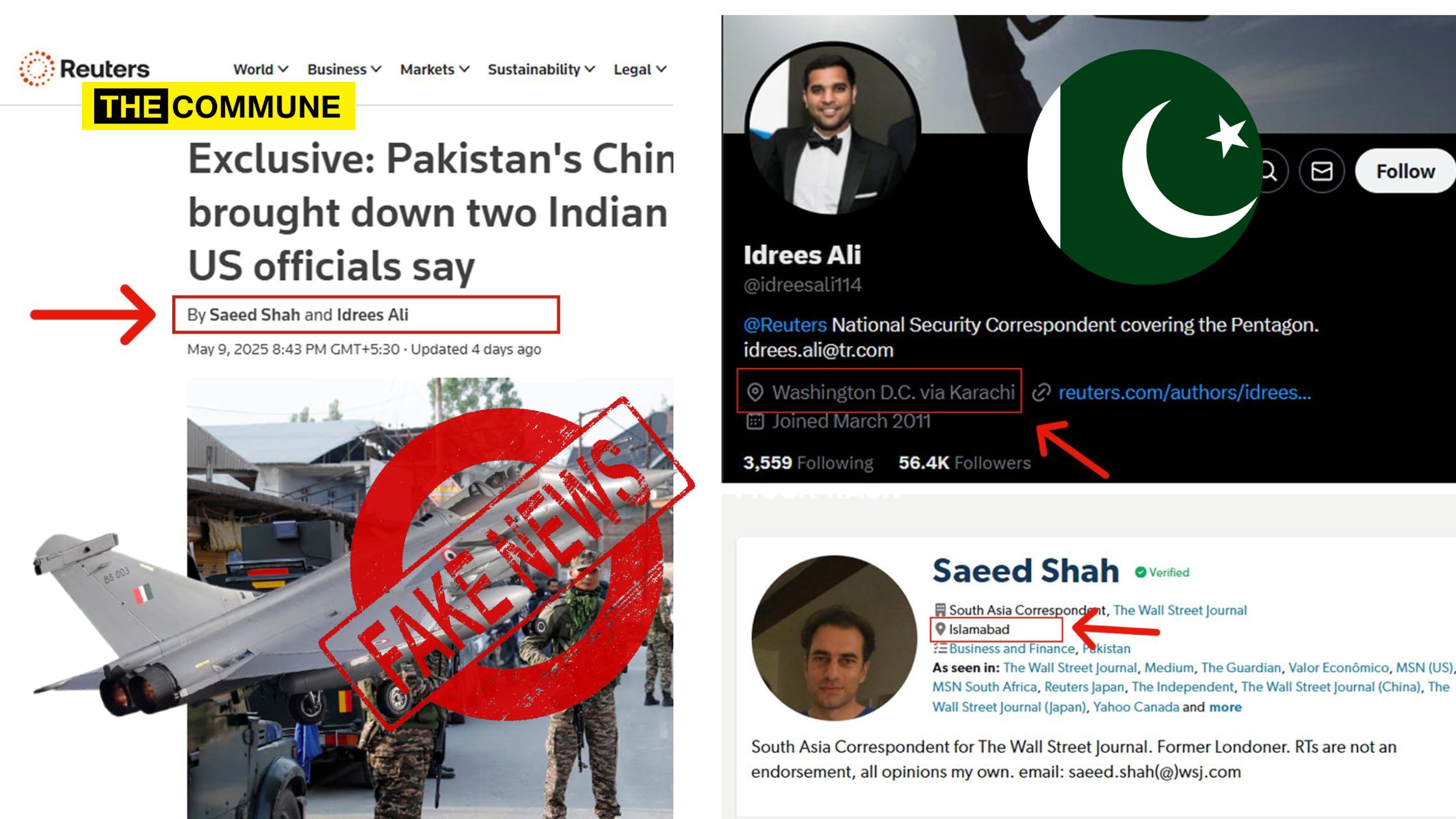
This time, Pakistan went to extreme lengths to fabricate and push its false “Rafale shot down” narrative—strategically planting the story in so-called international media using its own journalists. By disguising state-sponsored propaganda as independent journalism, Pakistan attempted to lend credibility to its baseless claims and mislead both domestic and international audiences.
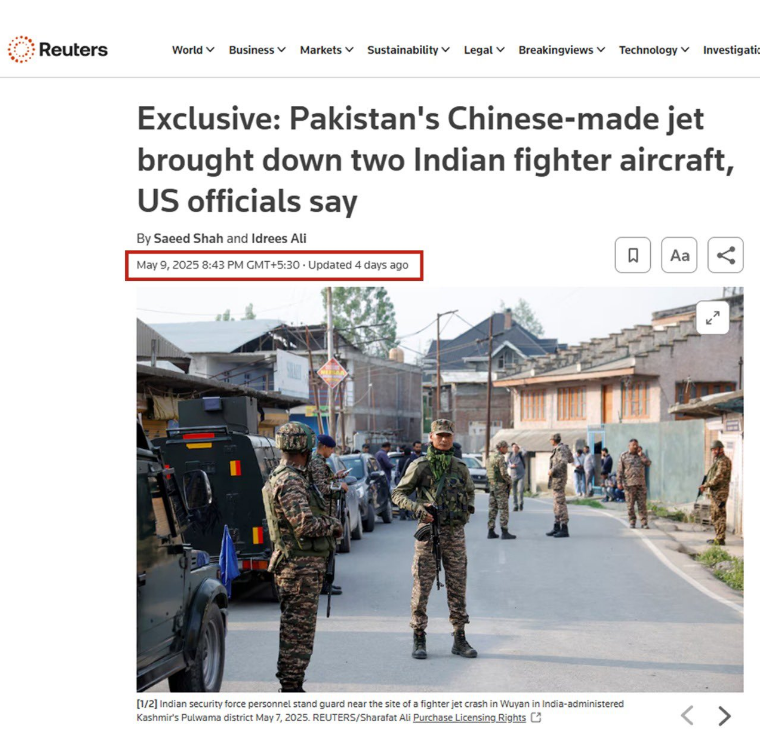
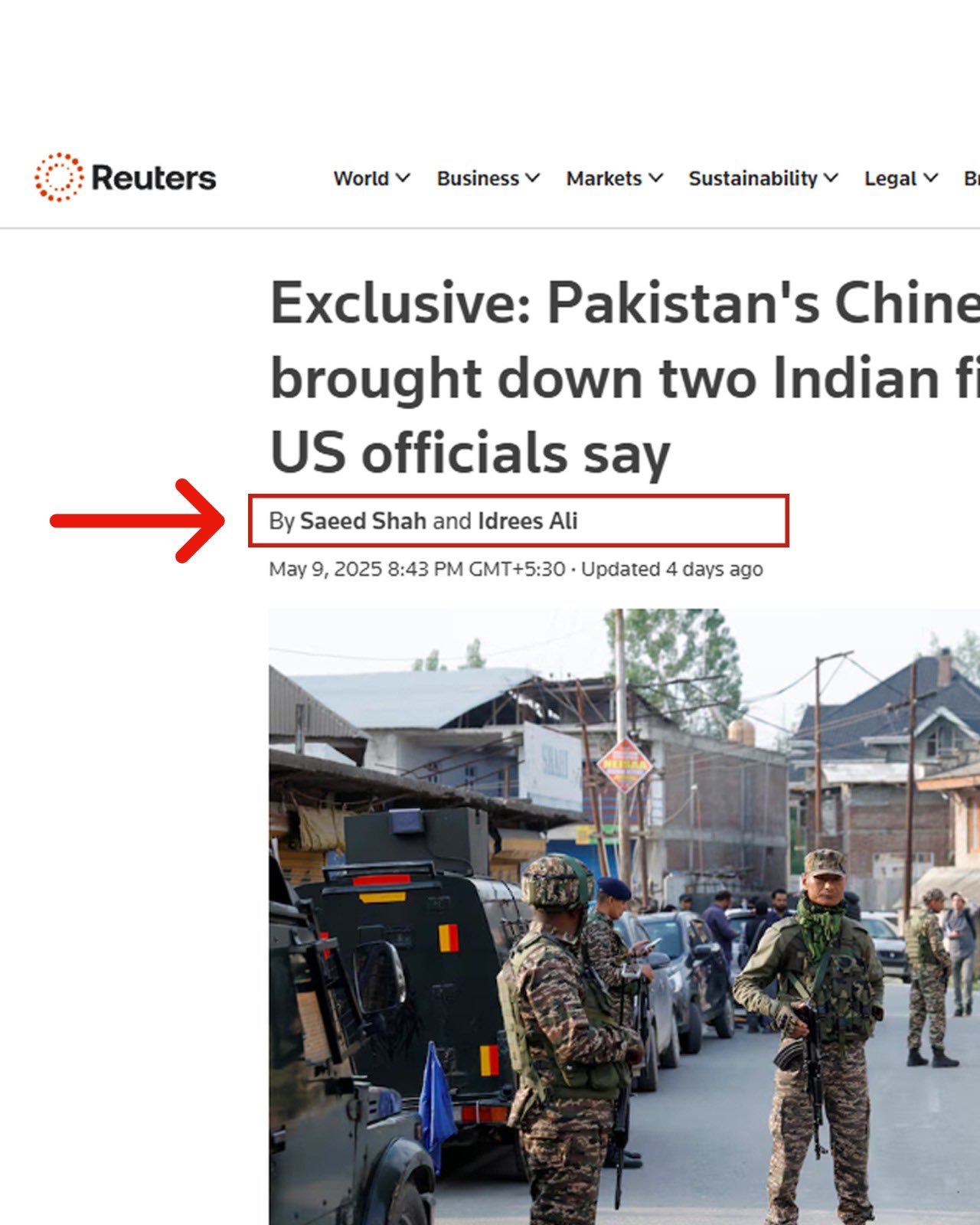
On 9 May 2025, a Reuters article titled “Pakistan’s Chinese-made jet brought down two Indian fighter aircraft, US officials say” claimed that a Chinese-manufactured Pakistani J-10 fighter jet had shot down at least two Indian military aircraft, including a French-made Rafale. However, the report lacked verifiable evidence and relied solely on anonymous statements from “two US officials.”
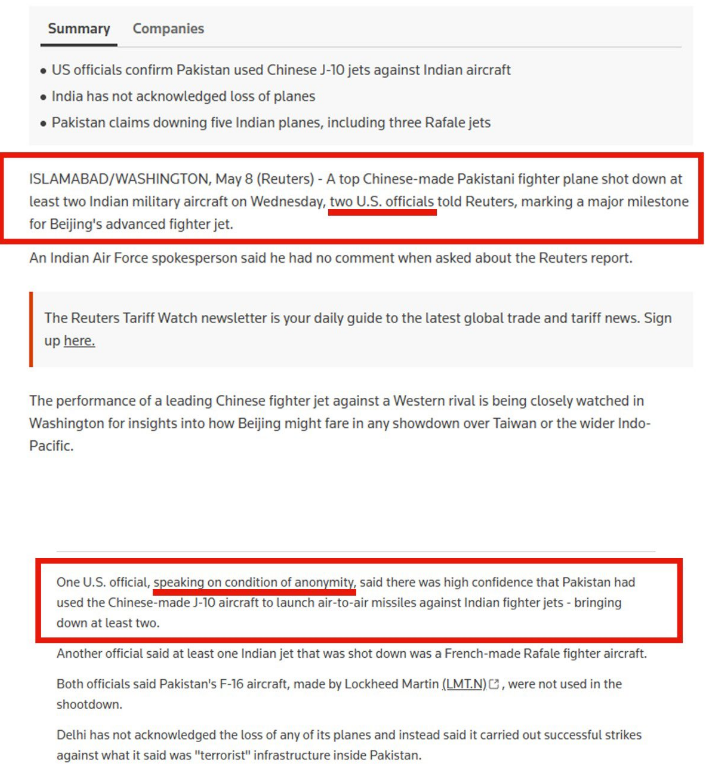
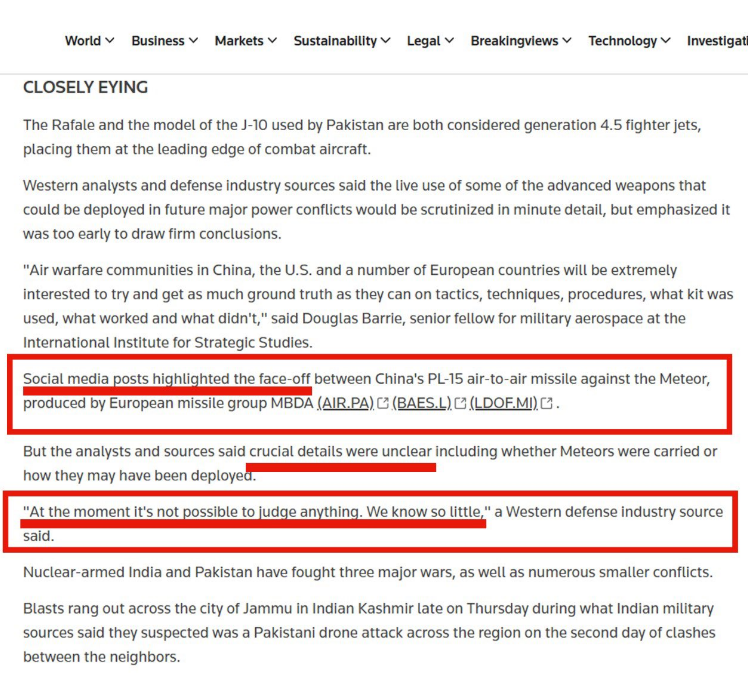
The identities of these officials remain undisclosed, and the article acknowledged that “crucial details were unclear,” with “social media posts highlighting the face-off.” This vague sourcing raises questions about the credibility of the claims. Notably, Pakistan’s Defence Minister also referred to “evidences on social media“ during a television interview, further emphasizing the reliance on unverified online content.
Upon closer examination, it was revealed that the article was authored by two journalists, Saeed Shah and Idrees Ali, both from Pakistan. Saeed Shah had written only three articles for Reuters, all published between 5 May and 9 May 2025, and all presenting a pro-Pakistan perspective. This pattern suggests a deliberate effort to propagate a specific narrative through an international news platform.
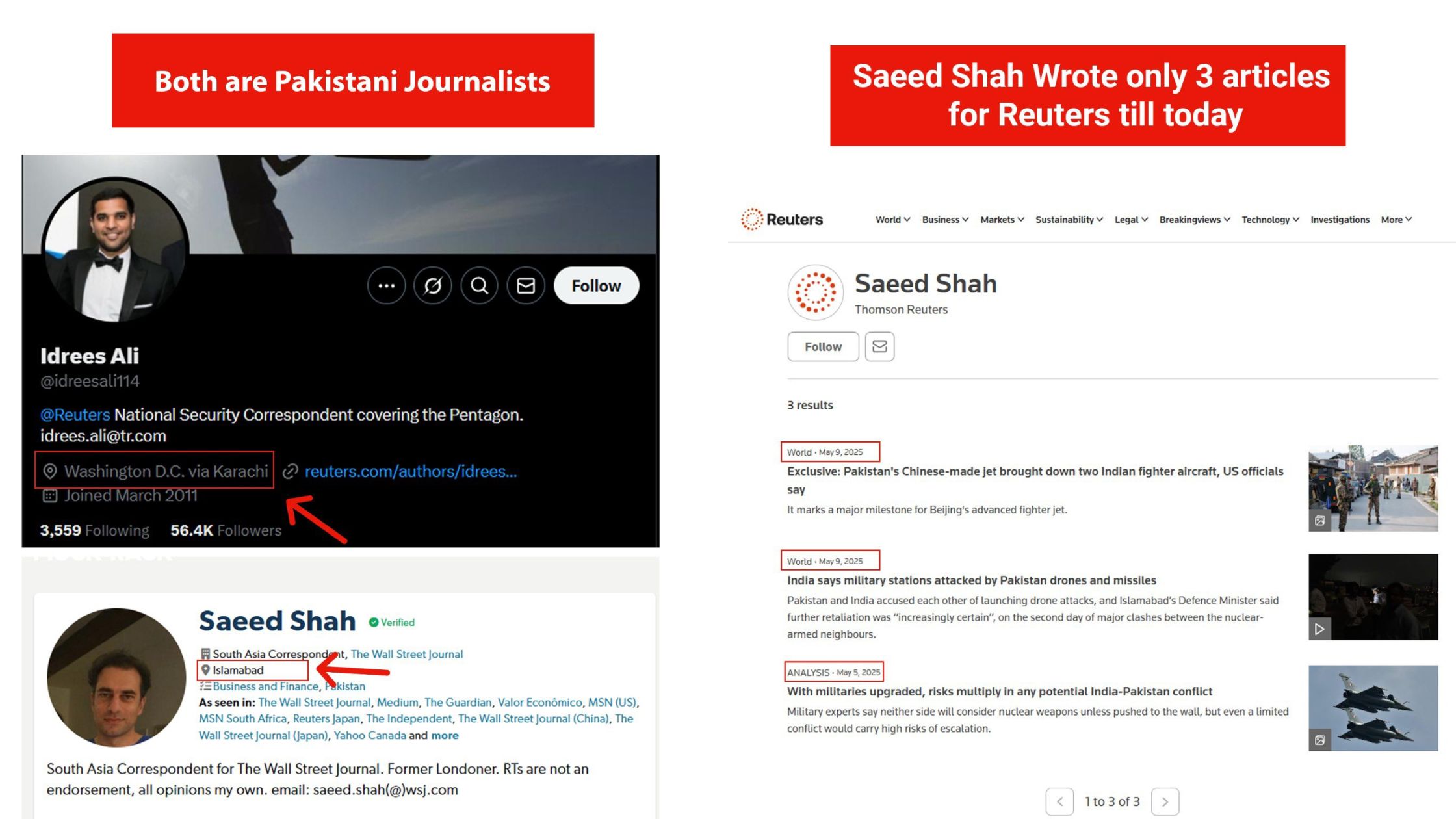
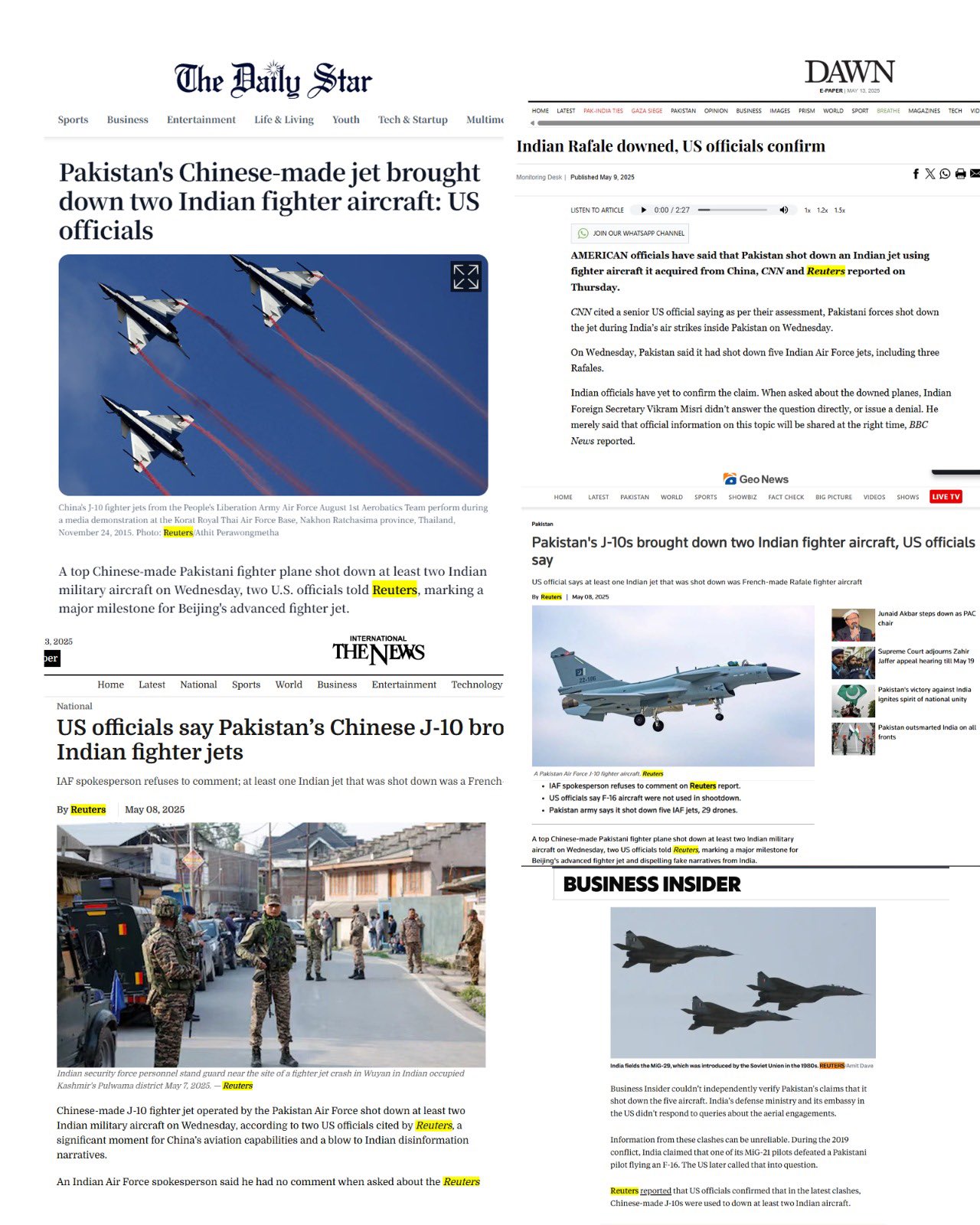
The article was widely disseminated across media outlets, particularly in Pakistan and China, and became a cornerstone of Pakistan’s military reports, reinforcing their narrative of shooting down Indian jets. However, the lack of concrete evidence and reliance on anonymous sources have led to skepticism regarding the authenticity of these claims.
In contrast, Indian authorities have consistently denied any aircraft losses, stating that “losses are a part of combat” and that all pilots returned safely. The Indian military also presented wreckage of a Mirage III or Mirage 5, claiming its interception during the conflict.
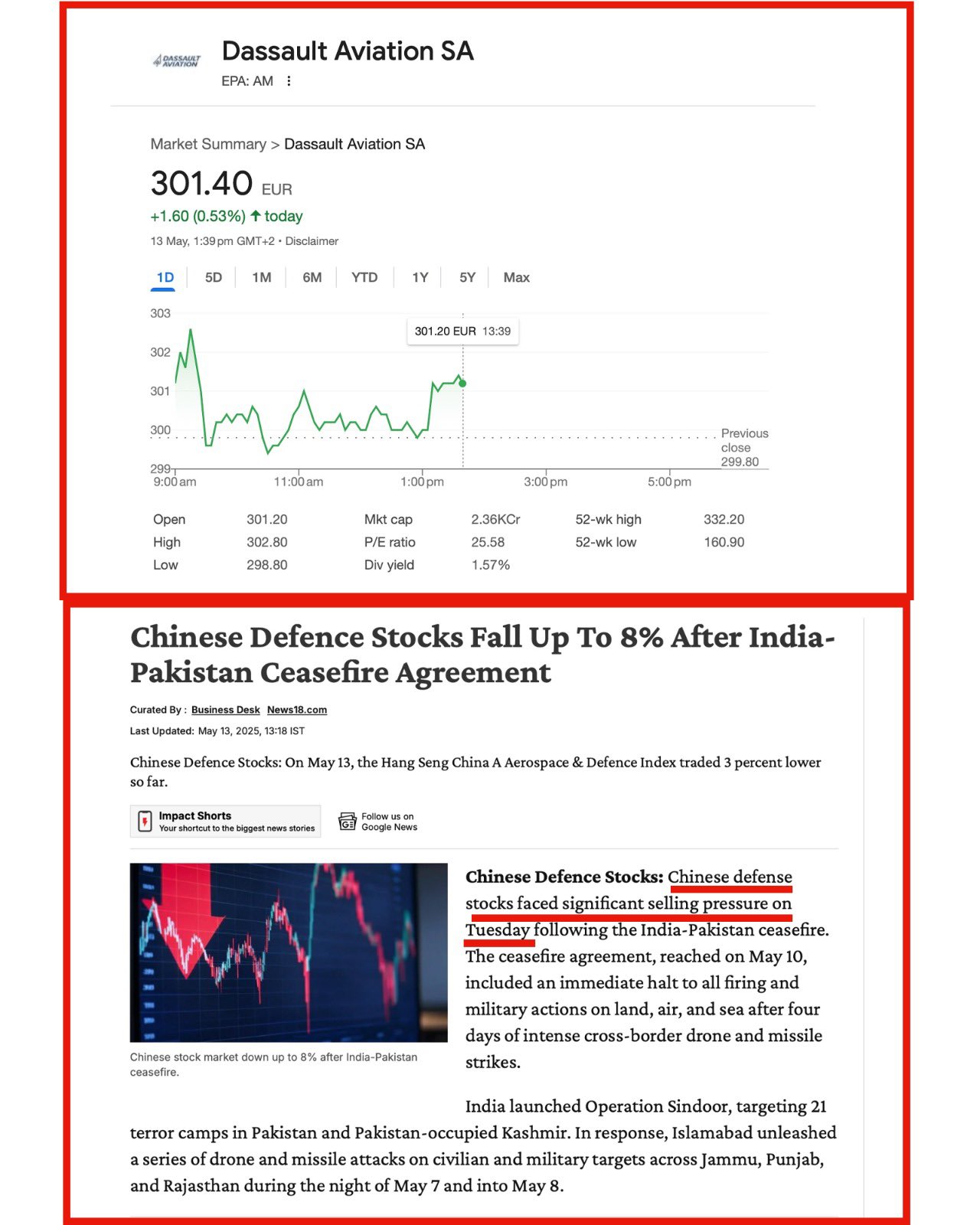
Lies may be loud, but truth always finds its way to the surface. Market reactions alone have dismantled Pakistan’s fabricated tales. As their false Rafale narrative spread, the real world responded: Chinese defense stocks plummeted by up to 8%, while Indian defense equities rose 4.12% and Dassault Aviation saw a 1% uptick. The contrast couldn’t be starker.
Only a country that suffered the destruction of 9 terror camps, the decimation of 11 airbases, the collapse of its air defense systems, over 100 casualties, and the suspension of the Indus Waters Treaty (IWT) could delude itself into celebrating defeat through fake news and social media memes.
The propagation of the “Rafale shot down” story underscores the challenges of information warfare in modern conflicts, where narratives can be shaped and spread rapidly, often without regard for factual accuracy. It serves as a reminder to critically evaluate sources and seek verified information amidst the deluge of content in the digital age.
(This article is based on an X Thread By Ashok Singhal)
Subscribe to our channels on Telegram, WhatsApp, and Instagram and get the best stories of the day delivered to you personally.